A living expression of the vision of Chögyal Namkhai Norbu
This year, something quietly profound has taken form in the sacred landscape of Maratika in Nepal.
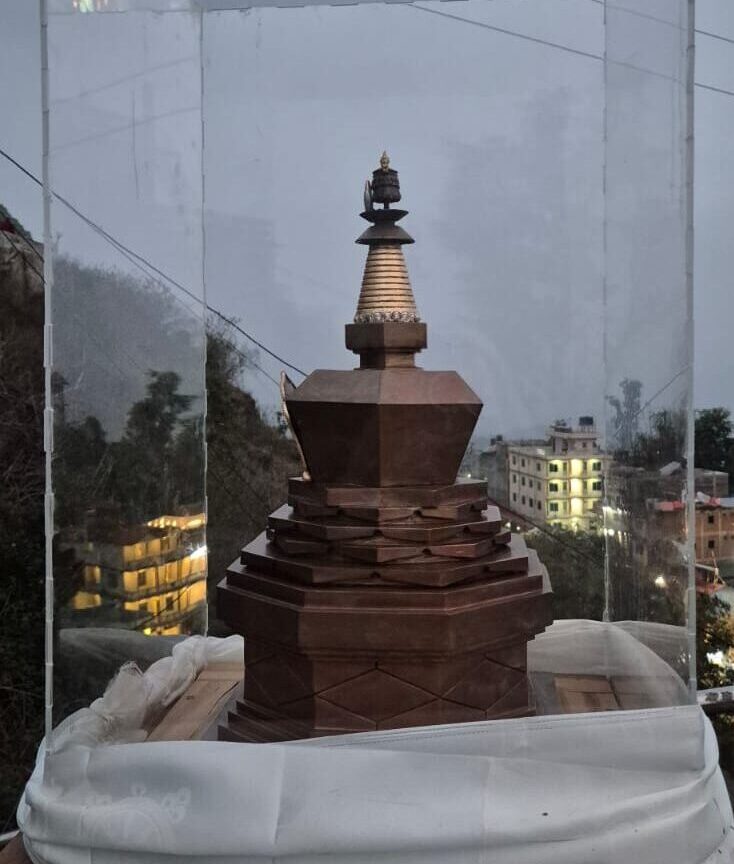
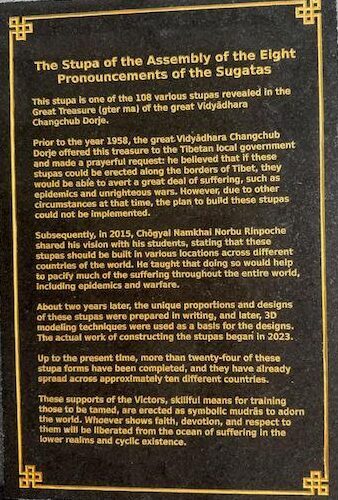
One of the 108 stupas of the precious terma of Nyala Rigzin Changchub Dorje now stands along a mountain path, continuing a vision that extends beyond place and time – a vision of presence, connection, and the subtle activity of awakened awareness in the world.
Maratika is not an ordinary place. For those of us in the lineage of Chögyal Namkhai Norbu, it holds a special resonance, being intimately connected with the revelation of the practice of Mandarava, and with the principle of long life – not merely as duration, but as the continuity of awareness itself.
The seed of this project arose naturally during last year’s pilgrimage to Maratika, organized by Shang Shung UK and MACO. It was there that Oliver Leick recognized the potential for placing a stupa in this sacred terrain. What followed was not immediate, but careful – unfolding through dialogue, respect, generosity and attention.
Together with the local village council, a suitable place was found along the path leading towards the cave on Manjushri Hill, where Guru Padmasambhava is said to have practised. A place shared, revered, and alive for both Buddhist and Hindu practitioners. A place where a stupa could stand without imposing, but instead quietly belong.
This manifestation would not have been possible without the unwavering dedication of Oliver Leick, whose clarity of intent and perseverance carried the fundraising effort from vision into reality. With deep gratitude, we also acknowledge a very generous private donor, whose support was essential in bringing this project to completion. Others, too, have contributed and continue to contribute – particularly towards the construction of a marble shelter that will protect the stupa from sun and rain.
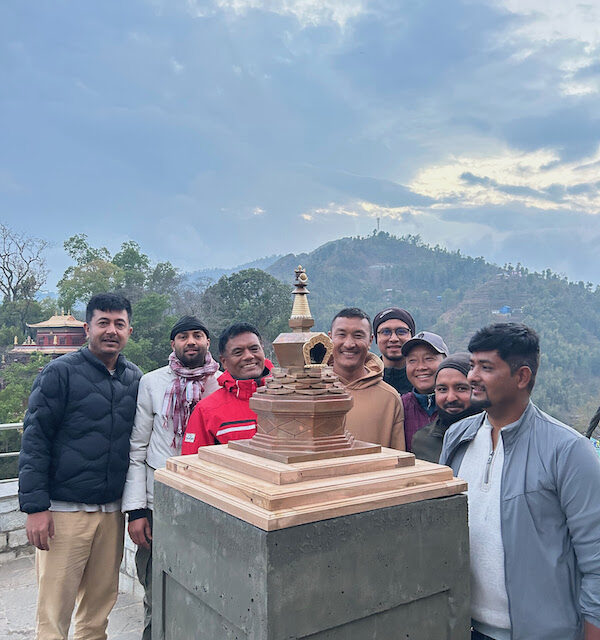
The stupa itself was brought to Maratika by Migmar Tsering, together with Gabrielle Siedlecki and Jamyang Oliphant, during this year’s pilgrimage. It was installed facing east, open to the rising light, overlooking the valley below – a gesture of offering, of orientation, of connection.
Under the guidance of Migmar Tsering, the appropriate practices were carried out, completing the placement. In this way, the stupa was not simply installed, but awakened into its function – supported by the collective intention and presence of all those involved.
The Inner Meaning of the Stupa
A stupa appears simple in form, yet its meaning is vast.
At its centre stands the Sogshing, the life-tree – crafted from olive wood, inscribed with mantras in gold, and resting upon a lotus base. It is both axis and presence: the living heart of the structure.
Within, layers of mantra, dhāraṇī, and sacred formula are carefully arranged – Ushnisha Vijaya, the spaces of Samantabhadra, the Song of the Vajra, and many others connected with powerful methods of transformation and protection.
Interwoven with these are relics – ringsel and substances that carry the blessing of realized masters. Through these, the stupa becomes more than representation: it becomes connection. A point where lineage is not remembered, but present.
The traditional twenty-five sacred substances – medicines, grains, precious materials, perfumes, and essences – complete this inner mandala, expressing the harmony of the elements and the fullness of offering.
A Continuing Vision
This stupa in Maratika is one expression of a wider intention.
Chögyal Namkhai Norbu Rinpoche envisioned the gradual placement of 108 stupas across the world; not as monuments, but as supports. Supports for awareness, for balance, for a more subtle harmony between beings and their environment.
Each placement is therefore both local and global. Rooted in a specific place, yet connected to a greater mandala.
As this vision continues to unfold, another stupa is planned to be installed this year in Beijing, China, under the auspices of the Dynamic Space of the Elements.
Looking Ahead
The work at Maratika is not yet complete.
A marble covering is now being prepared to protect and honour the stupa – ensuring its stability and presence for years to come. Those who feel a connection to this project are warmly invited to support this final stage.
If you wish to contribute, you may do so here:
https://www.shangshunguk.org/support/
In the end, what has been placed at Maratika is more than a structure. It is a gesture of continuity, of care, of transmission.
A meeting point between vision and place, between past and future. Something quiet, yet enduring.
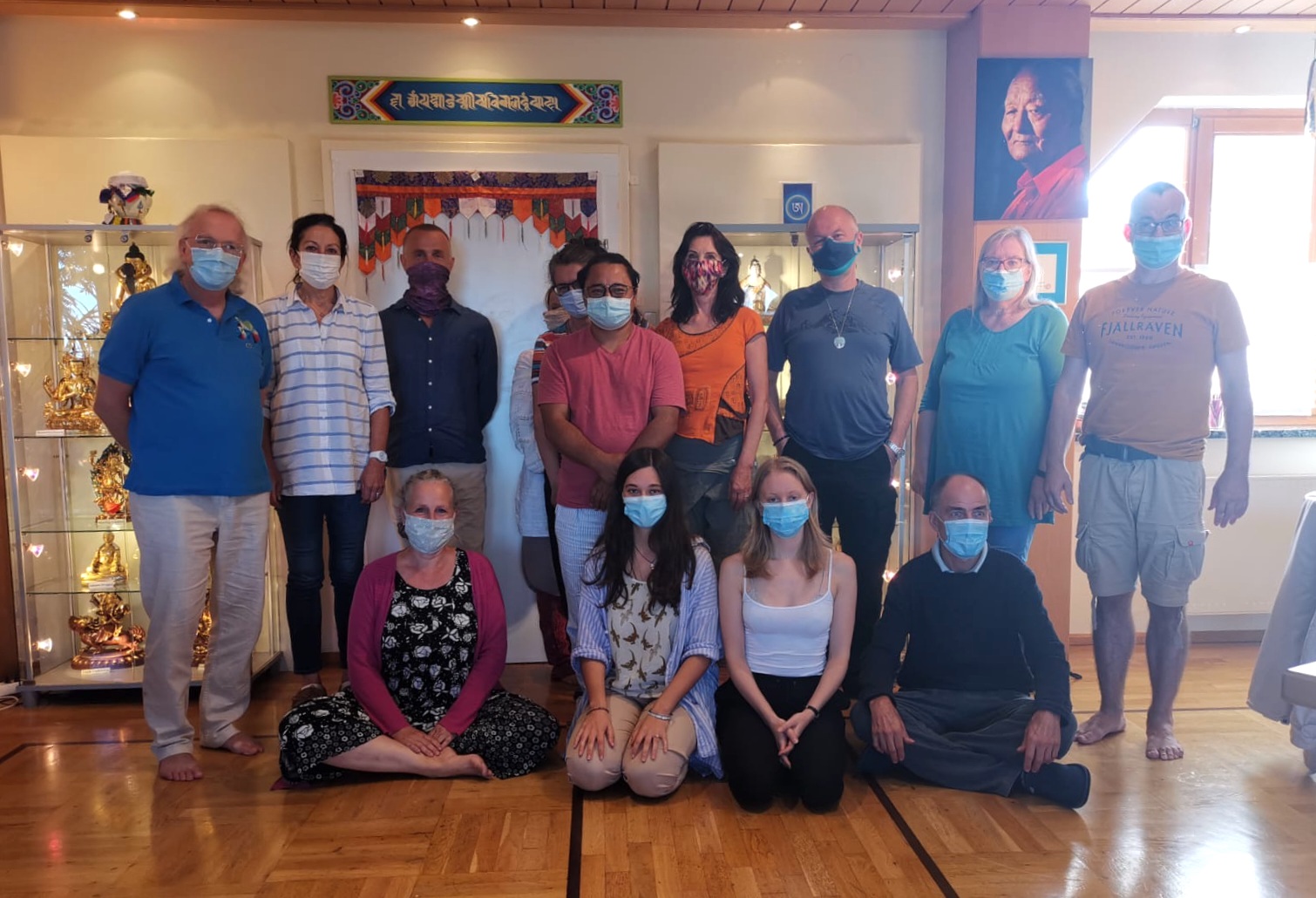
Featured photo: Members of the local community who helped install the stupa at Maratika.