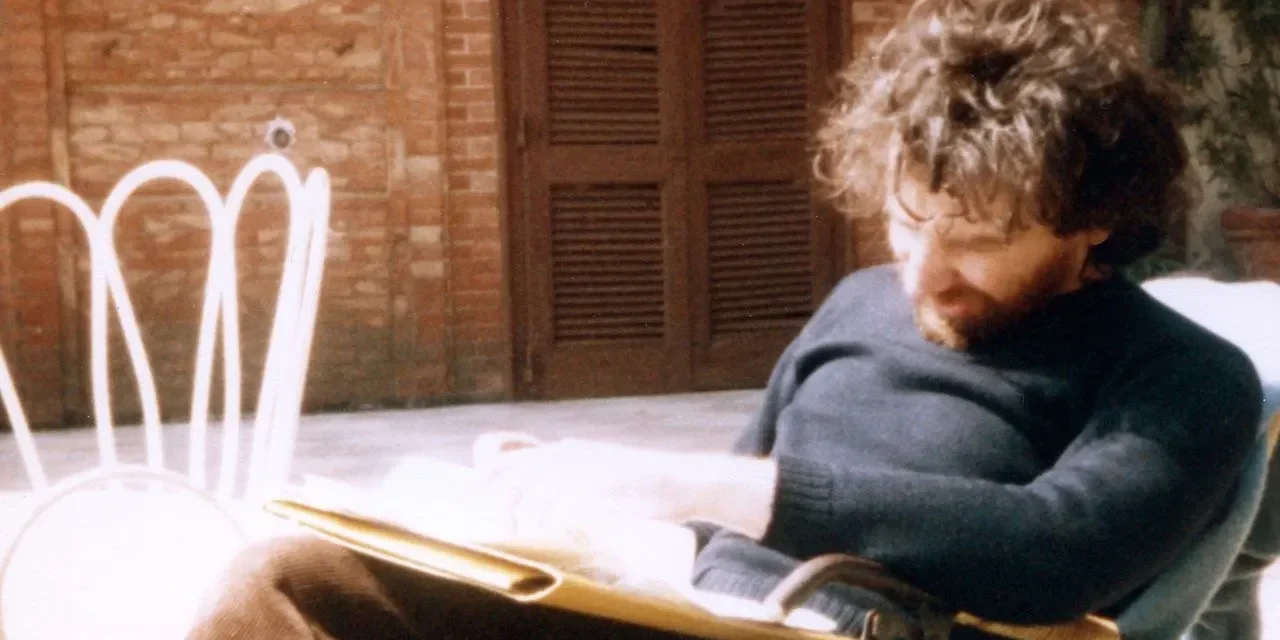
(Yogis, Yaks, and Yetis in the Italian town of Formia, by the Sea)
John Shane
Continuing the celebration of the 40th anniversary of the publication of ‘The Crystal And The Way Of Light: Sutra, Tantra, and Dzogchen’. (1986-2026)
‘The past is never dead.
It’s not even past.’
William Faulkner
While recovering, at my old farmhouse in Tuscany, 20 minutes drive down the mountain from Merigar, from the medical crisis that I went through earlier this year, I began to go through the many boxes of old photographs that I keep here, looking for photos to use to illustrate an article about the months during which – over 40 years ago – in order to be able to continue working with Chögyal Namkhai Norbu on a book of his teachings – I rented a room in an old villa on the beach at Formia, not far from the Namkhai family’s private apartment where I had previously lived for six months, sleeping on the sofa in the living room while beginning to work on the book that, when it was finally published, would become ‘The Crystal And The Way Of Light: Sutra, Tantra, And Dzogchen.’
As I went through the boxes of old photos at my house in Tuscany this summer, the memory returned of how, while I was still living at the Namkhai family’s apartment, Rinpoche had one day decided that we would take a break from working on books, and would instead go down into the cantina in the basement of the apartment building to retrieve boxes of old photos that were stored there that Rinpoche had previously noticed had – due to the damp in the basement – begun to become covered with a light film of mold.
That afternoon, after we had brought the boxes of Rinpoche’s old photos back up from the cellar into the living room of the family apartment and began to open them, I sat with him at the family dining table as we used pieces of soft, dry cloth to carefully clean each of the photos and sort them into piles of different categories, preparing them so that they could be put away again in a place that was not so damp.
While we sat at the table working on cleaning the photos, I was, of course, able to look at them, and, seeing my curiosity about the images of him as a young man in Tibet and wearing a suit and tie with neat, slicked back hair after he arrived in Europe, he began to tell me about his early life and how he came to Italy.
I couldn’t help but be deeply moved by the story he told me of how he had arrived in Italy as a young Tibetan man with hardly any baggage, speaking no Italian and very little English, knowing hardly anyone in his new country, but carrying profound knowledge of the culture and spiritual traditions of his native land in his mind.
Entering fully in my imagination – while sitting in Rinpoche’s family apartment in Italy, and later in the old villa by the beach in Formia – into the wonderful stories he told me of yogis, yaks, and yetis was more than a little surreal, as was the story of what happened when he had to leave Tibet.
And from everything he told me, I got a clearer idea of how traumatic his departure from his native land – and from his family there – had been for him. During the months I had been staying at the apartment with
him and his family, he had often asked me about my work in England as a poet and singer-songwriter, and, in turn, he had told me about the music he had listened to when he first arrived in Italy.
As we looked at and cleaned the old photos from his basement and he told me about what he went through when he first arrived in Italy, I remembered that, when he had sung for me lines from some of the popular songs he had listened to in those days, he had twice sung, with great pathos, these words ‘C’era un re, senza regno…’, which seemed to be from a song that was a favorite of his.
The song the line came from, he told me, was ‘Il Re Dei Pagliacci’ by Neil Sedaka, ‘The King Of The Clowns’, and the line that he emphasised when he sang some of the song for me, means, ‘there was a king, without a kingdom’. It wasn’t until I was sitting with him at the table in the family living-room while he was telling me the stories behind the old photos that we had rescued from the basement that I realized why that particular line might have such meaning for him, as I learned from him about his having been recognized as a young child as the reincarnation of the Chögyal – or Dharma King – but then having had to leave the lands in which such a title had meaning, to travel to a far-off country where no one knew who he was or anything about his heritage.
He had, in many ways, due to social and political circumstances completely beyond his control, himself become a ‘king without a kingdom’, albeit, in his case, the role for which he had been recognized and trained, and which he had subsequently lost, was more as a spiritual monarch rather than a temporal one.
Over the following years of his life, of course, as those who are familiar with Chögyal Namkhai Norbu and his teachings will know, step-by-step, a little at a time, as he began to teach and students gathered around him all over the world, and as he founded dharma centers and institutions for the preservation of Tibetan culture and spiritual teachings, overcoming innumerable obstacles of every kind, he established a realm of dharma worldwide that is in every way worthy of his heritage and the title ‘Chögyal’ he was given at birth.
If the old photos I cleaned up with Rinpoche at his family apartment that day showed me how he had lost everything when he had to leave his native country, following him in the ensuing years of his life showed me how he had not let that tragic setback define his life, but had taken the ‘losing hand’ he had been dealt by circumstances, and through compassion, courage, and determination had turned it into a ‘winning hand’, particularly for the many thousands of people whom he helped in so many ways through his activities.
It is worth remembering how Rinpoche, although he started with nothing, was nevertheless able to build up the Community of spiritual practitioners that thrives all over the world today, himself training Westerners to translate texts from Tibetan, yoga teachers to ensure that Tibetan Yantra Yoga remains a living force for good in the world, and establishing so many institutions for the benefit of beings.
Towards the end of his life, such was the impact of his activities, that he was awarded by the President of the Republic of Italy, Rinpoche’s adopted country, the highest honor that can be bestowed upon a private Italian citizen.
This summer, while I was looking through the collections of photos from my own life here at my house near Merigar, searching for images of the old villa in Formia where I rented a room in order to be able to continue to work with Rinpoche on the book that became ‘The Crystal And The Way Of Light’, there has been a continual stream of discouraging news about the state of the world, with so many of the worlds problems whether societal, ecological, political, technological, or economic – seeming to go on getting worse and worse, and in the face of so many pressing threats it is easy to despair and to begin to feel helpless and hopeless.
Looking at the example of Rinpoche’s life and remembering all the obstacles to his activities that he encountered over the years, one may wonder how he managed not to give in to despair.
Each of us – each of his students – has their own experience of interacting with him and their own memories of him. We are all different and we all have different backgrounds and different needs.
I can only speak for myself and from my own experience. I remember that once I confessed to Rinpoche that I was going through a particularly hard time with a problem in my life that I just couldn’t seem to handle.
I went into the problem in great detail, hoping that the amount of detail I was telling Rinpoche would enable him to see how difficult it was for me to solve the problem.
Ignoring all the detail, he cut to the core, and gave me advice that I consider to be what we call in English a ‘skeleton key’ – a key that will open any lock.
He said, ‘Non dare tanto importanza alle cose, John, ti prego. E tutto irreale. Irreale…!!’ ‘Don’t attach so much importance to things, John, I beg of you. It’s all unreal. Unreal…!!’
The way he said so intensely, ‘Ti prego’, ‘I beg of you’, was quite a shock to me at the time, as it was clear that he seemed really moved by compassion at the suffering I was going through, that was due – beyond all the details I was so caught up in – to the fundamental error of the way I was misperceiving reality.
We are so conditioned to believe in the solidity of the world and our place in it that, even after receiving teachings and transmissions whose purpose is to reveal to us that ‘nothing is quite as it seems, but everything is just as it is’, we can still get caught up in our convoluted mental and emotional processes to such an extent that we lose our way completely and get lost in a maze of confused thinking and feeling.
Taking the example of Rinpoche’s life and work to heart – in the face of the unrelenting flow of world-threatening bad news with which we are constantly being confronted by the vast array of media we are surrounded by – one can remember that, from the point of view of the Dzogchen teachings, what is appearing to us as the display of apparent phenomena is not fundamentally real.
While it is not an illusion in the sense that it doesn’t exist at all, its existence is provisional and impermanent, relative rather than absolute. This understanding of the fundamental unreality of phenomena does not make what is perceived as ‘the problem’ go away, but it does make dealing with the problem more workable.
If one understands that what one is perceiving is the empty display of one’s own energy, one can be playful in working with whatever arises, and even difficult circumstances can become easier to deal with.
Beyond techniques of practice, beyond strategies, the essence of what Rinpoche taught me involves ‘release upon inception’, letting go of whatever thought, emotion, or situation arises, as soon as it arises, without effort or struggle, and resting in one’s natural condition, whatever arises.
Dzogchen is also referred to as ‘The Uncorrected State’, and it is said that one should leave whatever arises ‘as it is’, since everything that arises is ‘kuntuzanpo’, ‘perfect as it is’.
One may ask how one can leave it ‘as it is’ when one is faced with catastrophe at a planetary level, as is currently the case. But you can only work with what is in front of you, one thing at a time.
One may think globally, but one can only act locally, as the saying goes.
And the example of Rinpoche’s life is that it is possible – by remaining present and not allowing oneself to become distracted, by regarding whatever arises as the play of one’s own primordial energy, and by working with circumstances one at a time in the moment – to achieve great things at all levels, even in the face of great obstacles.
This is what I observed while working with Rinpoche at his family apartment in Formia and at the old villa on the beach there, long before any books of Rinpoche’s teachings were published and before any centers of the Dzogchen community were founded.
I hope that this incomplete and inadequate account of my experience in Formia all those years ago may be of interest to you today and perhaps even useful to you in your life now, as the memories of the time I spent with Rinpoche certainly still are to me.
As the great American novelist William Faulkner wrote, ‘The past is never dead. It’s not even past.’ Rinpoche is very much alive in my life as he is in the mindstream of all his students who keep his teaching in mind.
Wishing you all the best…!! Be well, and live long…!!
You can also find more of John’s work at his Substack publication https://johnshanewayofthepoet.substack.com where you can add comments to articles or write to John.
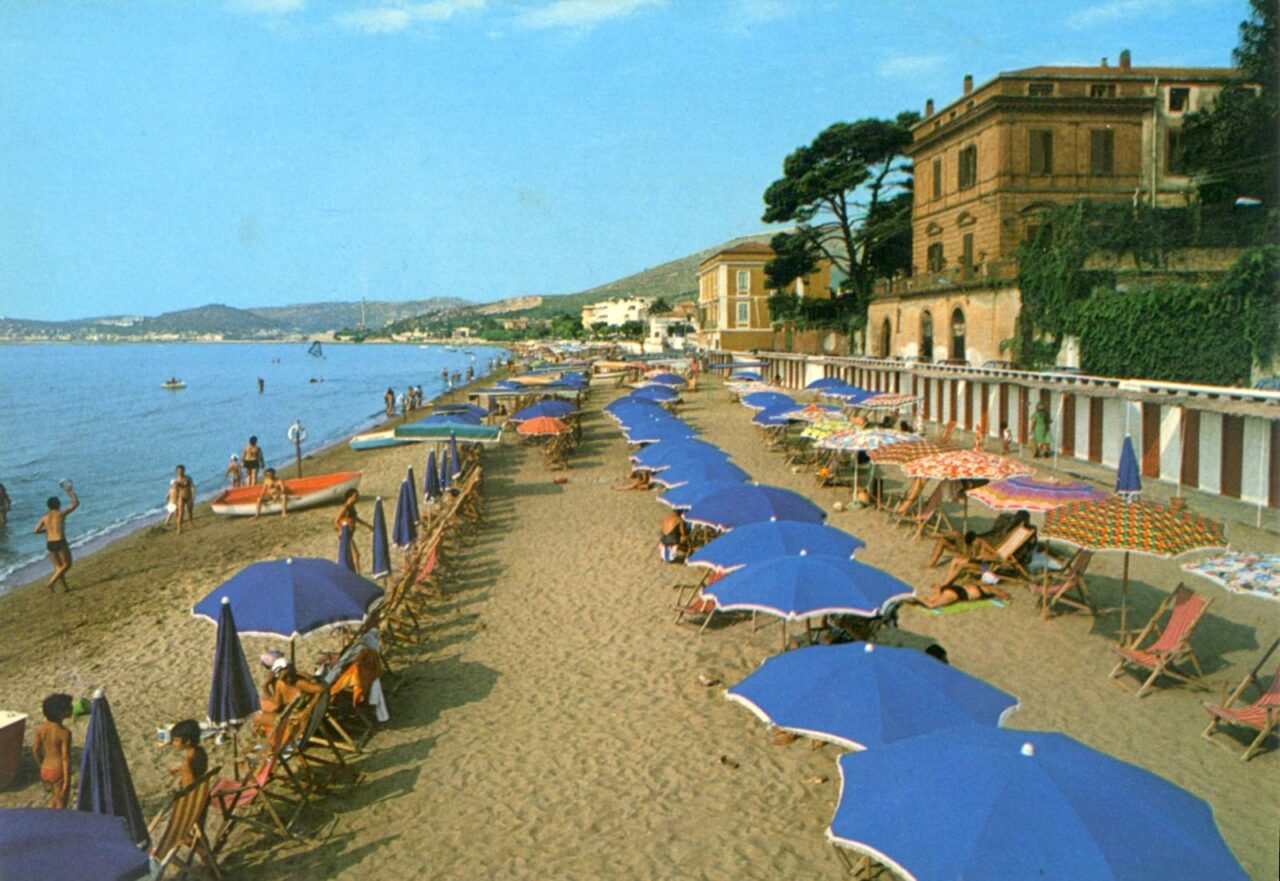
When I returned to Italy after traveling around the United States with Chögyal Namkhai Norbu on his summer tour of retreats there, I needed to find a place to live while I was working with him on the book that would become ‘The Crystal And The Way Of Light: Sutra, Tantra, And Dzogchen’, and, after looking everywhere in Formia for an apartment to rent for the short term, but not finding one, I met up with other students of Rinpoche who were living in apartments in a big old villa by the beach that you can see at the right of this postcard of Formia in summertime.
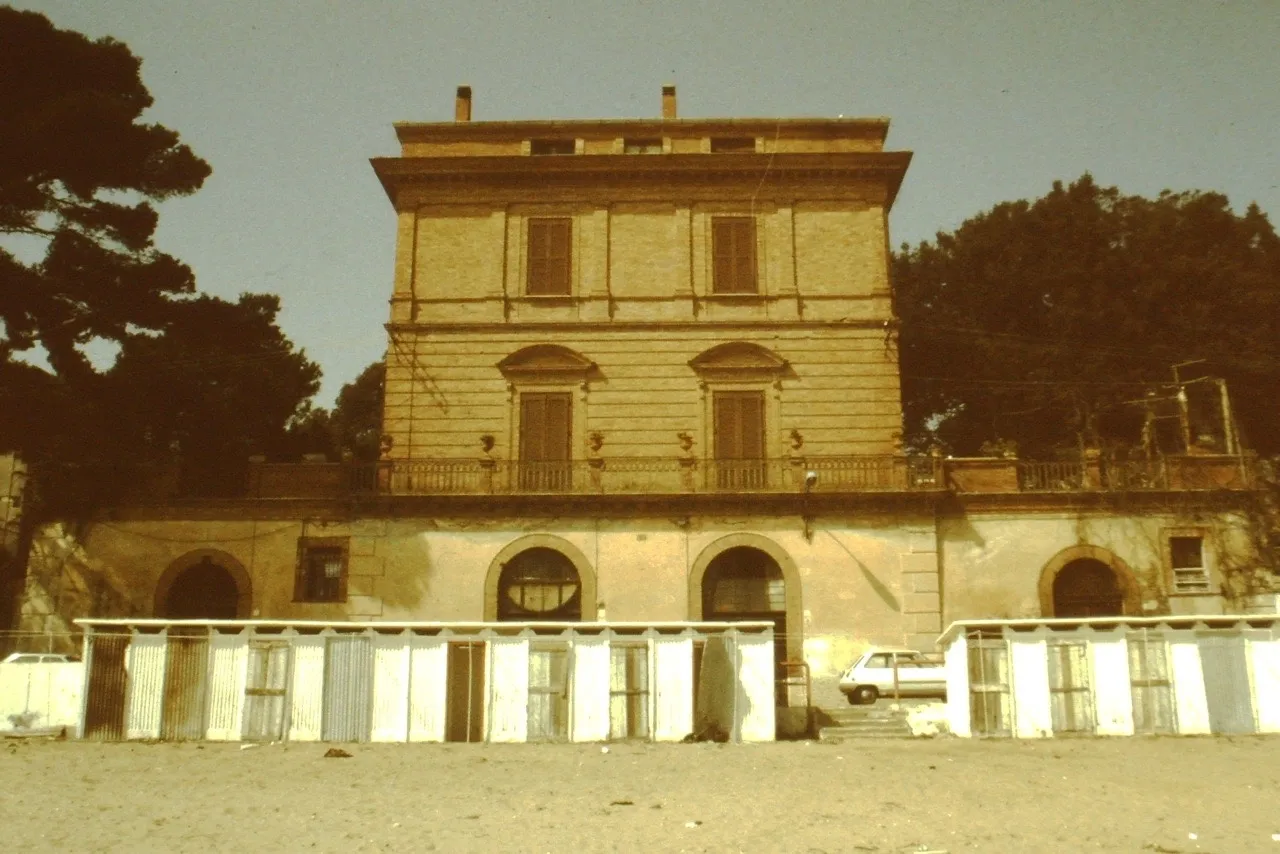
When I arrived at the villa, the summer was over, and both the villa itself and the beach looked quite different from the way they do in the postcard without all the beach umbrellas and deck chairs.
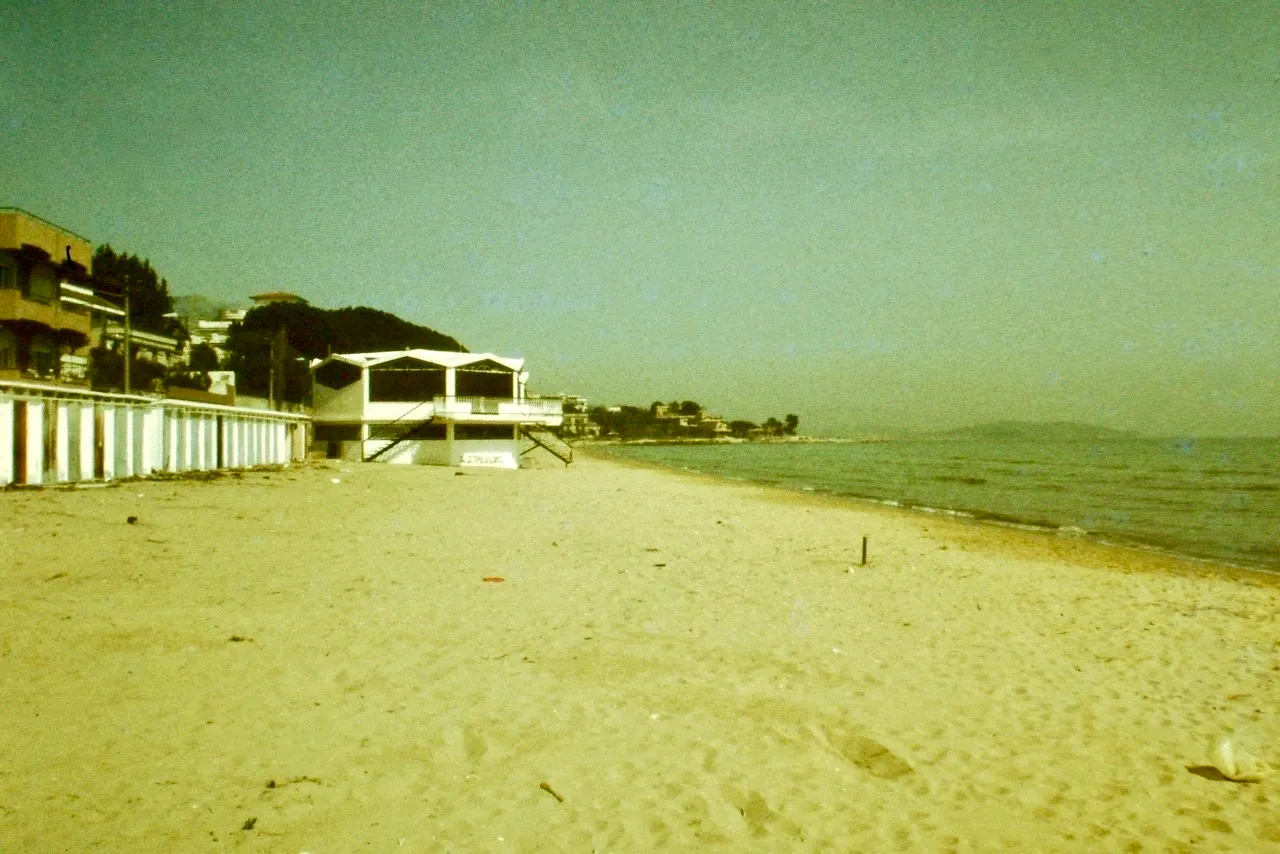
The beach below the villa was deserted at that time of year.
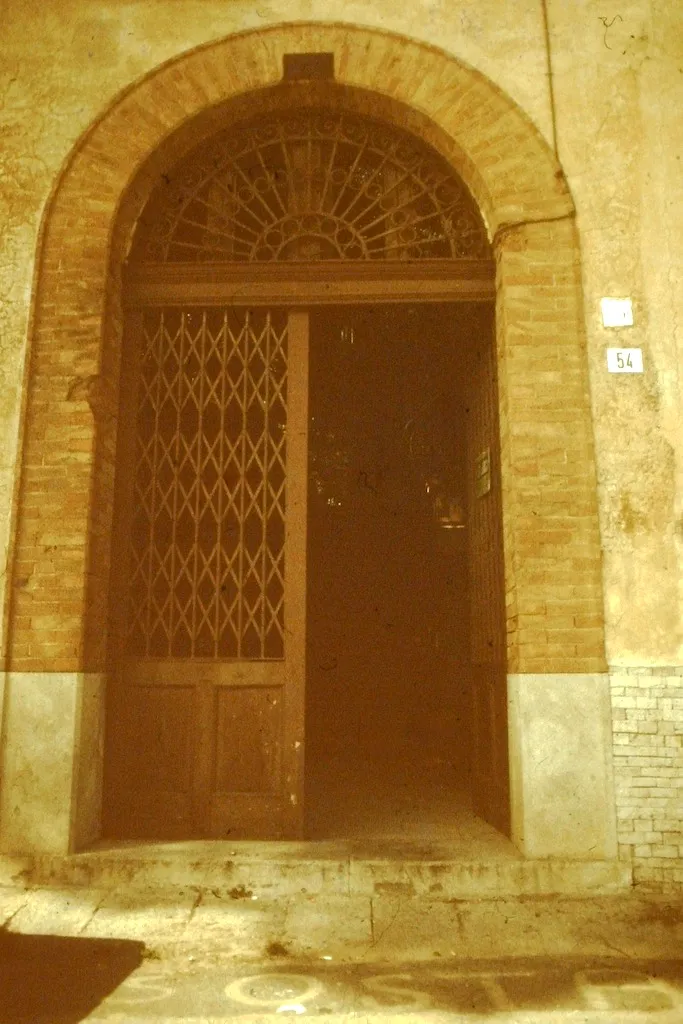
Walking for the firsttime in through the dim doorway that led from the beach into the villa, I wondered what I would find there.
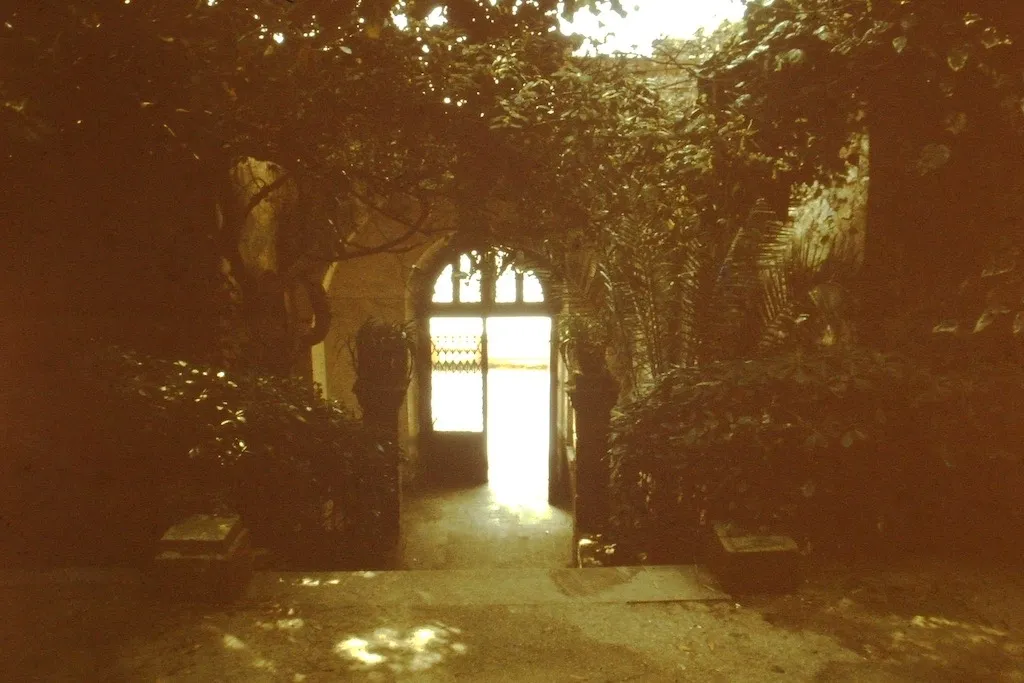
As I climbed the steps that led from the beach into the villas gardens, I seemed to be entering a parallel dimension of shadow and light. I had the feeling that I was entering a place full of wonder and mystery, and, in fact – in a manner that I didn’t expect it turned out that way.
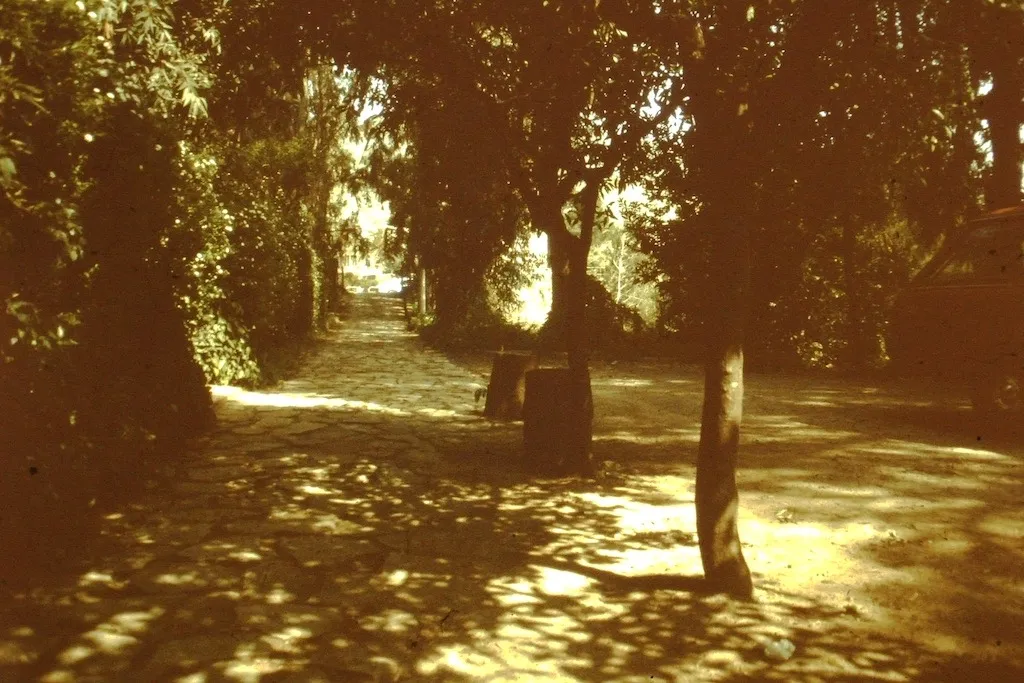
I wandered along the pathways of the internal courtyard garden of the villa, looking for the two apartments that I knew were being rented by Rinpoche’s students. I knew that Dr Kennard Lipman, who had studied for a PhD in Tibetan Studies in Canada under the renowned Tibetologist Dr Herbert Gunther, was living in one apartment with his wife Huisun. Kennard was also working on a book project with Chögyal Namkhai Norbu, translating a text by Manjushrimitra that was later published with the title ‘Primordial Experience’.
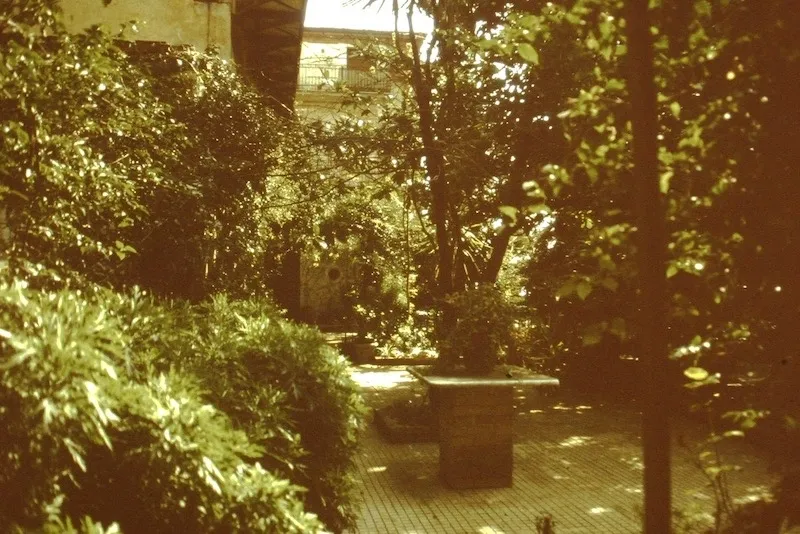
I knew that a young Norwegian student of Rinpoche’s, Wilvin Pedersen, was living in another apartment in the villa with her young school-age son Marius, and I wanted to see if I could also find an apartment to there, but it turned out that there were no more apartments to rent, and I wondered what I was going to do.
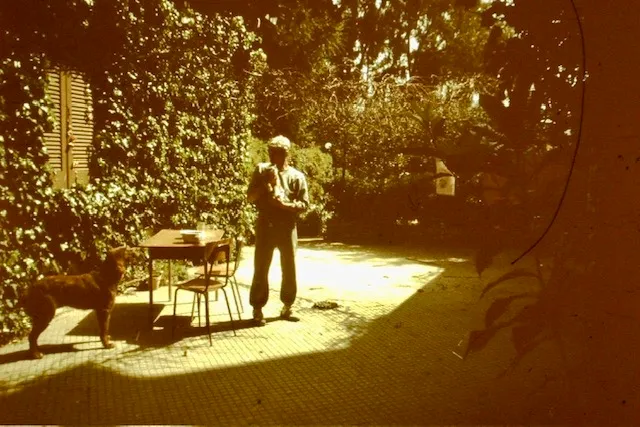
Then, in the villa’s garden, I met a man who said that his name was Sandy, or, if I preferred, Sandro, who told me that he had an apartment in the villa where he lived with his dog, J.R., and he said that he would rent me a room in his apartment, and, not having found any other options, I immediately took him up on his offer.
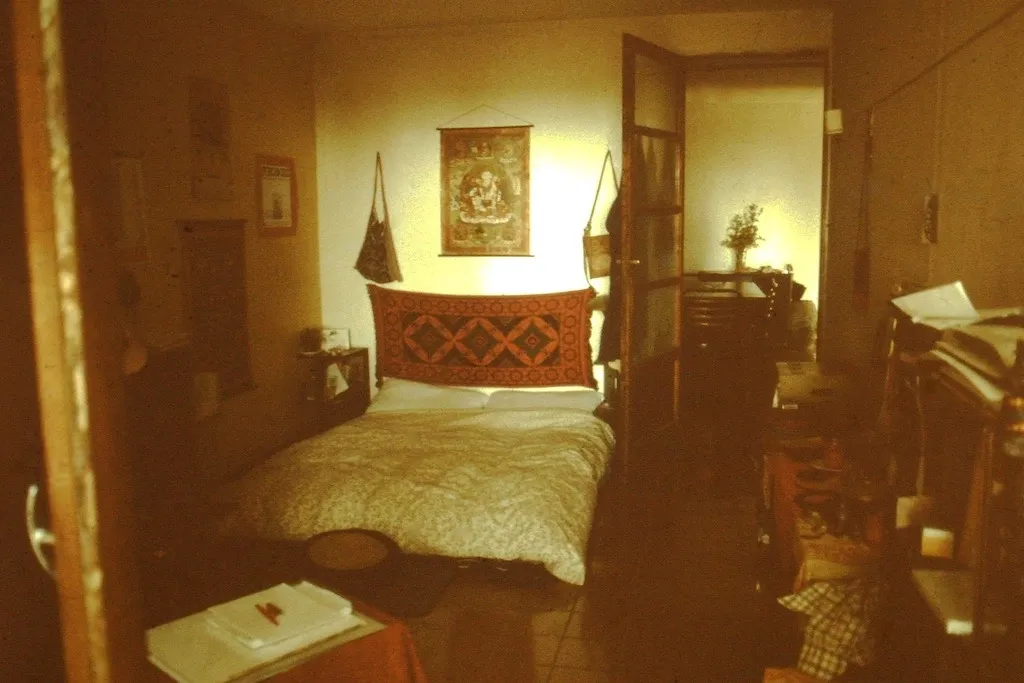
I moved in, and made the room as comfortable as I could, but I soon found that there were problems. Sandy, or Sandro, was an American citizen of Italian descent, and I discovered that he had been a US Marine, was a veteran of the Vietnam war, and was still associated with the nearby U.S. naval base at Gaeta, just around the bay from Formia. I gradually learned from Sandy that he had suffered from PTSD after his service in Vietnam and it soon became obvious that he was a chronic alcoholic. Sandy would go out drinking and come home at all hours, shouting at his dog, J.R., as he entered the apartment such things as ‘J.R. Are you a man or a mouse..??!!’. I would wake up in the middle of the night to the noise of Sandy’s return wondering what on Earth was going on.
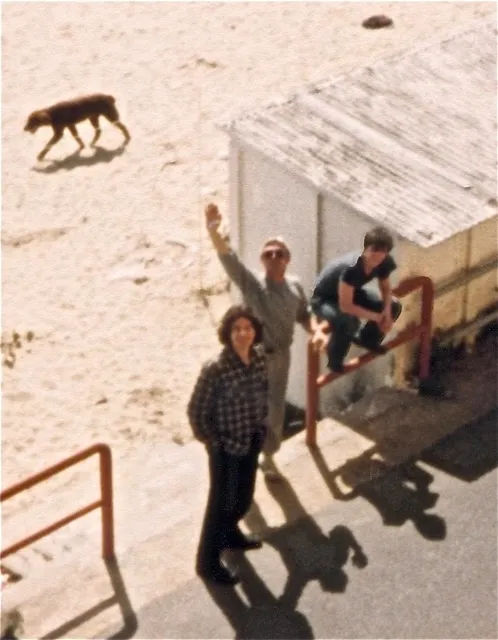
Sandy would drive around in his sports car with the top down, leaving J.R. in the apartment all day, and when I came back to the apartment to sleep after working with Rinpoche at his family home nearby, I
would often find that poor J.R. had done his business in the hallway. When Sandy came home later, I would again hear him shouting ‘J.R. Are you a man or a mouse..??!!’, as he discovered he had once again stepped in the poop. In the photo above, you can see another of Rinpoche’s long-time students, Michel Bricaire, who was visiting the villa, hanging out with Sandy beside him waving up at me from the beach below where I am standing the villa’s courtyard garden to take the photo, while J.R. prowls the sands behind them.
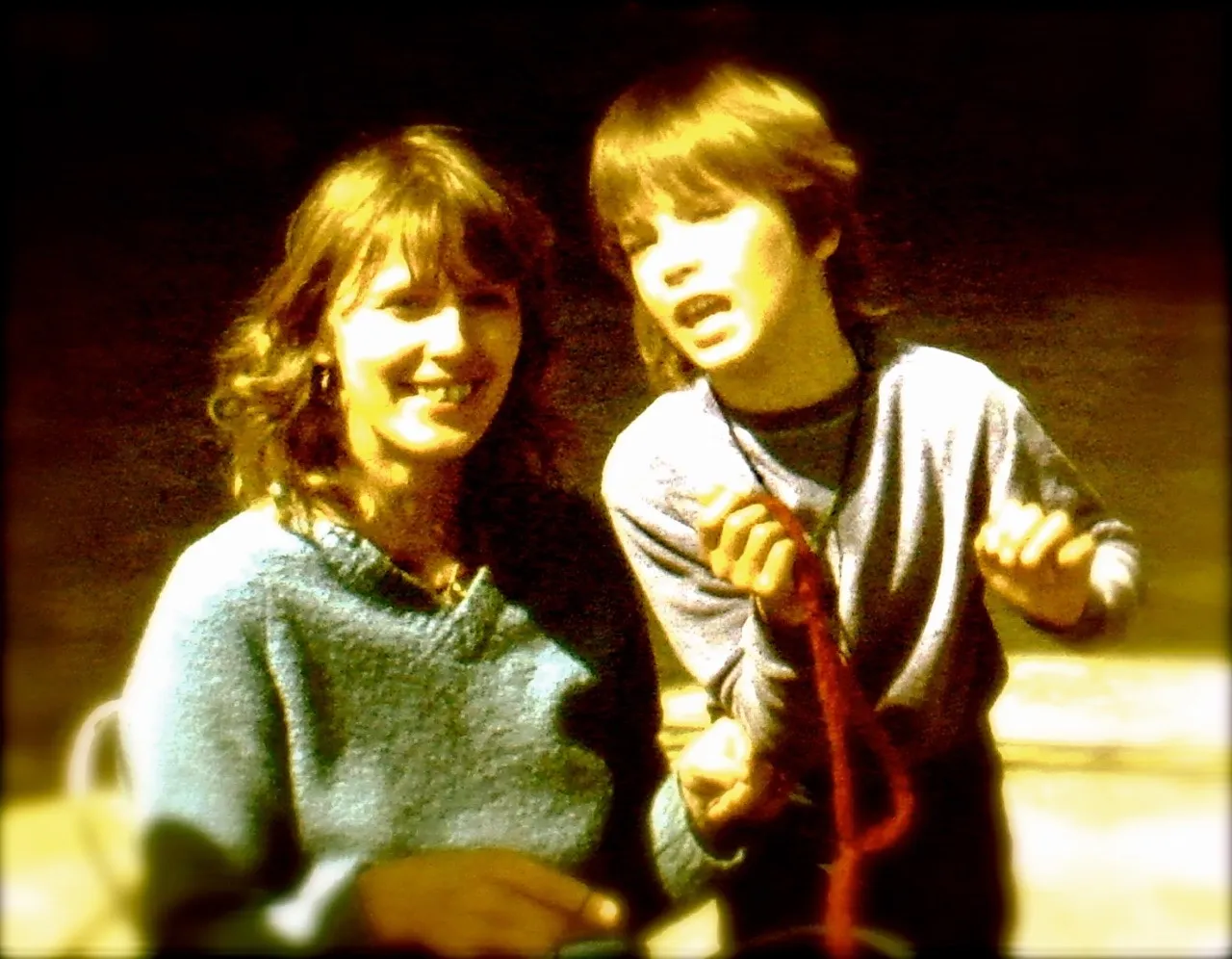
Wilvin’s son, Marius, attended a local school in Formia, and, one day, we opened the door of Wilvin’s apartment to find a posse of outraged black-dressed nuns standing outside along with a very wet Marius. Apparently, while walking by himself to his nearby school that day, Marius had decided that the would take the beach route, and, as the excited nuns told us, he had decided to plunge into the sea fully-dressed with the backpack containing all his school books.
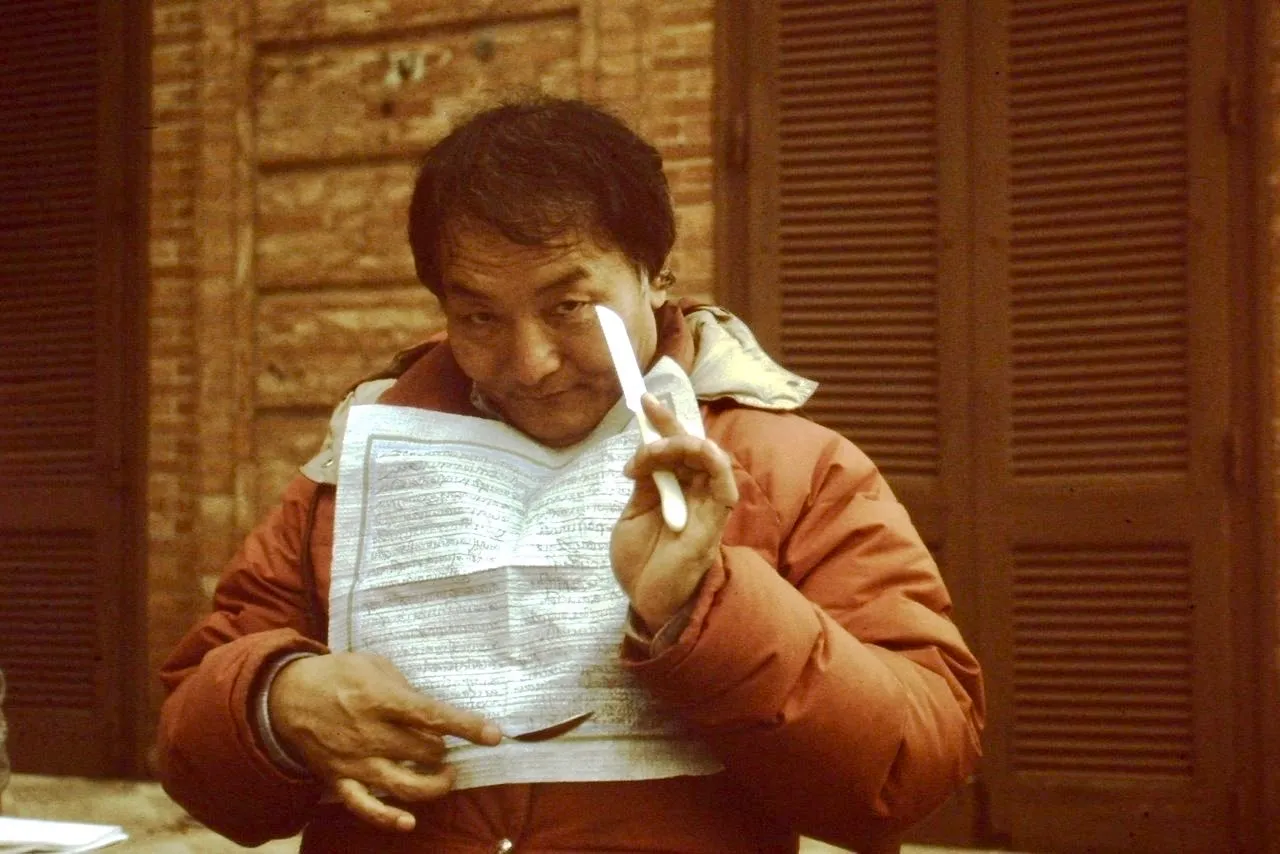
When Rinpoche came to work on the book at the villa he would usually wear the rust-colored down jacket that he wore even in summer to keep him warm as he said that, according to Tibetan medicine, he lacked heat in his body. He liked to write and, in those days before everyone had computers, would sit at the table in the villa courtyard with his pens and write on any paper that was to hand.
One morning, when he came to work at the villa at breakfast time, he wrote a poem on the napkin that we gave him, and then posed for a photograph, mysteriously making mudras with his cutlery. When Sandy woke up late that morning, he came out of his apartment and found Rinpoche sitting there on the terrace. He immediately disappeared back into his kitchen for a few minutes and then came back out onto the terrace carrying two large glasses brim-full of whiskey. He put one of the glasses down in front of Rinpoche, and then, saying ‘Salute!!’, or ‘Cheers!!’ in English, began to drink from the other glass. Rinpoche had met Sandy before, but he had never spoken to him, and, without saying anything, he stood up, took off his down jacket and his shirt, and, picking up the glass of whiskey, poured it onto his hands and began to use the amber fluid to massage the upper part of his body. When he had emptied the glass in this way, he put his shirt and jacket back on, sat down and resumed writing, as he had been doing before, still without saying a word to Sandy.
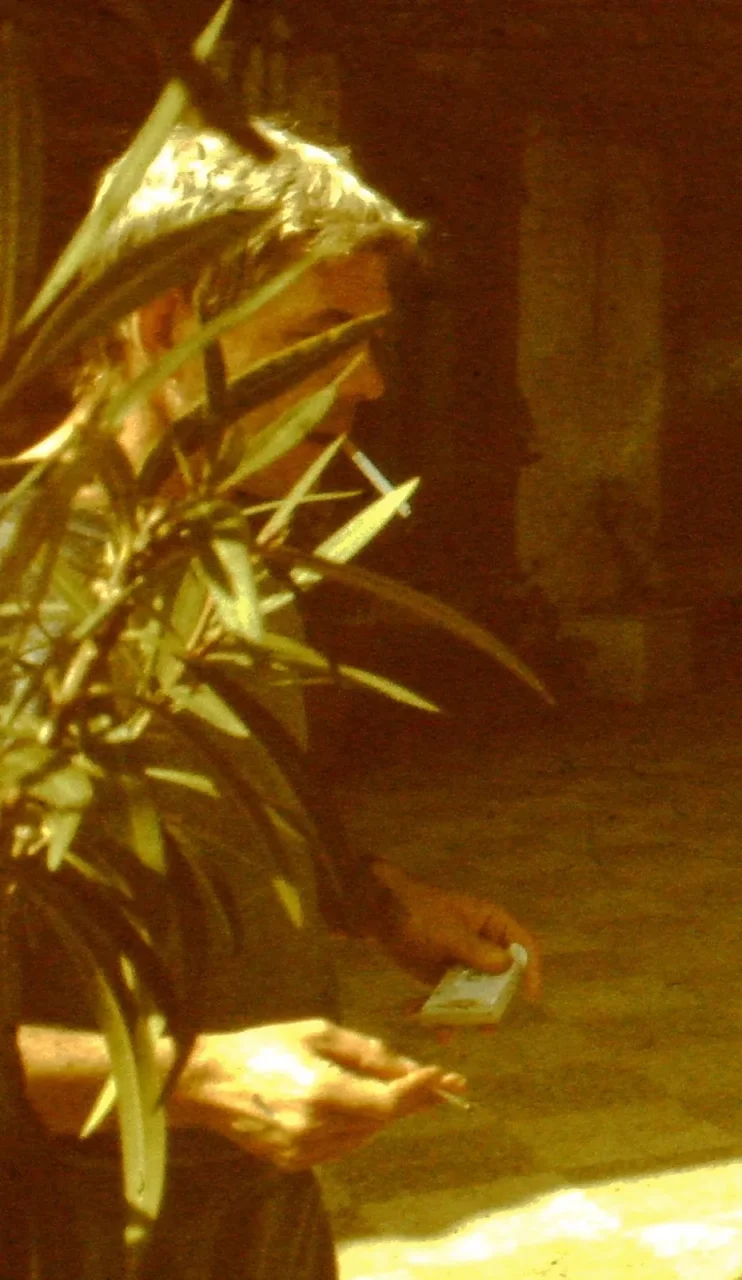
Surprised by what he had seen Rinpoche do, Sandy went off and sneaked a cigarette behind the plants the other side of the courtyard, trying to puzzle out what had just happened. There was no doubt that this surprising interaction with Rinpoche made Sandro think about the way he was living, and he began to want to change his self-destructive behaviour.
Just as Rinpoche did, I liked to write, and I would also sit in the courtyard of the villa with my pens and paper working on the book that became ‘The Crystal And The Way Of Light’.
Learning more about the teachings as I worked with Rinpoche, and following his example of regarding daily life as a dream, I came to see whatever happened at the villa as being a magical display of apparent phenomena, and everything – even the obstacles I faced in my living conditions and my work there – became easier to deal with.
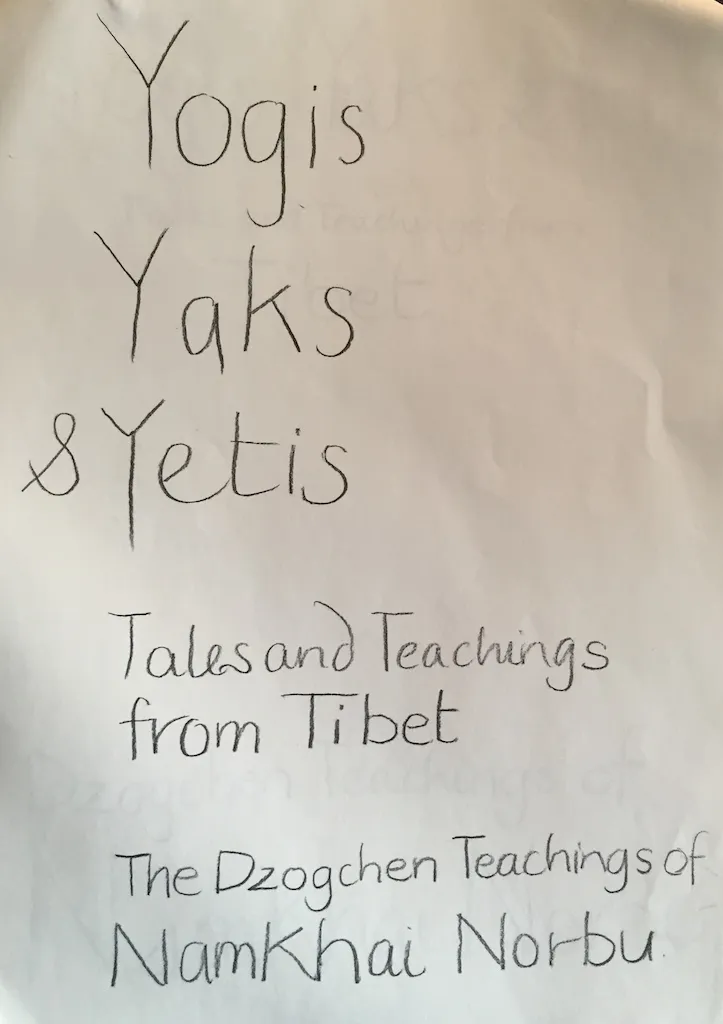
All the time I was living at Formia, whether I was staying at the Namkhai family’s apartment or at the villa by the beach, along with explaining Tibetan Buddhist teachings, Rinpoche would tell stories about his life in Tibet, and while I was living at the villa, I proposed another book project to him, a book of his stories, and he was enthusiastic about the idea, so I made a mock up of a cover page to show him.
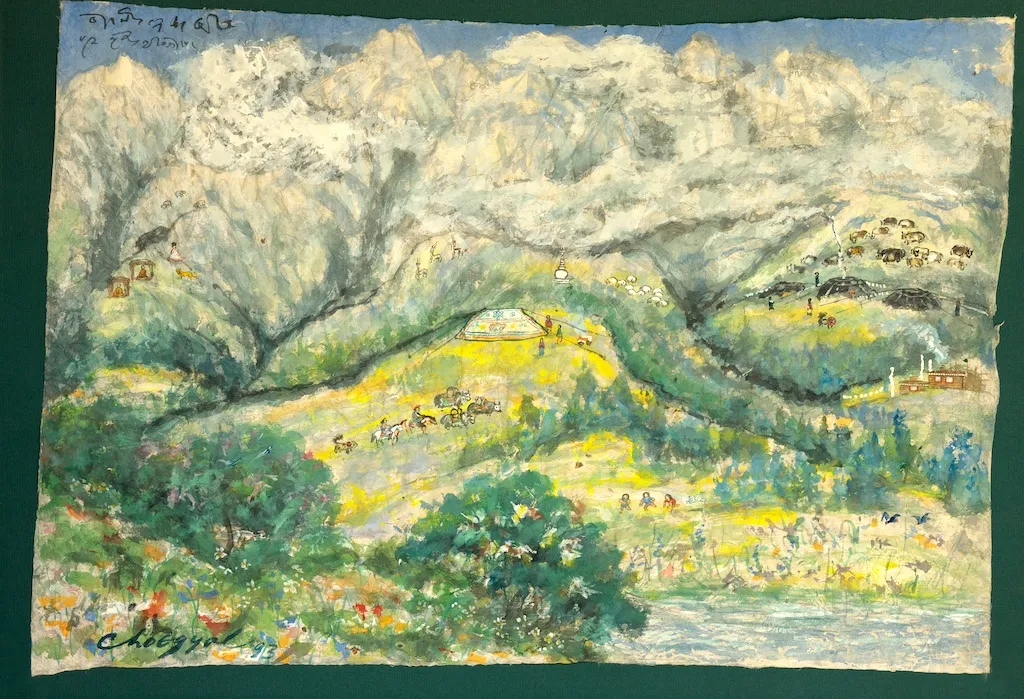
A painting by Tibetan master and artist Dugu Choegyal Rinpoche of the countryside of Tibet in the region where he grew up. (Collection: John Shane)
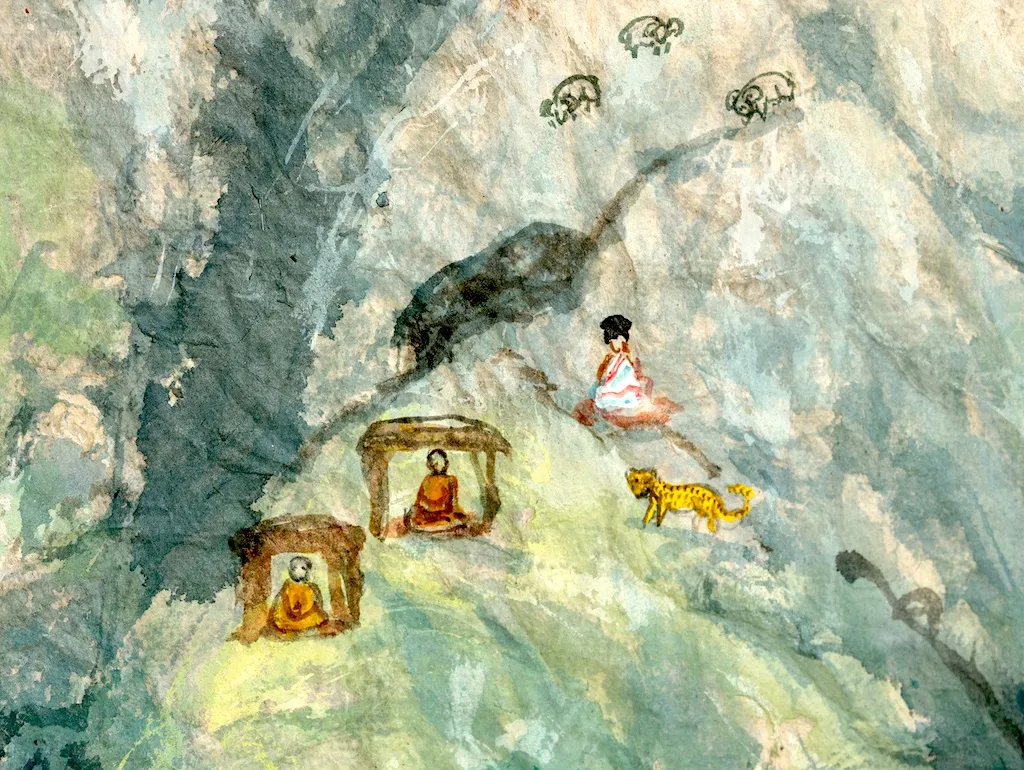
Detail of the painting by Dugu Choegyal Rinpoche showing yogis practicing on the mountainside while a snow-leopard roams the hillside.(Collection: John Shane)
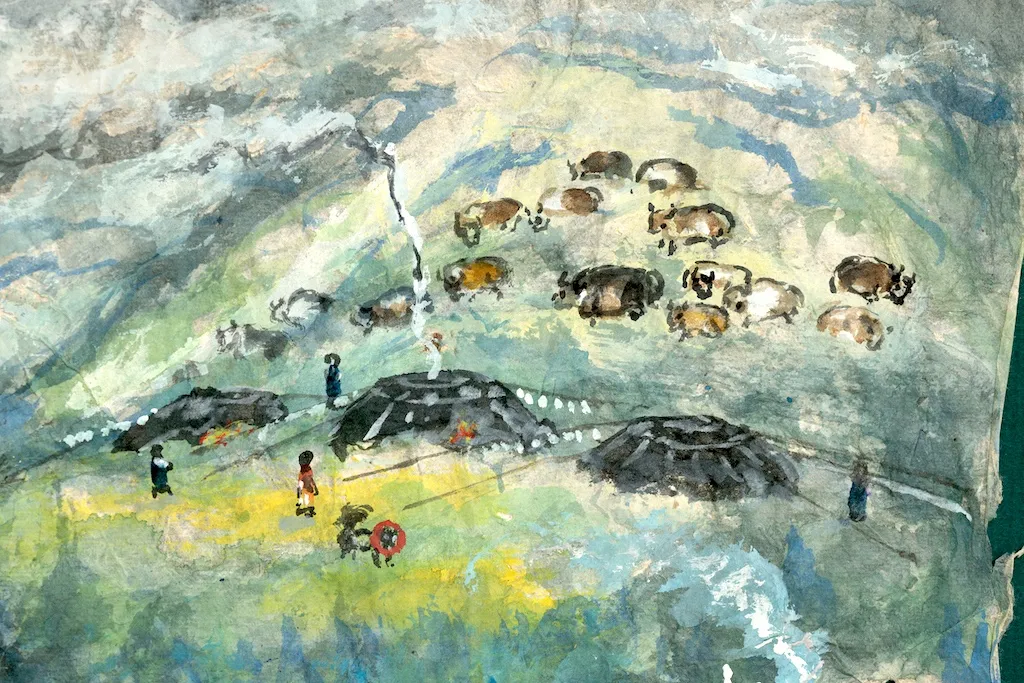
Detail of Dugu Choegyal Rinpoche’s painting showing a nomad encampment in Tibet with their tents and yaks. Chogyal Namkhai Norbu was also born and raised in an area of Tibet famous for its nomads and many of the stories he told us while I was living at his family apartment or at at the villa by the beach were about events that took place during his time living among nomads.(Collection: John Shane)
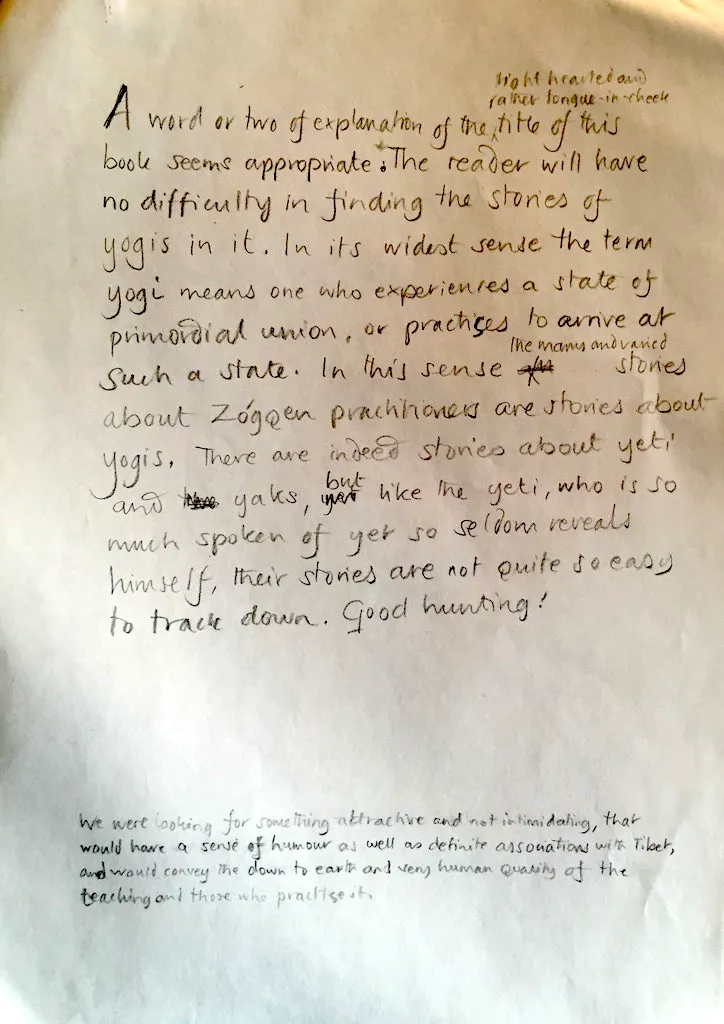
That particular book project has never yet come to fruition, but, when ‘The Crystal And The Way Of Light’ was finally published in 1986, the fact that it included many of the stories that Rinpoche told at the villa of ‘Yogis, Yaks, and Yetis’ and his life in Tibet helped to make it a great success, and it has now been translated into over 30 languages.
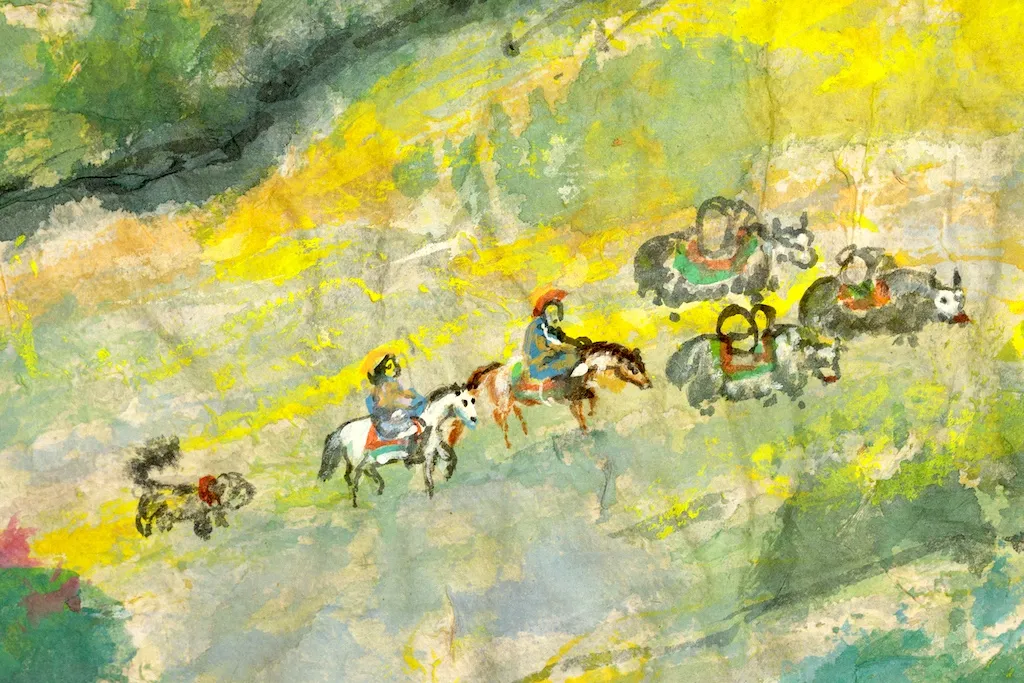
Detail of Dugu Choegyal Rinpoche’s painting showing Tibetan nomads traveling on horseback, accompanying their yaks, with their dog following behind them. (Collection: John Shane)
Wishing you – wherever you may be – many Tashi Deleks and good luck on your journey…!!
[Photos of Dugu Choegyal Rinpoche’s painting by Paolo Fassoli. All photos copyright John Shane. ]