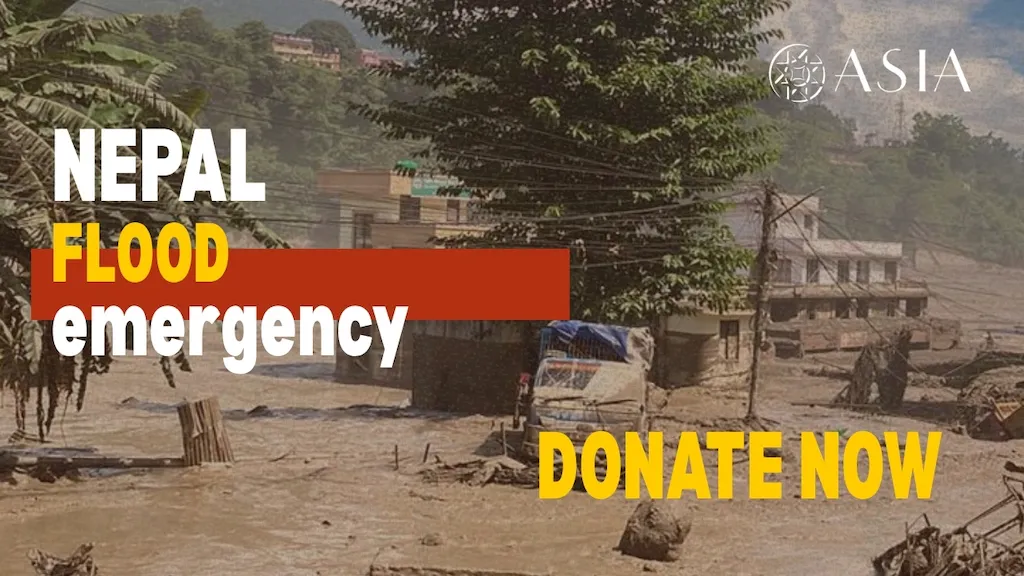
An apocalypse of water, mud and debris has swept across Nepal, on the border with Tibet.
On the morning of 26 August, the collapse of a glacier on the Tibetan side triggered a violent flood that tore through villages and infrastructure with a river of mud and debris in the Nepalese district of Rasuwa, on the border with Tibet, and in the areas downstream.
The dead number in the hundreds; the missing and injured in the thousands. An emergency growing by the hour. As you may know, ASIA has been working in the Rasuwa district since the 2015 earthquake, when it supported more than 11,800 people affected by the disaster. Our projects and the schools we built were not damaged, but all around them there is devastation.
In this moment of grief, our thoughts are with the people searching for their loved ones in the rubble, with those who have lost their homes, and with the whole population living through these terrible hours.
Beyond restoring access to the most isolated villages, the immediate priorities are emergency shelter, clean drinking water, food and personal hygiene kits.
The displaced communities have lost everything.
We must act now
What is a flash flood?
The sudden surge that swept acros Nepal and Tibet
A flash flood is a sudden surge — a river of water, mud and debris that arrives with
extraordinary force, even when there has been no rainfall. A wall of water, mud and boulders that races down a valley in minutes and leaves no time to move. That is what happened over these past days between Nepal and Tibet, and it is not an isolated case.
On 8 July 2025 the same valley was struck by an almost identical flood. Nine people died, around twenty went missing, the Friendship Bridge between Nepal and China was destroyed, and even then Sentinel imagery confirmed the burst of a supraglacial lake in Tibetan territory. The bridge swept away was the one rebuilt after 2025. The dry port at Timure, 60% damaged last year, had still not returned to operation.
The Rasuwa region has been hit twice in thirteen months by the same kind of event. Attributing any single event to climate change requires scientific assessment, but there is no reason to wait for those conclusions before investing in preparedness and early warning in regions this vulnerable and this exposed to ever more frequent extreme weather events.
In this moment of grief we are already at work in the field, alongside communities we know well — communities that have already taught us how to get through the worst of times. Extreme climate events strike hardest at those furthest from the spotlight, but we have learned over the years that there is something we can do.
Thanks to your donations we can help bring immediate support to the communities hit by the flood.