A “Dzamling Gar” Talk by Adriano Clemente
The text presented here is drawn from a talk by Adriano Clemente, the principal translator of the Dzogchen Community, who has devoted many years to preserving and elucidating the teachings transmitted by Chögyal Namkhai Norbu.
In this lecture Adriano introduces key aspects of the life of Rigdzin Changchub Dorje, the root master of Rinpoche, while also sharing the challenges and significance of translating this extraordinary biography. The work is currently in progress and is supported by Ka-Ter, the Community’s translation organization.
For more information about the ongoing translation of Rinpoche’s writings, or to support these publications, please visit ka-ter.org.
Changchub Dorje mostly became famous in the West because he was the root master of Chögyal Namkhai Norbu; however, for many years we did not know much about his life except for the occasional stories that Rinpoche had heard during his life.
Then some twenty years ago, Changchub Dorje’s grandson, Karwang Dorje, wrote a biography of his grandfather. Our translator, Elio Guarisco, began to work on the translation but unfortunately could not finish it because he passed away due to COVID in 2020, so then I took on the responsibility to complete it. I’m still working on it as it is very complicated and contains many local expressions in dialect. Some parts are not easy even for Tibetans to understand. In any case, I think that in one year it will be finished.
This translation work is under the auspices of the Ka-Ter organization, the Dzogchen Community organization for translations, so I would like to thank Oliver Leick and Jamyang Oliphant for doing such a great job gathering the funds for Ka-Ter, which allows me to continue my work. There are still many works of Chögyal Namkhai Norbu that we need to complete.
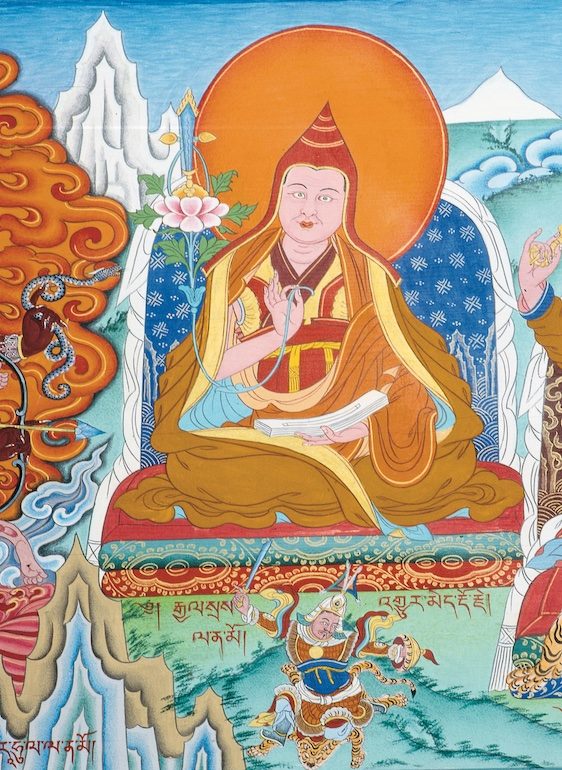
Rigdzin Changchub Dorje was one of the great tertöns of the 19th and 20th century in Tibet. He was originally from the Nyarong area and for that reason he was also known as Nyala Changchub Dorje meaning “Lama from Nyarong.” His main biography was written by his grandson Karwang Dorje; however, Chögyal Namkhai Norbu also wrote a biography. I think his original idea was to write a complete biography but then he stopped around the 20th year of Changchub Dorje’s life. Sometimes the stories in Rinpoche’s biography are the same as those by Karwang Dorje; at times they are a little different. Anyway I will explain according to Chögyal Namkhai Norbu’s text.
There is also another biography of Rigdzin Changchub Dorje in his collection of termas. During his lifetime, at Khamdogar, his place of residence, they prepared wood blocks for printing many volumes of his termas. When Chögyal Namkhai Norbu returned to east Tibet in 1988 for the first time, he brought many of these texts back to Italy, which was the first time they had arrived in the West. Then, about 10 years ago, one of the relatives of Changchub Dorje, Rinchen Samdrup, printed 56 or 57 volumes of his collection of terma teachings in Lhasa. Together with these volumes there is also a biography written by Rinchen Samdrup which is more concise.
Changchub Dorje was very important for Chögyal Namkhai Norbu because even though Chögyal Namkhai Norbu was a Drugpa, had a connection with the Dzogchen teaching from an early age, and had received many teachings and empowerments—for instance, his uncle Togden Ugyen Tendzin, who achieved the rainbow body, was one of the main students of Adzom Drugpa, and Rinpoche received many Dzogchen and Vajrayana teachings from him and other important masters—it was only when he met Changchub Dorje that his knowledge reawakened. This means that the connection with the lama from former lives is the most important point for discovering and developing one’s knowledge. It is what we call “root master” and is not something that one chooses, because even if it is a great master, if one does not have that connection, it does not work.
It all began when Chögyal Namkhai Norbu had a dream in which he met a yogin dressed like a normal Khampa, and in that dream Rinpoche received a kind of blessing. Later he tried to discover who this master was but nobody could identify him, until almost one year later when a relative of Chago Tobden, an important political figure in Kham, Tibet, in the first half of the 20th century, visited Chögyal Namkhai Norbu’s family and talked about a very special medical doctor. That relative had traveled without stopping for two days to take the urine [of a sick person] to this doctor to check, but as soon as he arrived, the doctor had said that it was no longer necessary to check it as that person had already passed away and instead gave some tadrol and relics to place on the body. When he described the surroundings, Chögyal Namkhai Norbu understood that it was the place and the lama he had dreamed about.
Finally, with his father he went to Konjo in Kham, on the west side of the Yangtze River—now in the Tibetan Autonomous Region—and when he arrived there he recognized the same place and the same master he had dreamt about and he understood that this was an important teacher for him.
Until that moment Chögyal Namkhai Norbu had spent five years of his life in the Sakyapa Derge Gönchen monastery, then in the shedra or school of philosophy for many years, studying, receiving teachings and empowerments, and in the meantime he had received many important initiations so that each time he went to a teacher, he would expect the teacher to give initiations and empowerments.
When he arrived at Khamdogar, Changchub Dorje was living as a yogi with his family, spending each day sitting outside his house to receive people. Of course, that does not mean he had spent all of his life that way, because in his biography it says that he gave empowerment and transmission many times. However, when Chögyal Namkhai Norbu met him, he was already around 92. Rinpoche had been expecting Changchub Dorje to give teaching and finally he asked him to give an empowerment, and Changchub Dorje agreed in order to satisfy his wishes. He gave an empowerment of the Shitro that lasted the whole day, and at the end of this empowerment—as was his habit with other teachers—Chögyal Namkhai Norbu thanked him and prepared to leave, when Changchub Dorje said, “Stop, we haven’t done anything. Now there is something we have to do.” And then Chögyal Namkhai Norbu received the rigpai tsalwang, which went directly to the introduction to knowledge of the real state of the individual, of Dzogchen. Then Chögyal Namkhai Norbu saw all the knowledge that he had constructed until that point collapse completely and the real state of Dzogchen arose spontaneously. This completely changed his view of the teaching and how to help students.
The connection between Chögyal Namkhai Norbu and Changchub Dorje is also the reason why we now have the Dzogchen Community in this way, and how Rinpoche’s view was influenced by Changchub Dorje’s understanding of the teaching.
Now I’ll read some explanations from Rinpoche’s text. It says:
With my three gates of Body, Voice, and Mind, I bow to the incomparably kind root master Vajradhara – meaning the state of Dharmakaya, source of all teachings – and Rigdzin Changchub Dorje – rigdzin is a realized master through the path of Vajrayana, and particularly Dzogchen. The biography of Changchub Dorje is like a vast ocean, but in the dimension of my mind, only a few drops could enter. Now I will explain these few drops of his vast life and knowledge.
Most of his life story was written down by his grandson, Karwang Dorje, and that is very important, and also what I heard directly from my Teacher I will write down. First of all, in his terma teachings it is repeatedly explained that he was a nirmanakaya manifestation of King Mutig Tsenpo who had chosen to take rebirth as Changchub Dorje for helping beings. Mutig Tsenpo was one of four sons of King Trisong Deutsen. In the Nyingmapa tradition, King Trisong Deutsen was the eighth century king who first invited Shantarakshita and then Padmasambhava to establish Buddhism in Tibet. Mutig Tsenpo was the last of his sons to reign and also father to Ralpachen, the last of the Buddhist kings before Langdarma. There are many quotations in the terma that explain how he was born as a reincarnation of Mutig Tsenpo.
He was born in the region of Nyarong in Kham, an area where several great teachers were born in the 19th and 20th centuries, such as Nyagla Pema Düdul, who achieved the rainbow body, and the extraordinary tertön Sogyal Lerab Lingpa. Nyarong is also renowned for its bandits, because with its shallow gorges and high mountains they can easily find ways to stop travelers and rob them. Nyarong is particularly famous for its 19th century chieftain, Gonpo Namgyal, who unified the area and conquered vast territory in Kham.
Changchub Dorje was born in a small village in the Nyarong area, however, at the time Rinpoche wrote this biography it was not clear which village it was. In Karwang Dorje’s biography, he mentions “Beru Gonpa,” a Gelugpa monastery in the Ganze area, but finally, with help from some Tibetologists, we understood that it was a mistake in the spelling of “Palri.”
He was born in Palri village near Palri Nyingma monastery in Upper Nyarong on the 10th day of the 7th Tibetan month, August 24, 1863. His father was a ngagpa, a Tantric style of practitioner, and a seventh generation descendant of an important tertön called Chögyal Lingpa, who had lived in that area. His mother was the daughter of a nun from the Derge area. When the nun broke her vows, became pregnant, and could no longer stay in Derge, she traveled on foot to the Nyarong area where she gave birth to a girl who became Changchub Dorje’s mother. His mother grew up in that area, living with her mother in poor, difficult conditions. When she met this yogin and became pregnant she was already a practitioner very devoted to a Drugpa siddha called Trom Drupthob Gyalwa Changchub, who told her that she would give birth to an important being.
From the time that Changchub Dorje was born, there was a strong presence of the guardian Ekajati, who was always near this small baby. At times she would appear as a female, in the nighttime as a peacock feather or sometimes like a light from the fire. Then after some months, Changchub Dorje’s mother took him to the siddha Gyalwa Changchub, for a purification ritual and to receive his name. Here he received the name Kalsang Tenzin and became known as “Akal,” because in Kham they take the first syllable of the name and put an “a” before it.
Ever since he was small, he would remember episodes from his previous lives. As they were very poor, with very little to eat, and living a miserable life, Changchub Dorje sometimes explained that in previous lives he had been a king many times and had tortured people, and it was for that reason he now had to suffer this miserable condition of poverty. At the time his mother was working mostly as a servant in wealthy people’s homes, so Changchub Dorje would remain alone until his mother returned with some food.
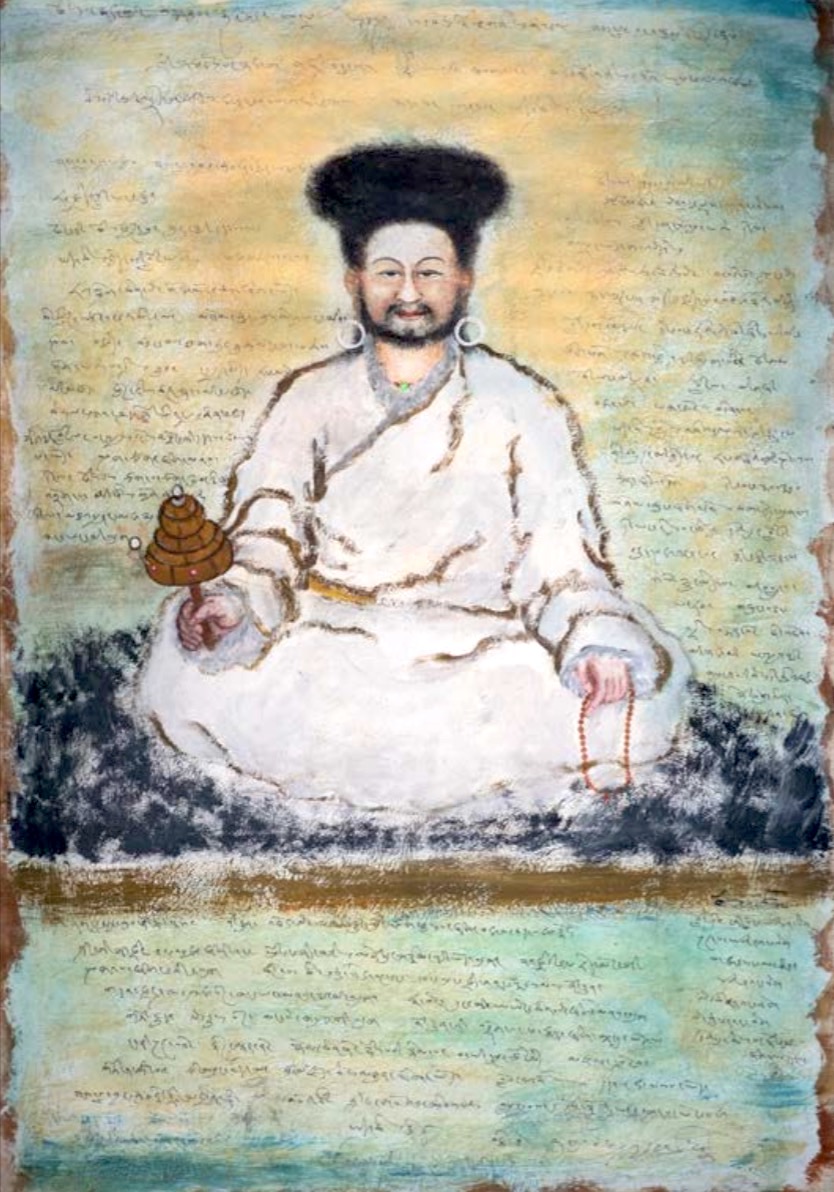
When he was around six years of age, he started to work as a herder for sheep and cows for people of the area, so at that time their condition improved a little, and at the end of each day they would have some tsampa and butter to eat. But he also encountered a few problems since at that time he had a strong link to the guardian Rahula who is connected to the Za class of beings, and at times causes a reaction related to the nerves similar to epilepsy or paralysis. From time to time there would be something similar to sparks emanating from his body at night, or somebody in the same room might get an electric shock or muscle spasms if they touched him, and for this reason people considered him to be a bad spirit.
He very much wanted to learn how to read and write, but local people would discourage him, saying that it would be better to learn how to herd cows well in order to make a good living. Sometimes he would visit places where there were tsa tsa or votive images, where people would leave some pages written in Tibetan, and he would take them and try to read them. Some kind people would help him to read while others would treat him badly saying, “You are a beggar’s son, what do you need with these sacred texts?” However, gradually he began to be able to read.
When he was about eight years old, while he was herding cows, one day he met the rishi Transong Rigpai Yeshe, an old man with white hair who expounded the teaching of medicine in the four tantras which are the basis of Tibetan medicine. He spent five days continuously with Changchub Dorje transmitting all his knowledge of medicine, of the four tantras and how to recognize herbs and minerals. But this was not only Changchub Dorje’s vision because his fellow herders also saw this white haired man and asked if he would be coming each day. After these five days Changchub Dorje had complete knowledge of Tibetan medicine.
Then he prepared 13 small bags containing herbal medicines or minerals according to the instructions he had received, and started to give these medicines to the people of the village. Not only that, but he also knew how to check the pulse and urine and do divination if there was a provocation of energy or some astrological situation. He had supreme clarity for discovering the cause of illness and how to remedy it. However, his mother was worried and one day she said to Changchub Dorje, “You are giving people these medicines, but they have no foundation, no authenticity. It’s dangerous, you might kill somebody,” and she tried to stop him. But he said to her, “They are not medicine that I invented. I received empowerment from this great rishi so all these medicines have that power.” From that time on he also had visions of Orgyen Menla, a form of Padmasambava’s manifestation as the Medicine Buddha, as well as other medical doctors from ancient times like Yuthogpa and many others and from them he received explanations of the four tantras of medicine and so on.
When he was nine years old he started to receive symbols from the dakinis for discovering terma, although mostly that is related to his meeting with Nyagla Pema Düdul. It is a little difficult to understand when he actually met this master because Nyagla Pema Düdul died in 1872 when Changchub Dorje was around nine years old so probably he met him when he was eight or nine. In any case, Changchub Dorje’s mother took him to Nyagla Pema Düdul, who was at Samten Gonpa—a Nyimapa gonpa in Nyarong—to consecrate that temple.
When Changchub Dorje arrived with his mother, the monks tried to block mother and son from entering the gönpa because they were like beggars. Nyagla Pema Düdul was about to give the empowerment of the Khachab Rangdrol, a very important terma of his. When they had been chased out, Changchub Dorje started to shout and knock on the door of the temple. When Nyagla Pema Düdul heard, he told his attendants to let the child and mother come inside to receive the teachings. This was the first time that Changchub Dorje had received a Dzogchen empowerment and Nyagla Pema Düdul made a prediction that he would receive the secret treasury of the Dakinis termas. He also gave the rigpai tsalwang, direct introduction. Here Chögyal Namkhai Norbu says that he heard this last piece of information from the Lama himself the day they received the shitro empowerment and at the end he stated that it was his first connection with knowledge of the Dzogchen teaching.
Nyagla Pema Düdul also predicted that Changchub Dorje’s teacher would be Nyala Rangrig, who was an important master and tertön and one of the main students of Nyagla Pema Düdul. Then, according to the prediction of Nyagla Pema Düdul, he received a drombu or symbolic container from the dakinis and began to continuously receive terma symbols, which he decoded and wrote down as texts. This was still happening when Rinpoche was there in 1955 when he wrote down a section of Changchug Dorje’s gongter Kadu Chokyi Gyatso.
Continuing with the account of Changchub Dorje’s early years, at that time he also completed 100 million recitations of the OM MANI PADME HUM mantra, had visions of Avalokiteshvara, received teachings, and so on.
He was still working as a herder when one day he saw that a leopard had just killed a cow. He was among the rocks, with his goats, when all of a sudden, he saw the goats running everywhere. He went to see what was happening on the rocks below and saw a leopard that had just killed a cow. Then he became very angry at the leopard and seeing a large stone nearby, managed to put his foot under it and rolled it down so that it fell on the leopard breaking some of his bones and the leopard could no longer walk. Then he felt strong compassion for this animal and started to collect food which he would bring for it every day, and they became close friends. Since the animal was crippled, people called him “Akal,” the crippled leopard of Akala.
When he was around 11 years old, he met Rangrig Dorje who he considered to be his root master, his Tsawai Lama. Nyagla Pema Düdul had three or four important students including Sonam Taye, Tertön Sogyal Lerab Lingpa and Yeshe Dorje who wrote a biography of Nyagla Pema Düdul. But the most important is considered to be Rangrig Dorje because when Nyagla Pema Düdul attained the rainbow body he appeared to Rangrig Dorje and told him that he was destined to be the owner of his teaching and terma. Rangrig Dorje also achieved a kind of rainbow body when his body shrunk to about 10 centimeters. It is still contained in a kudung reliquary, which can be seen in the Lumorab Gönpa in Nyarong.
Rangrig Dorje is also important because when the family lineage of Minling Trichen at Mindrolling monastery in central Tibet did not have male heirs to continue that line, they thought to ask Nyala Rangrig Dorje, because he was considered to be an emanation or reincarnation of Gyurme Dorje, to give one of his sons or grandsons to a female of the Mindrolling lineage so that it could continue, and this actually took place.
Changchub Dorje received the Lama Yangtig initiation, instructions and important teachings from Rangrig Dorje. Also here it says that when first he went to receive empowerment from him, again these attendants did not allow him to enter so he shouted. In any case, Rangrig gave him an important rigpai tsalwang and the name, Changchub Dorje.
During the time that he was still working as a herder he had some visions including one of Vimalamitra and some signs manifested at the place where he was working. One night the milk spontaneously became butter, which they used for the butter lamps that lasted for days and days. He also had a vision of Guru Padmasambhava as well as some indications for discovering a Hayagriva terma and so on.
When he was around 12 years of age, he finally stopped working as a herder and became a monk at Palri monastery near the place where he was born. In that period he received from Tertön Sogyal Lerab Lingpa all the teachings of Chögyal Lingpa, the tertön from whom his father was descended, and he started to do intensive practice of Hayagriva from Chögyal Lingpa’s terma.
While he was at the monastery he mostly remained in his room doing practice. However, the other monks were not happy about this and told him that he should learn how to play ritual instruments. When he showed little interest, they suggested that he learn to be umdzé or chant leader. He knew how to sing; however, he was a little concerned about the tone of his voice. One night with this worry in his mind, he fell asleep. There was a full moon that evening and during the night he saw a white conch shell coming from the moon and being absorbed in his throat. When he woke up he cleared his throat loudly and all the dust in his room started to rise everywhere. Then he understood that he had received the siddhi of Brahma’s voice. The next day, when he started to lead a ritual as umdzé, he sounded HUM and the dust rose up from all around so that everybody was amazed and understood that he was not normal.
Then the monks started to joke and tease him and suggested that he should play the tungchen, the long ritual trumpet, but he replied that it would be better if he didn’t because he might break it. However, they insisted and said that since the trumpet was made of copper it was not easy to break, however, when he sounded one note, it did break, but of course they couldn’t say anything because he had already warned them.
Then at a certain point at Palri gönpa, when they were doing practice of Hayagriva from Chögyal Lingpa’s terma, some people belonging to that monastery started to criticize saying that the termas were not pure, not authentic, and that they should stop doing this practice. Following this everyone at the monastery got a serious skin illness including Changchub Dorje. Then he had a vision of Ekajati asking Kharchen Palgyi Wangchuk, one of 25 students of Guru Padmasambhava and of whom Chögyal Lingpa was his reincarnation, “What should we do with these people? They are behaving badly and are not respecting your terma. We should send some provocations,” to which Palgyi Wangchuk replied, “Yes, but if they resume doing that practice, then they should all be healed and restored to health.” Finally they resumed that practice with Changchub Dorje reciting 100 million mantras and they were all healed.
When he was 13 years of age he had a vision of Guru Padmasambhava and some termas and understood how to decode symbols. He also became famous because he could stop hail. In Tibet the ngagpas or tantric practitioners were very important because they could stop hail storms by means of guardian practice and mantras. Hail would destroy the crops and there would be little food for one year so people relied very much on these tantric practitioners to prevent it. However, when they asked Changchub Dorje to stop the hail, he would simply remain in the state of contemplation to stop it and he became famous for that.
When he was 14 years old, he spent more than a year at Kathok monastery, an important Nyingma monastery. It was founded by Kathok Tampa Deshek, and the Mahayoga, Anuyoga and Atiyoga traditions were maintained there and especially the three series of Dzogchen: Semde, Longde and Upadesa. Later in the 16th century, the monastery also became important due to the presence of two extraordinary tertöns, Düddul Dorje and Longsal Nyingpo, who established that tradition at Kathok. Changchub Dorje lived there as a monk and received all the kama teaching, all three series of inner yogas including all the termas of Düddul Dorje and Longsal Nyingpo.
When he was 15 years of age, for the first time he received symbols for the termas of Kadu Choki Gyatso, an important series of termas meaning “Ocean of Dharma that unifies all teachings,” and although he did not put it into writing he started practicing this series. At one point Rangrig Dorje had to go to central Tibet because of events at Mindrolling, so he said to Nyala Yeshe Dorje, who was also a student of Nyagla Pema Düdul, “I give you this son of mine. Treat him as if he was your own son.” Hence Yeshe Dorje became Changchub Dorje’s second important master after Rangrig Dorje. He received many teachings from him, he practiced and Yeshe Dorje was very satisfied. Changchub Dorje spent a year or so with him near Kalsang Gönpa in Kham.
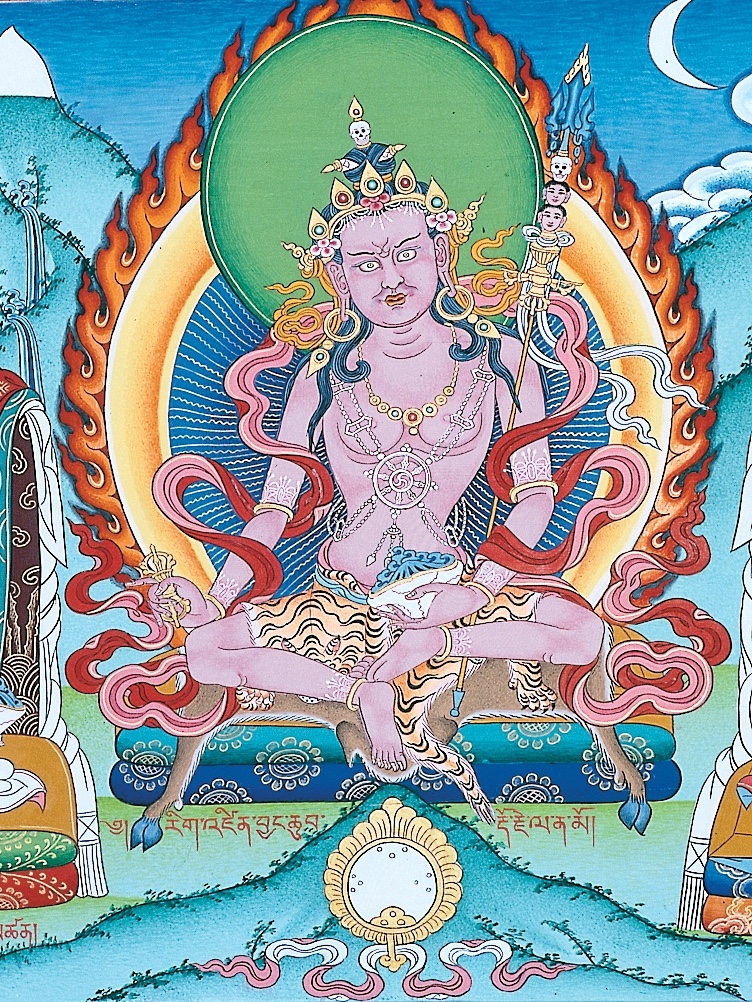
When he was 16 years old, he set out on a pilgrimage that lasted two or three years. First of all he went to China to Wutaishan, which is linked to Manjushri, where he had a vision of five forms of Manjushri. He also received a terma of Manjushri, in both peaceful and a wrathful aspects. Then going south through Tibet he visited many places like Pemakö and Kongpo until he reached Lhasa, where he met Shakya Shri, the famous siddha, and received teaching from him.
When he reached Lhasa, he went to visit the Jokhang. While he was in front of the Jowo Shakyamuni statue—the most important image in the Jokhang—as he stepped back, he saw a kind of hole and he entered the dimension of Ganachakra with King Songtsen Gampo and many dakinis. He received some Ganachakra substances or food and took it back with him. In the meantime, his fellow practitioners who had accompanied him on the pilgrimage asked him where he had been. When he told them the story he also gave them some substances from the Ganachakra so they would not doubt him.
When Changchub Dorje went to visit Trandruk temple, founded by Songtsen Gampo, with his companions, they found the temple door closed and they could not enter. When he heard somebody walking in the temple, he knocked on the door, and a 16-year-old girl opened it and invited him in. Then he had a vision of a jnanadakini in blue with blue light and seven chakras opened, like seven mandalas. That vision was related to his termas for the future.
He also traveled to India and Nepal, did practice and received termas. When he went back to his teacher, Yeshe Dorje asked him where he had been and what he had done all those years. Changchub Dorje told him that he had been to many important places and received some amazing signs and also many important termas. He went on to say that he would like to go to other power places to improve his capacity and asked his teacher what he thought about that. Then Yeshe Dorje said, “Instead of making holes in 100 shoes going on pilgrimage it would be better to make one hole on a sitting place. One year of doing practice is better than 100 years of pilgrimage to all the sacred places. You have just been wasting your time.” In this way, Yeshe Dorje shattered Changchub Dorje’s pride and his idea that he was a good tertön, a good practitioner. At that moment, he understood that he should follow this advice from his teacher.
Accordingly he went on retreat alone for seven years in a place called Baya Tragkar and mostly fed on chulen, herbs, and minerals and practiced the termas he had received. That was when he was in his thirties. Then for 10 years he met other teachers such as Shardza Tashi Gyaltsen, a Bonpo practitioner who achieved the rainbow body. When he was around 55—after having received for some years indications that he should go to the Konjo area—he moved there and established Khamdogar, which still exists today. At that time he started to have a lot of students and became well-known, both as a doctor, and as a tertön and teacher, so that many lamas would go to him to receive teaching.
There are so many stories about his life that you will be able to read about in the biography. So this is the end of my talk. I hope it was useful to know about this incredible being.
December 2, 2025, Dzamling Gar
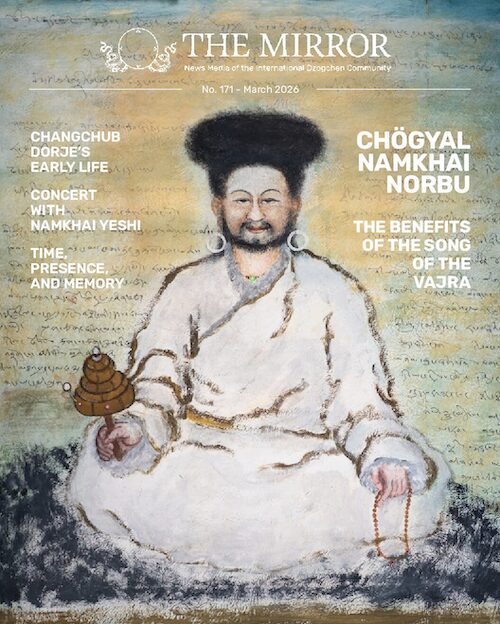
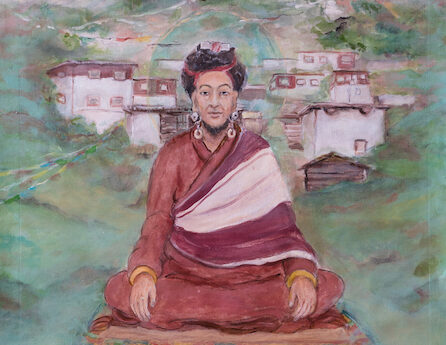
Featured image of Rigdzin Changchub Dorje at the beginning of the article taken from a painting by Norwegian artist Wilvin Pedersen.
You can also read this article in:
 Italian