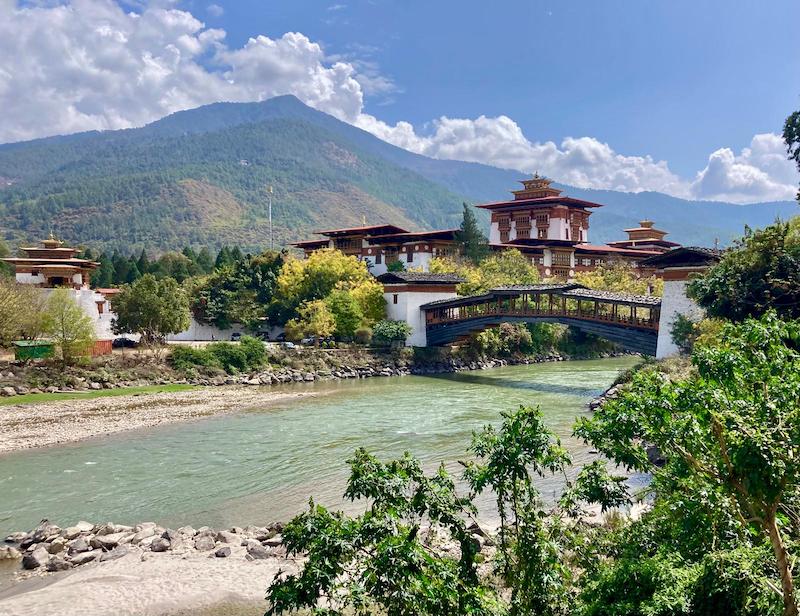
Our recent expedition to Bhutan, from March 7th to 18th, 2026, organized by Shang Shung UK, was far more than just a vacation. It took us deep into the history and spiritual heart of this Himalayan kingdom, offering a profound immersion into a land where heritage and spirituality are woven into every aspect of daily life. The trip was meticulously crafted to ensure that we didn’t just see Bhutan, but truly felt its essence.
The Journey Begins: Paro and the Valley of Saints
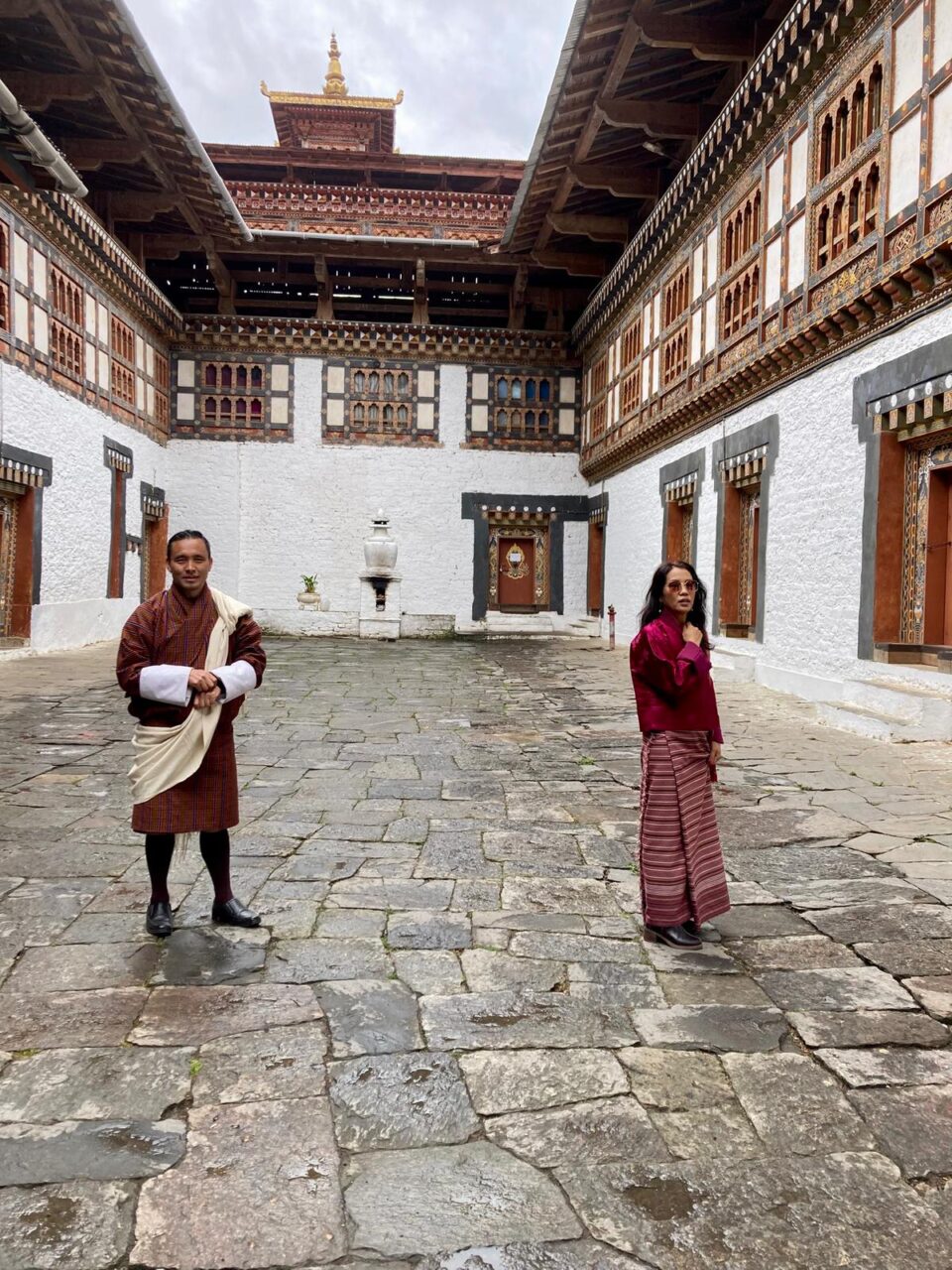
Our adventure started on March 7th in Paro with a visit to Senge Trak, a site deeply linked to the 8th century arrival of Guru Rinpoche, where we set the tone for our journey with the practice of Simhamukha. The following days were a whirlwind of spiritual immersion: from the ancient Kyichu Lhakhang, built in the 7th century by the Tibetan King Songtsen Gampo as one of the 108 “border-taming” temples, to the National Museum overlooking the majestic Paro Dzong, founded in the 15th century and later expanded in 1644 by Shabdrung Ngawang Namgyal (the 17th century unifier of Bhutan).
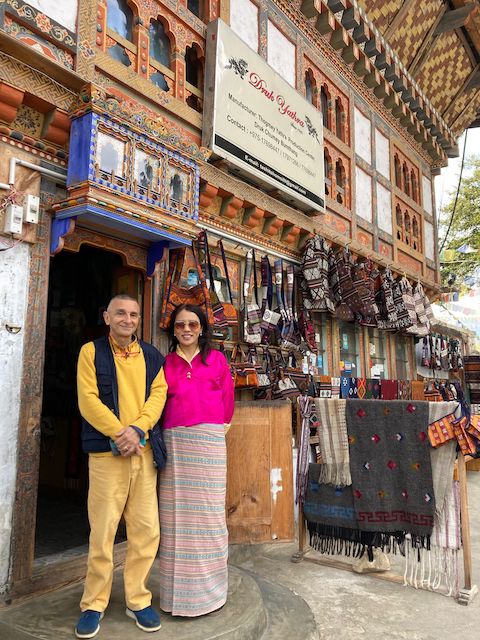
We explored the unique circular architecture of Dumtse Lhakhang, founded in 1421 by Thangtong Gyalpo (the “Leonardo da Vinci of the Himalayas”), and the hidden gems of Pangbisa Ugyen Guru Lhakhang. This site dates back to the 14th century and houses the precious Guru Sungjonma statue, connecting us with the legacy of the 14th century Terton Sherab Menbar. The cliffside temples of Dzongdraka, a sacred site where Guru Rinpoche subdued local spirits in the 8th century, offered breathtaking views and a profound sense of spiritual power.
Bumthang: The Spiritual Heartland
Flying to Bumthang on March 10th opened a new chapter of discovery. We stood before the Maitreya statue at Champa Lhakhang, another pillar of Bhutanese Buddhism dating back to the 7th century. This was followed by the Kalacakra Temple, a center for the intricate 3D Mandala of the Kalacakra teachings, and the Barched Lamsel Temple, dedicated to Guru Rinpoche’s power to dispel obstacles.
Our visit to Chagkhar Lhakhang was made even more profound by the 8th century story of Princess Tashi Khyidren (also known as Bumden Tsomo). As the Bhutanese consort of Guru Rinpoche, she is said to have attained the Rainbow Body. By dissolving her physical form into pure light, she became a symbol of supreme enlightenment and a guardian of the Dharma in the Bumthang valley. Because of her devotion, this temple, once her father’s “Iron Castle”, serves as a bridge between the royal history of Bumthang and its spiritual treasures, acting as a magnet for great Tertons (Treasure Revealers).
We experienced a truly unique moment there. Thanks to the special connection our dear Tsering Choeden shares with this Gonpa, the caretaker granted us a rare privilege: he personally showed us the sacred termas (hidden treasures) of Dorje Lingpa, Pema Lingpa, and Ugyen Zangpo. These termas are directly linked to Bumthang because the Princess herself helped Guru Rinpoche conceal these sacred objects in the valley for future generations to find. Standing in the presence of these authentic relics was a highlight that moved us all deeply.
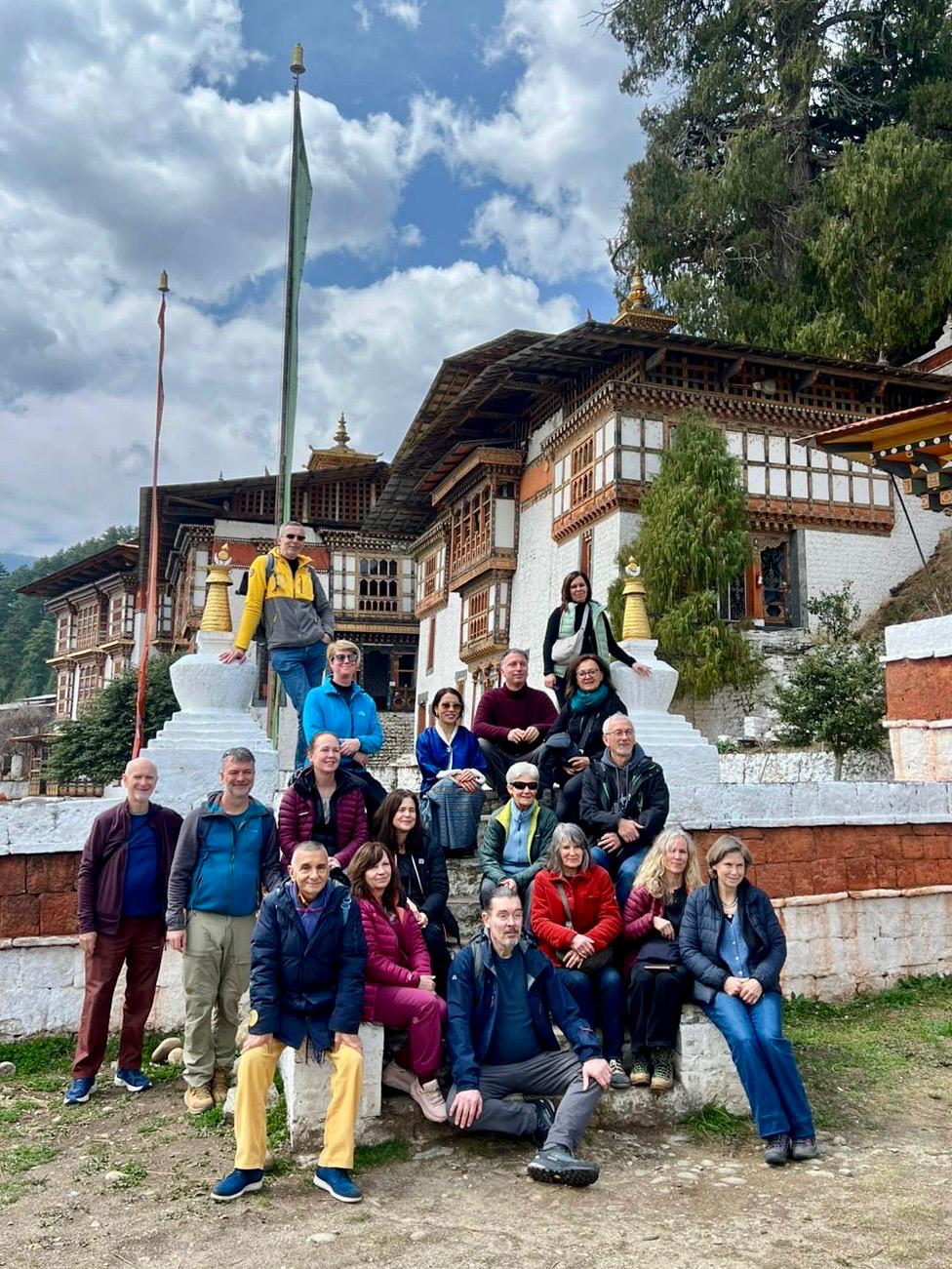
From March 10th to 12th, we visited some of the most sacred sites in the region: Kurje Lhakhang, where Guru Rinpoche left his body imprint in the 8th century; the Sampa Lhundrub Temple, where we contemplated the statue of Nangsi Zilnon; and Kagongphur Sum Lhakhang, where we encountered the fierce protectors of the Himalayan path (Kama, Lama Gongdu, and Phurba – three essential tantric cycles hidden by Guru Rinpoche). We also explored Konchogsum Lhakhang, restored by Pema Lingpa in the 15th century but housing an ancient Vairocana statue believed to date back to the 8th century. Finally, we visited Pema Lingpa’s Tamshing Lhakhang, established in 1501, which houses a magnificent Padmasambhava statue and original 16th century murals, and the Amitayus Temple, built in the early 16th century by Pema Lingpa, a treasure trove of ancient spiritual energy.
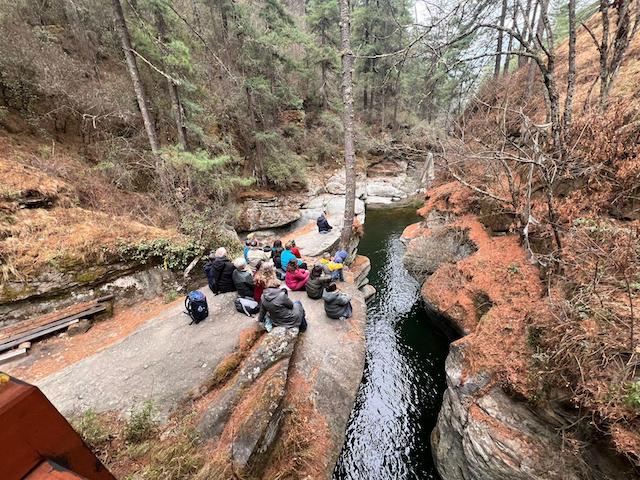
We followed in the footsteps of the great Terton Pema Lingpa to the “Burning Lake” (Menbar Tsho), the sacred pool where, in the late 15th century, he famously emerged with a butter lamp still burning, proving his status as a true treasure revealer. We then journeyed to the remote Ugyen Choling in the Tang Valley – the ancestral home of our dear Tsering. According to her, Rinpoche had received an indication to visit this place in his dreams, though unfortunately it could not be identified at the time. Back in the 14th century, the great master Longchenpa chose this spot for its auspicious geography, describing the hill as having the shape of a sleeping elephant. He named it Dechenling, the “Land of Great Bliss”. Later, through the influence of Dorje Lingpa, it became known as Ugyen Choling, serving as a sanctuary where the lineage has been kept alive for over six hundred years.
There, we visited the Dorje Lingpa Temple, rooted in the 14th century legacy of the great Terton. While women visited the Tara Temple to connect with the primordial female power and compassion, men went to the Mahakala Maning Temple, dedicated to the fierce protector of the lineage. At the end of our visit, Tsering’s family offered us delicious arak made with sandalwood, and we were utterly charmed by their hospitality.
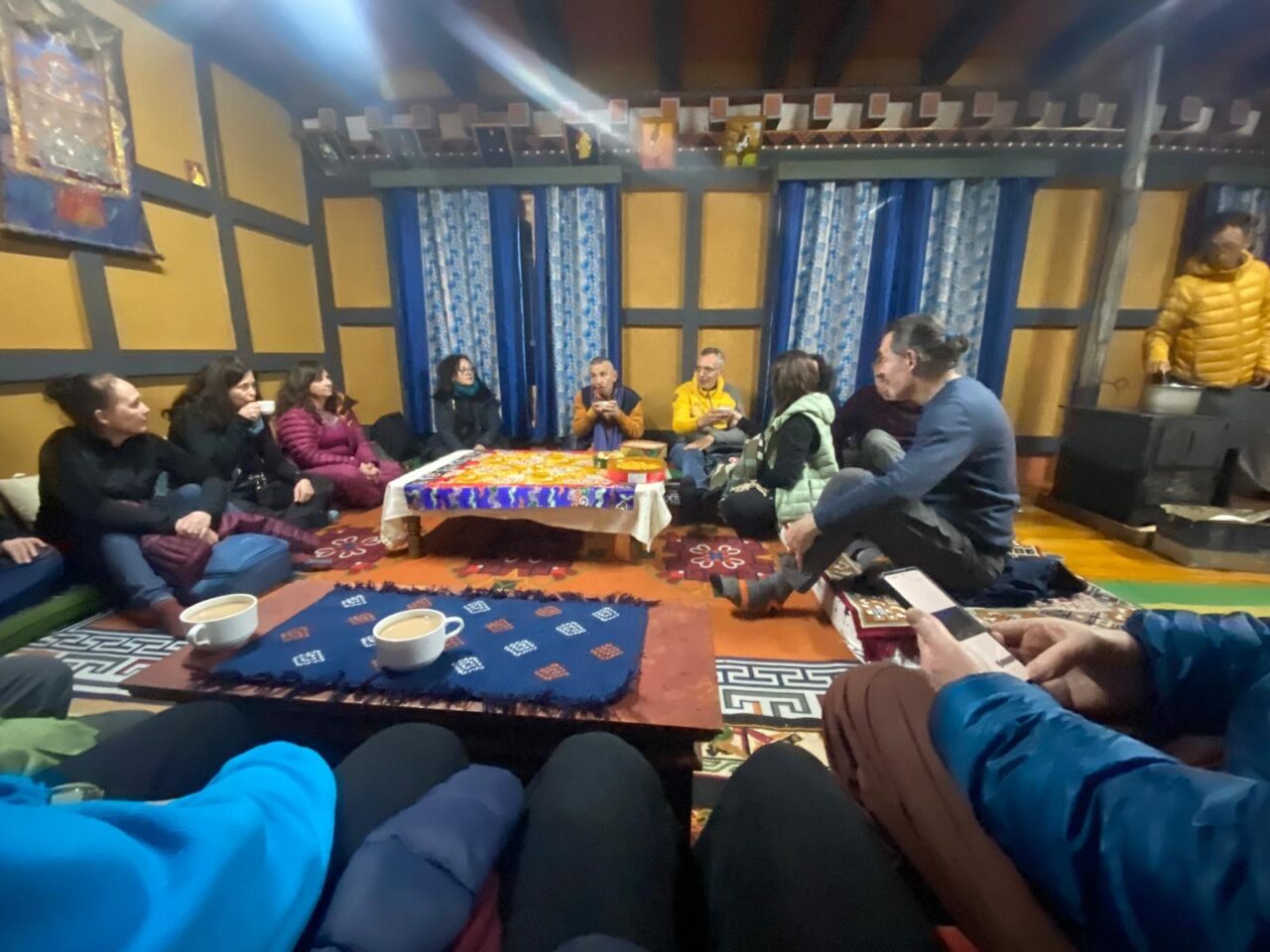
Our time in Bumthang concluded at the Padmasambhava Lhakhang, a vital link to Guru Rinpoche’s arrival. We then climbed to the high-altitude serenity of Tharpaling Monastery, the “Place of Liberation” founded by Longchenpa in the 14th century. While there, we were permitted to see the sacred relics of Longchenpa’s tooth and Jigmed Lingpa’s tooth. Finally, we visited Zugne Lhakhang in the Chume Valley, associated with the 7th century wave of temple building, where sacred statues are surrounded by the vibrant energy of local weavers, whose craft continues to color the spiritual landscape of Bhutan.
The Path to Punakha and Thimphu
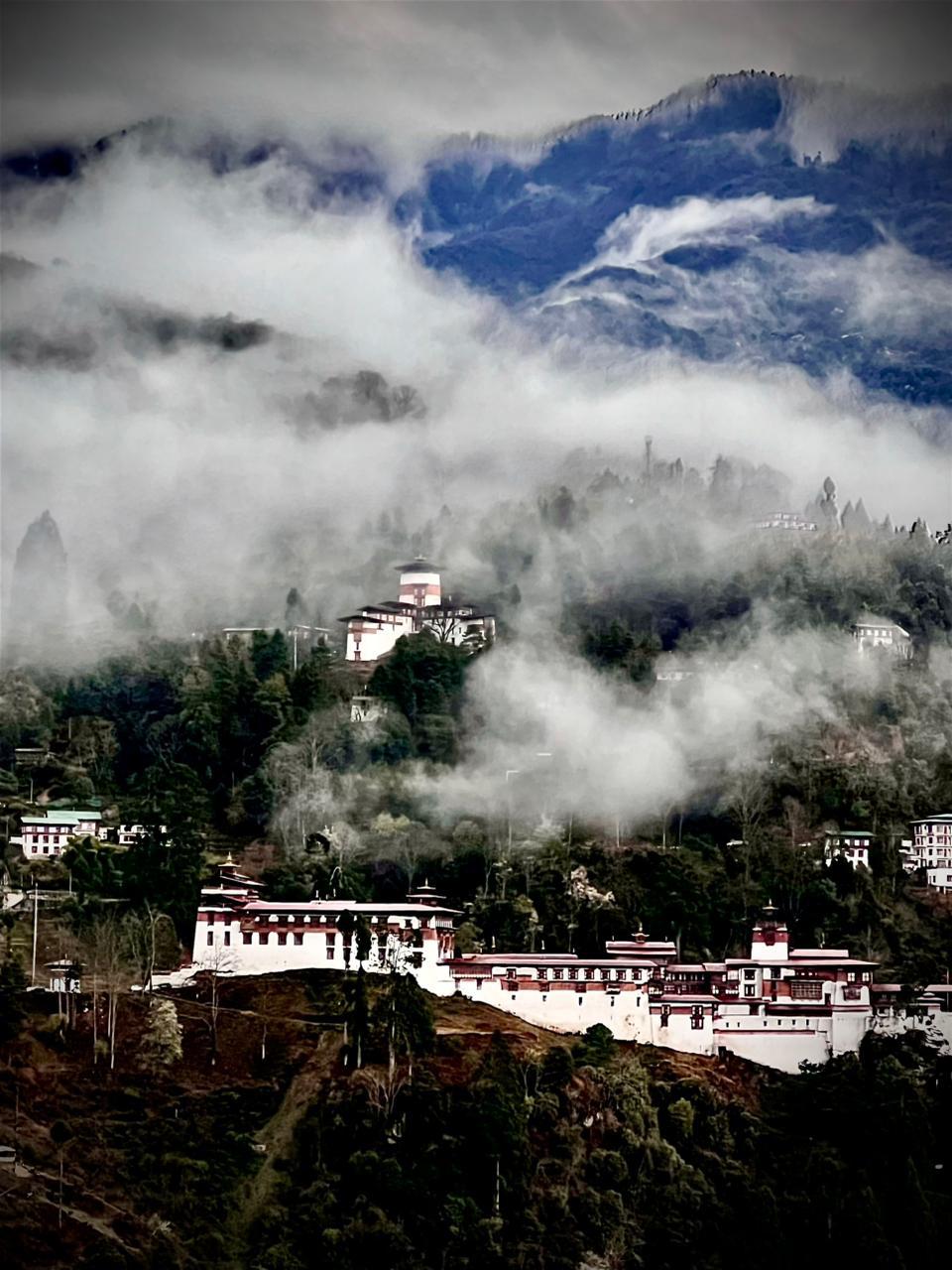
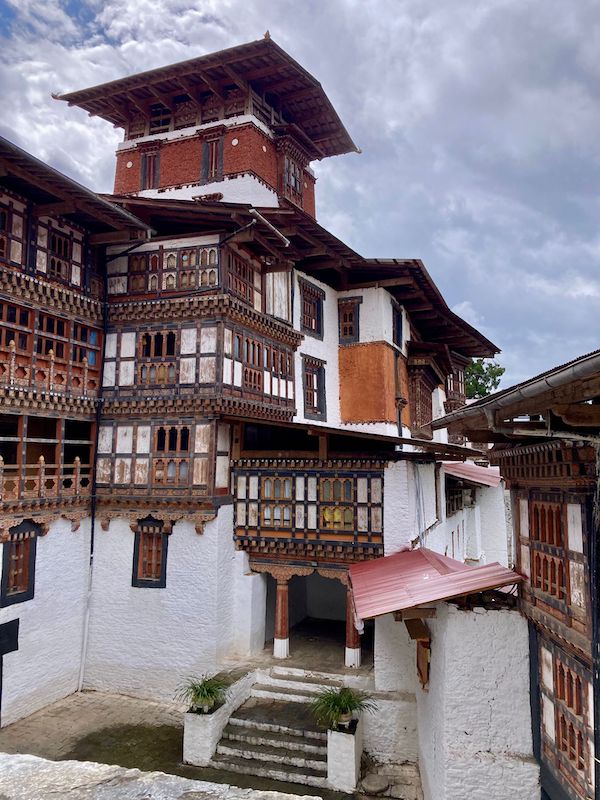
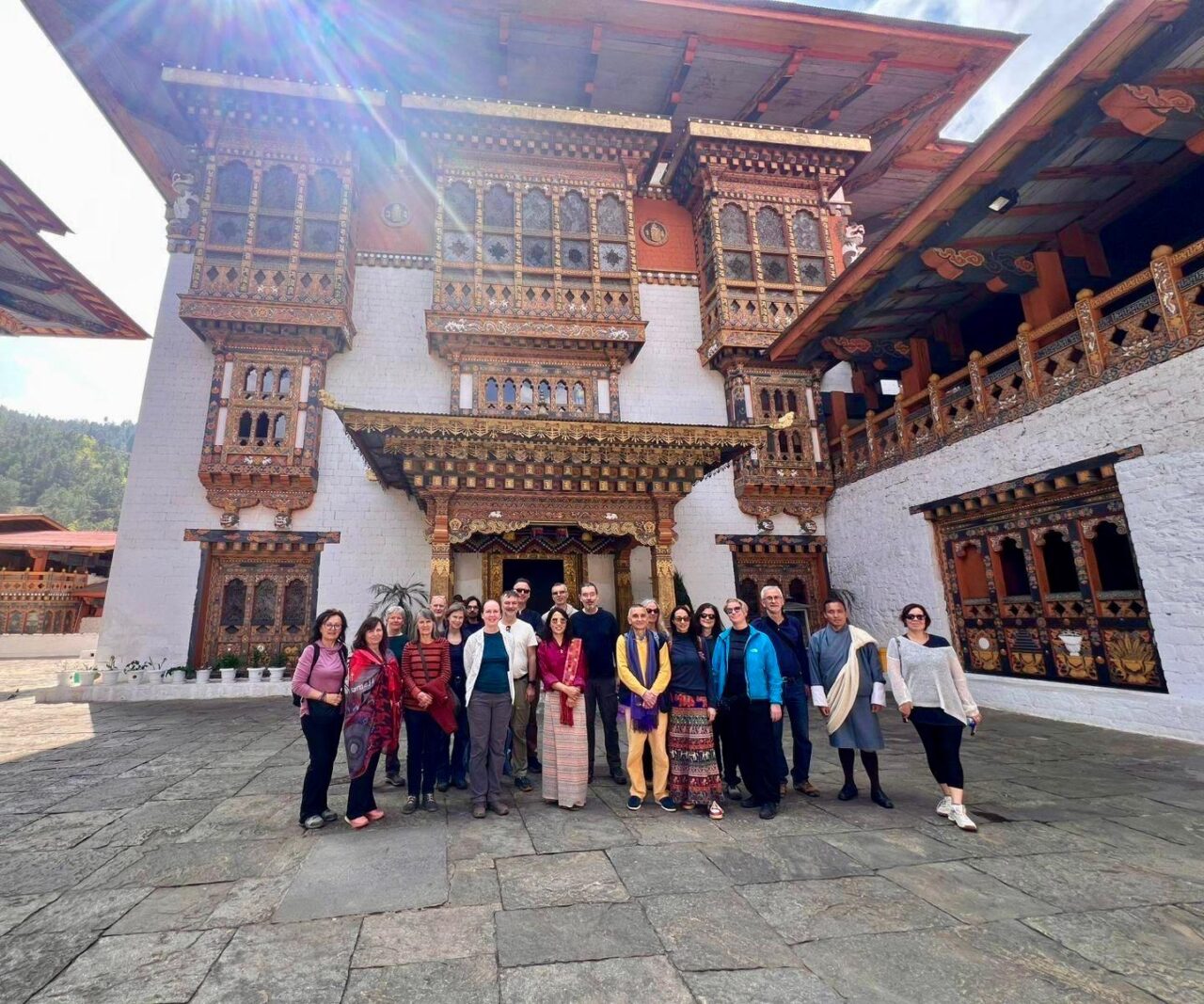
Moving toward Central Bhutan on March 13th, we stopped at the impressive Trongsa Dzong. Built in 1647, this massive fortress was the ancestral home of the Royal Family and served as a strategic gateway between the east and west. Finally, we reached the warm valley of Punakha to visit the majestic Punakha Dzong. Built in 1637 at the confluence of the Pho Chhu and Mo Chhu (Father and Mother) rivers, it remains a masterpiece of Bhutanese architecture. We were granted the rare privilege of entering the main temple, standing before the towering Shakyamuni statue amidst murals depicting the timeless story of the Buddha’s enlightenment.
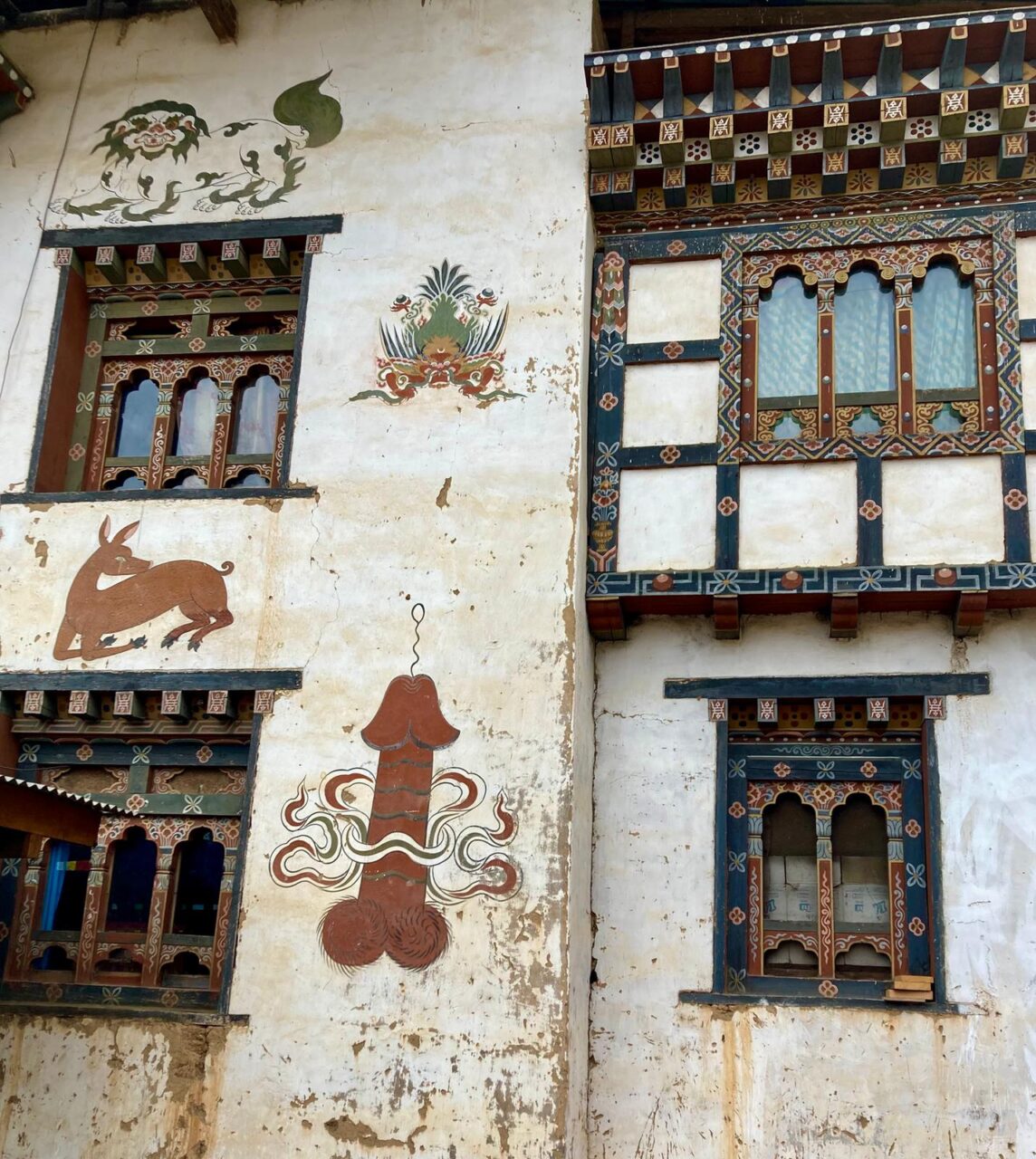
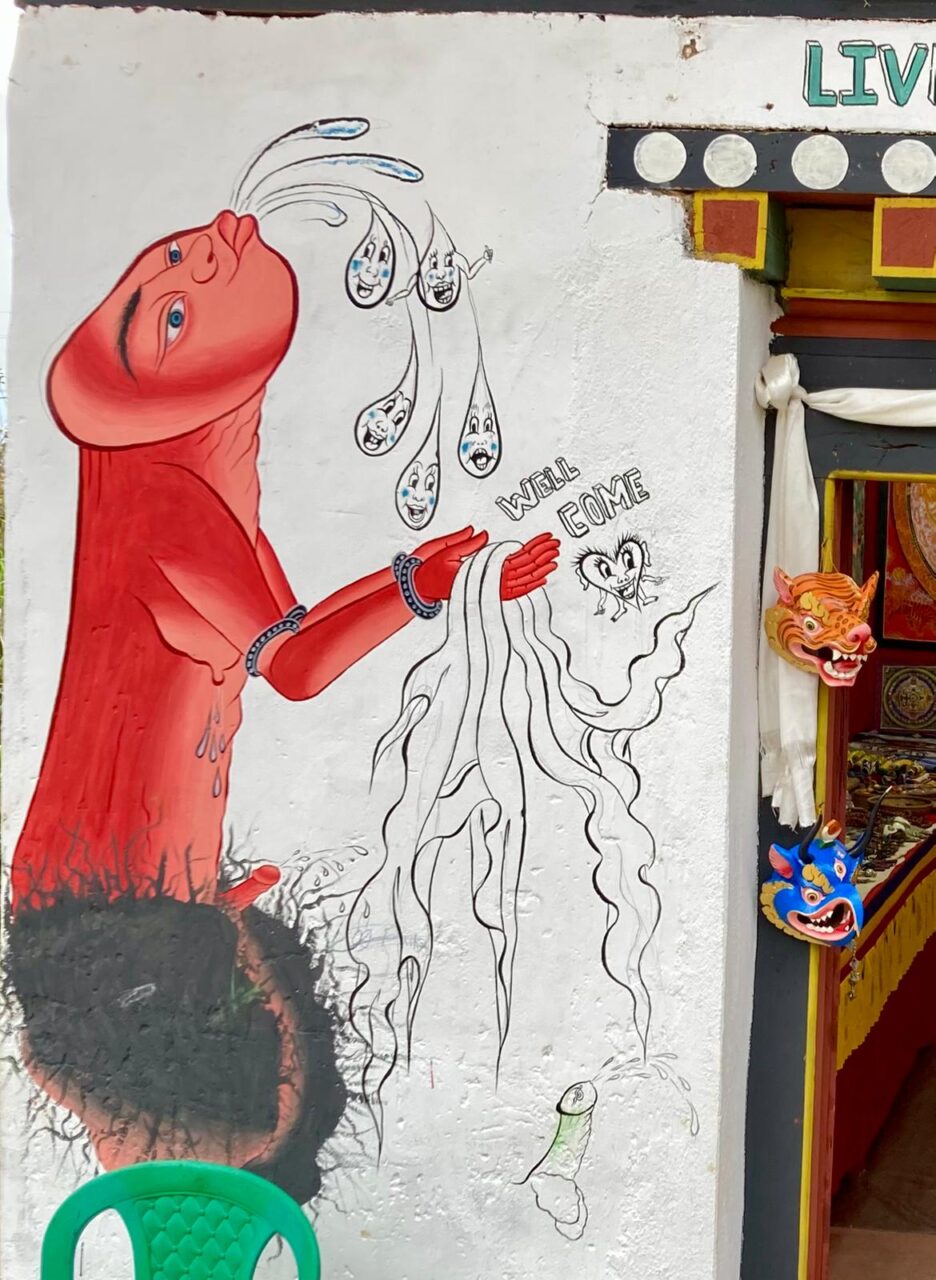
A village near the temple of Drugpa Kunley
We also paid our respects at Kyime (Chimi) Lhakhang, the temple of the “Divine Madman”, Drukpa Kunley, founded in 1499. Walking through the surrounding villages, we were fascinated by the traditional murals of phalluses, powerful symbols of protection and fertility. The atmosphere was a blend of deep faith and the rebellious spirit of the Saint, who taught that the path to enlightenment can be found through joy and humor. We fondly remembered the stories our Master, Chögyal Namkhai Norbu, used to tell us about Drukpa Kunley, often laughing at the Saint’s non-traditional and humorous ways of teaching the Dharma.
On March 15th, we crossed the Dochula Pass (3,100m), walking among the 108 memorial chortens built in 2004 as a prayer for peace. Upon reaching Thimphu, we hiked to the majestic Tango Lhakhang. A true highlight, we explored the temple dedicated to the wrathful deity Hayagriva, whose energy emanates from the horse-head shape of the mountain. We had the privilege of entering the meditation cave of Shabdrung Ngawang Namgyal. Standing in the stillness where the Great Shabdrung once meditated, we felt a profound connection to the spiritual foundations of the Land of the Thunder Dragon.
The following day (March 16th), we visited the Pangri Zampa astrology temple. Built in the 16th century, it served as the first residence of Shabdrung Ngawang Namgyal in 1616. Standing before his self-crafted statue, we felt the weight of the legacy he brought to this land.
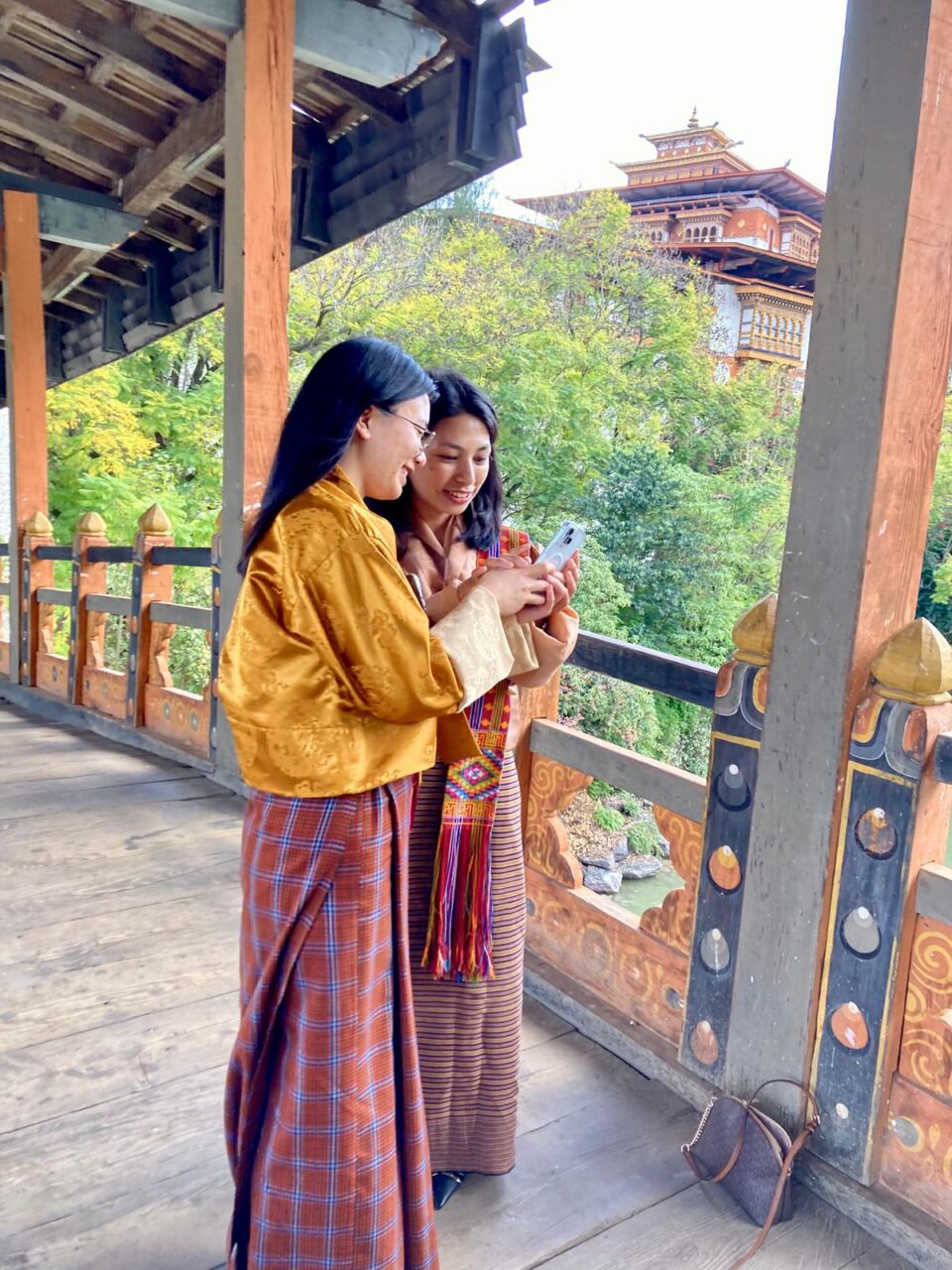
Our journey continued to the Temple of the 21 Taras, where we were surrounded by the compassionate energy of the female Buddhas. On our way back to Paro, we stopped at the iconic Tachog Lhakhang, crossing the iron bridge of Thangtong Gyalpo, a marvel of 15th century engineering. Finally, we explored Rinpung Dzong, the “Fortress on a Heap of Jewels”. Its massive walls have stood as guardians of the Dharma since 1644, concluding our pilgrimage where it all began.
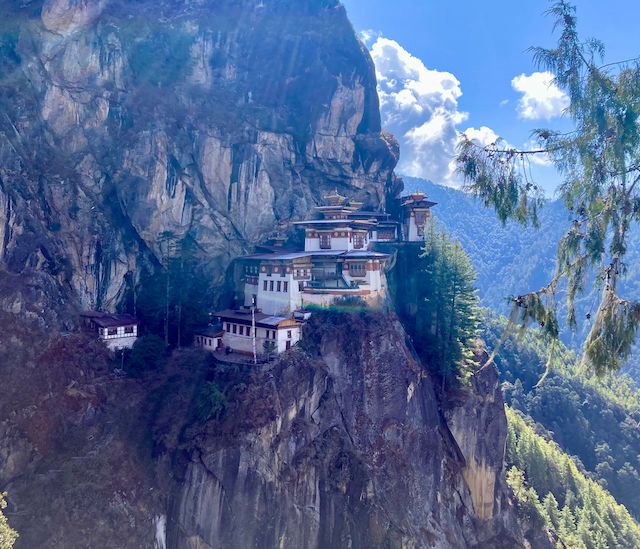
The journey reached its spiritual culmination on March 17th with the ascent to the legendary Paro Taktsang (Tiger’s Nest). Perched on a cliff 900 meters above the valley, this site has been a beacon of light since the 8th century. We practiced together near the Dorje Trolod temple, connecting with the fierce wisdom of Guru Rinpoche, and sat in deep contemplation before the Kudung of Palgyi Senge. As one of the 25 main disciples of Guru Rinpoche, Palgyi Senge was the master practitioner of Vajrakilaya who sanctified these cliffs through his practice.
Some of us entered the Cave of the Tigress, the legendary site where Guru Rinpoche manifested as Dorje Trolod. Nearby, the Cave of Yeshe Tsogyal reminded us of the immense power of the female lineage. In the mountain’s stillness, we felt the full weight of Bhutan’s extraordinary spiritual heritage, a perfect ending to a journey of heart and soul.
In the evening, we gathered for a beautiful Ganapuja at Tsering’s home in Paro. It was a joyful occasion, made even more special by the wine generously offered by Dima from Saint Petersburg, which we enjoyed throughout the evening as we shared in the warmth of our community.
Community and Gratitude
Beyond the temples, a beautiful bond formed among us. We became fast friends, constantly sharing insights, photos, and reflections in our group chat, creating a supportive Vajra family.
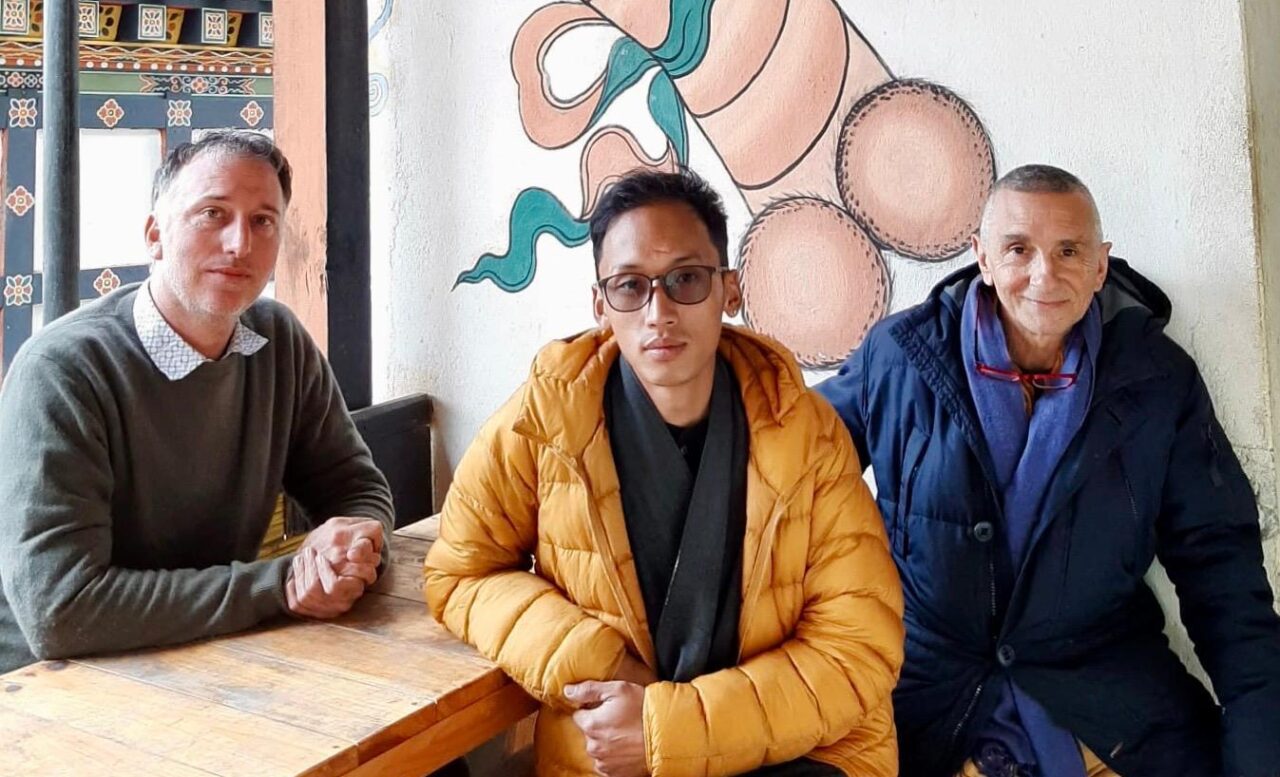
The success of such a complex journey was entirely due to the incredible team of Shang Shung Uk. We would like to extend our deepest gratitude to Jamyang Oliphant, Tsering Choeden, and Samten for their flawless organization. Their expertise allowed us to focus entirely on the experience, free from the logistical concerns of mountain travel. We also owe a special thank you to Dr. Kunzang, whose kindness and medical presence provided a sense of security for everyone in the group.
Our daily explorations were brought to life by our exceptional guide, Tsering Penjoe, whose knowledge of Bhutanese history and spiritual philosophy is unparalleled. Rather than just providing facts, he shared the very soul of his country with us.
Navigating the winding Himalayan roads was made safe and comfortable by our skilled drivers, Phala and Kunzang. They were much more than just drivers; they were guardians of our well-being, always attentive and caring, ensuring that no traveler was ever left behind or felt overlooked. Their thoughtfulness fostered a family-like atmosphere where every participant felt seen and supported.
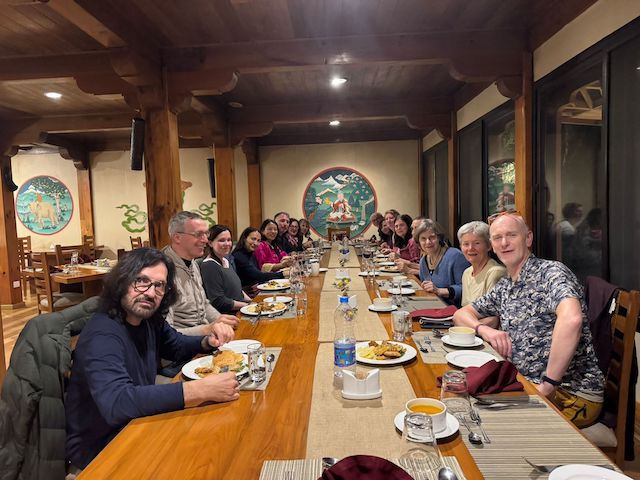
What made this trip truly special was the presence of Adriano Clemente. We were honored to travel with him, performing practice at nearly every sacred site we visited. This shared practice created a powerful sense of community and a deep, vibrant connection with our Master. Furthermore, Adriano’s knowledge of traditional books and ancient texts allowed us to discover specific places we might otherwise have missed, adding a layer of rare insight to our pilgrimage.
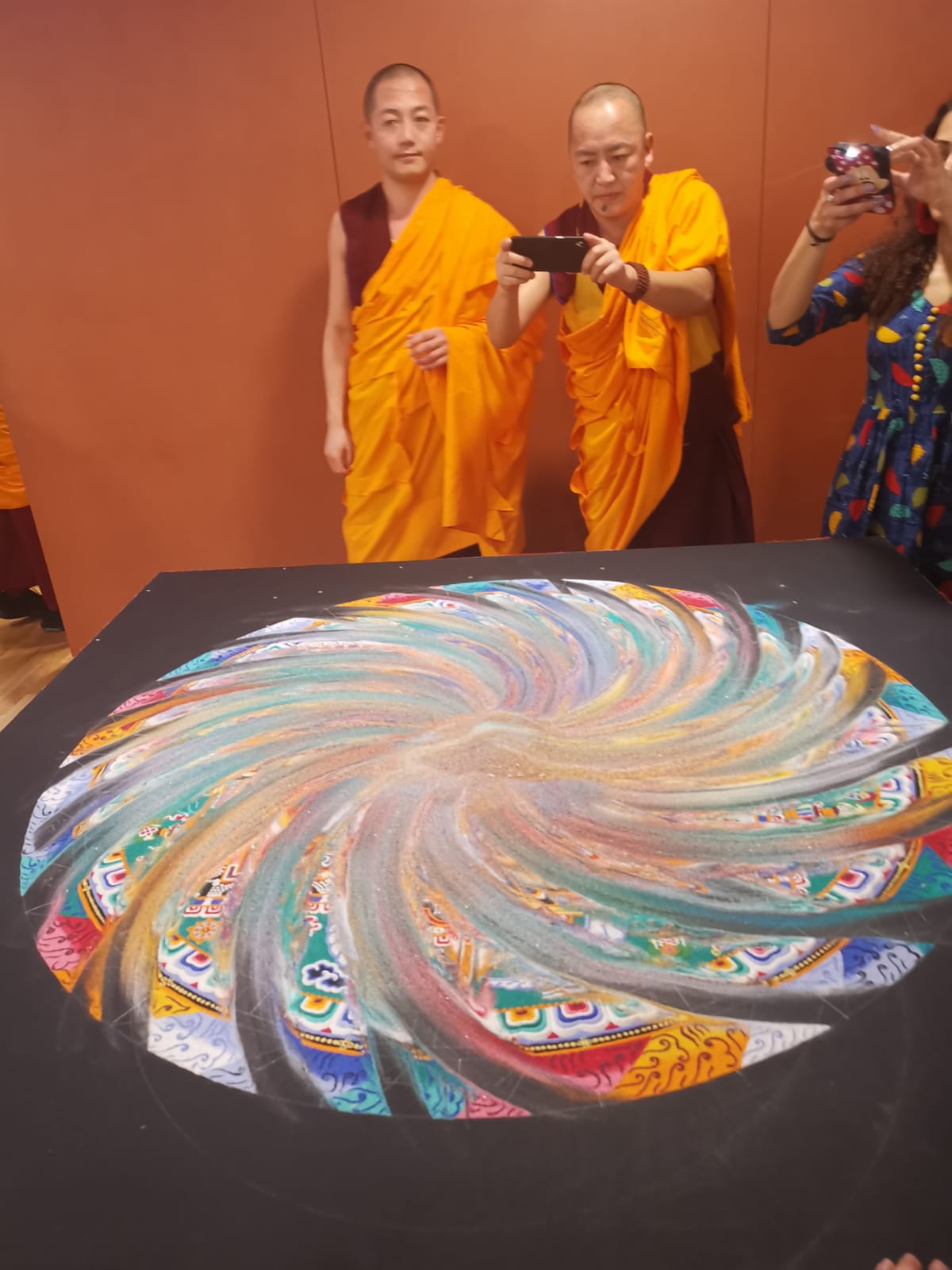
Every morning began with the vital energy of Yantra Yoga with Dina Priymak, and on several days, we had the joy of performing the Vajra Dance. A particularly symbolic moment was the inauguration of a brand-new mandala upon its arrival, where we practiced the Khalong Dorje Kar of the Unborn (12 A). These moments of collective practice transformed a cultural tour into a living, breathing spiritual experience.
Reflections from the Group
The impact of this high-level organization was best summarized by one of our fellow travelers, Michal from Poland. In a humorous but heartfelt note to Jamyang, Michal said: “You have ruined my vacations. I can’t plan anything by myself anymore! Your trips are so interesting and attractive that everything else pales in comparison.” This sentiment was shared by the entire group.
We also received this feedback from Mark from England: “Wow, what a trip! It was so lovely to journey with you all in this incredible land. To practice, dance, observe, and learn together in so many amazing spaces, museums, and gonpas, suffused in blessings that brewed until my head melted. Thank you all for your kindness, joy, humor, and support. It has been a wondrous time, and I hope one day we will meet and journey together again. Bon voyage, dear friends of Bhutan!”
When a journey is curated with such passion and precision, it changes your expectations of what travel can be. As we return to our busy lives, we carry with us the stillness of the Bhutanese mountains and the warmth of the people we met. This trip was a rare gift, and we are forever grateful to the Shang Shung UK team for guiding us through the Land of the Thunder Dragon with such grace and devotion.
Dina Priymak