July 13, 2026
In the late afternoon on Monday, July 13, 2026, dancers and audience members began to arrive to the gracious tent over the outdoor mandala beyond the Zikhang. The Zikhang, or house of Zi, contains the library, Shang Shung Foundation archive, and the Mandala Hall, and the location also looks out over the nearby valley and the Great Stupa of Enlightenment, the resting place of the Body of our Teacher, Chögyal Namkhai Norbu.
This significant setting held the jewel of the dances performed by dozens of dancers, who held the rapt attention of the 150–200 people and a few pet dogs gathered around the performance space, on chairs, benches, in the grass, and perched on the green hillside above the tent.
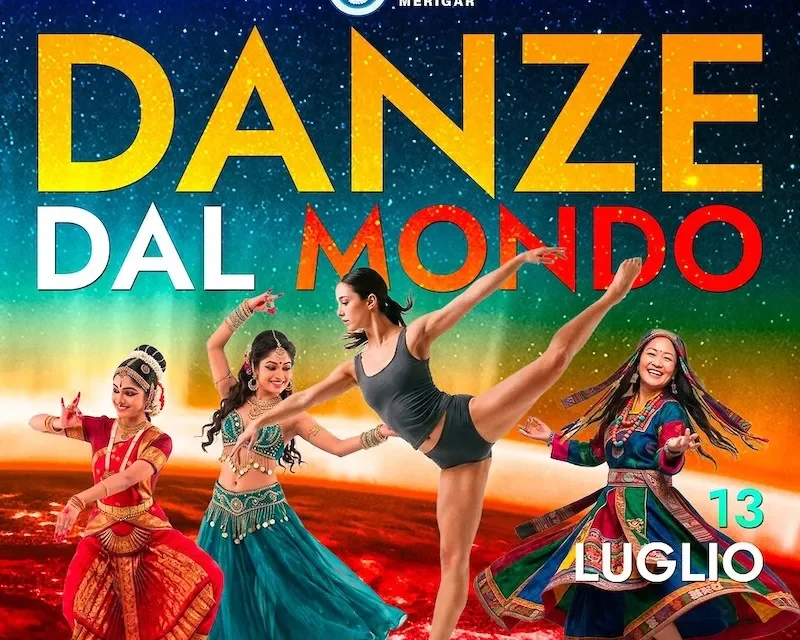
The event was created at the initiative of dancers associated with Merigar, and included Modern Tibetan Gorshey dances, Indian classical dance Bharata Natyam, Middle Eastern belly dance, modern dance, and Khaita Joyful Dances.
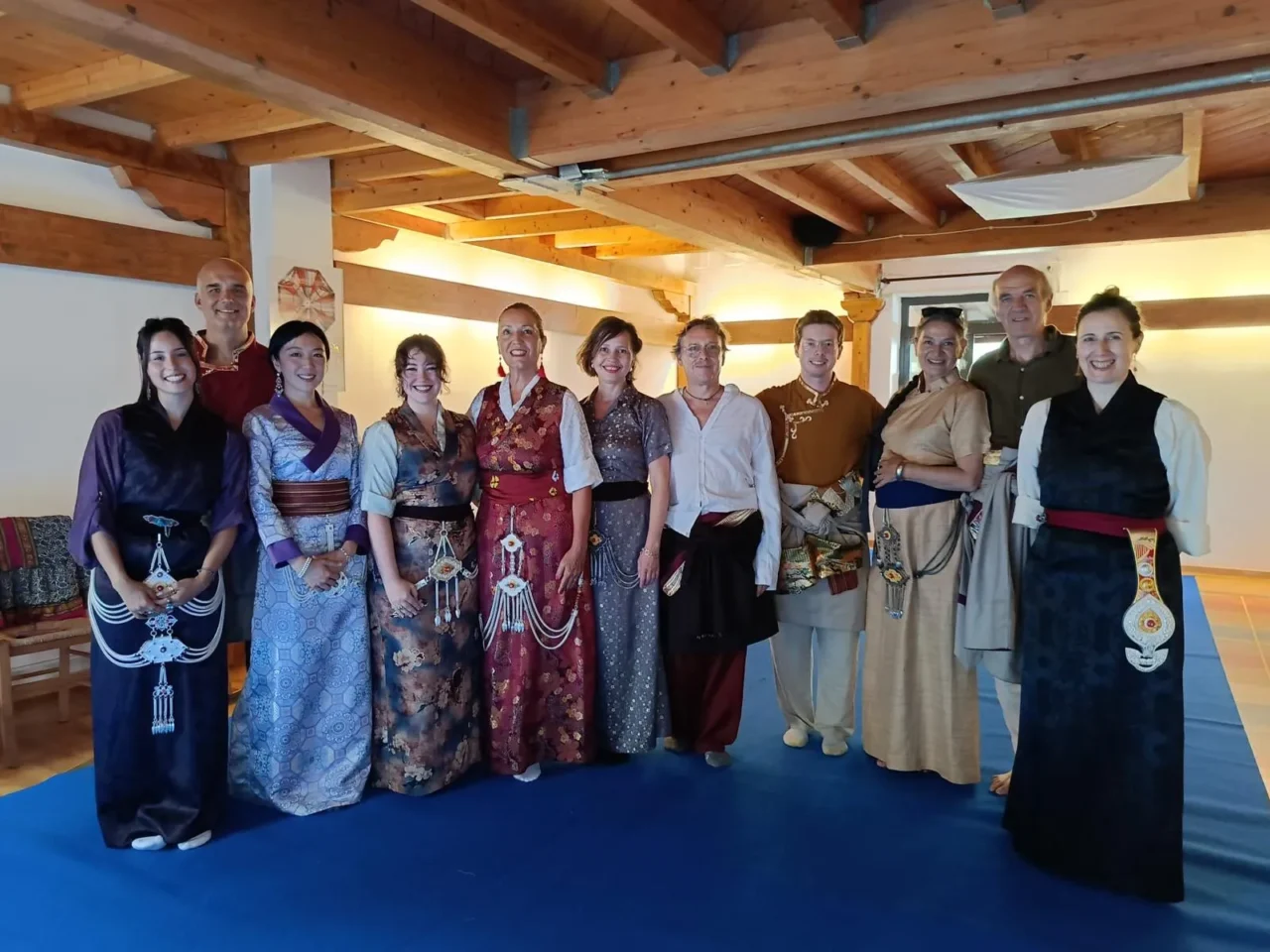
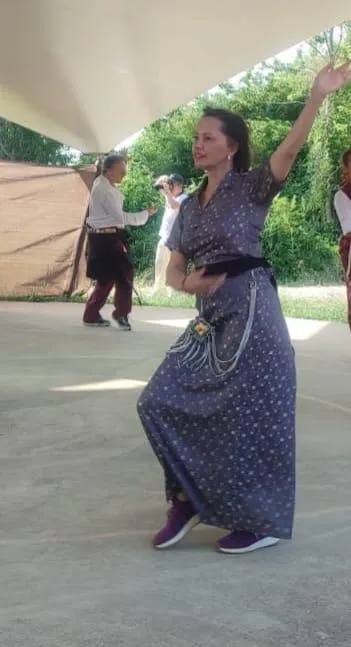
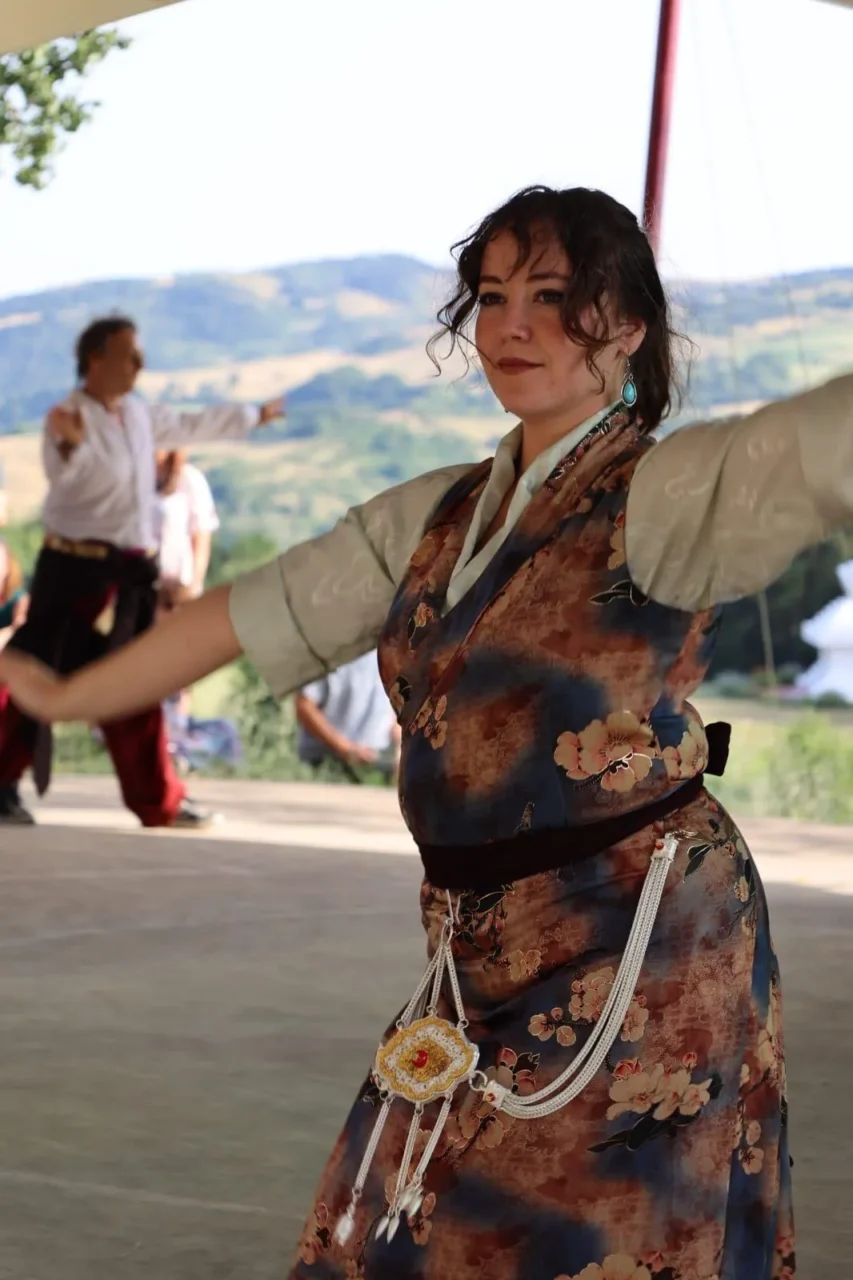
The Tibetan Gorshey dancers opened the show with a performance of Dzongchen Tramo, meaning The Dance of the Great Fortress; Rawag Kordro, The Circle Dance of Raba, a song of praise to one’s homeland celebrating its natural beauty, culture, traditions, and way of life; and finally Tashi Kartshog, an auspicious dance performed to convey blessings and good fortune. Gorshey are popular group dances typical of Tibet and the Himalayan region, performed in a circle with simple, repeated movements accompanied by singing. They are community dances accessible to everyone, often practiced during festivals and celebrations.
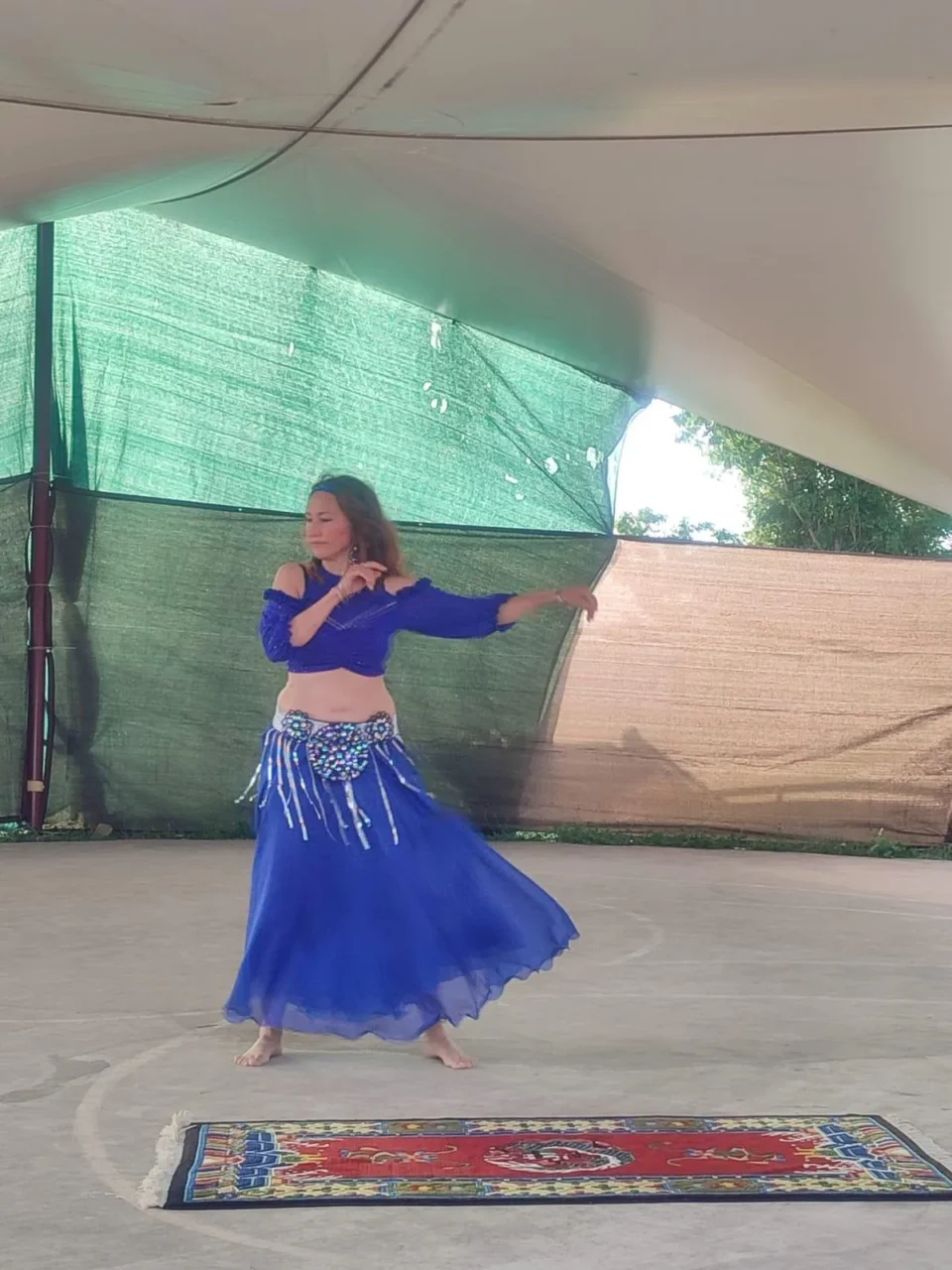
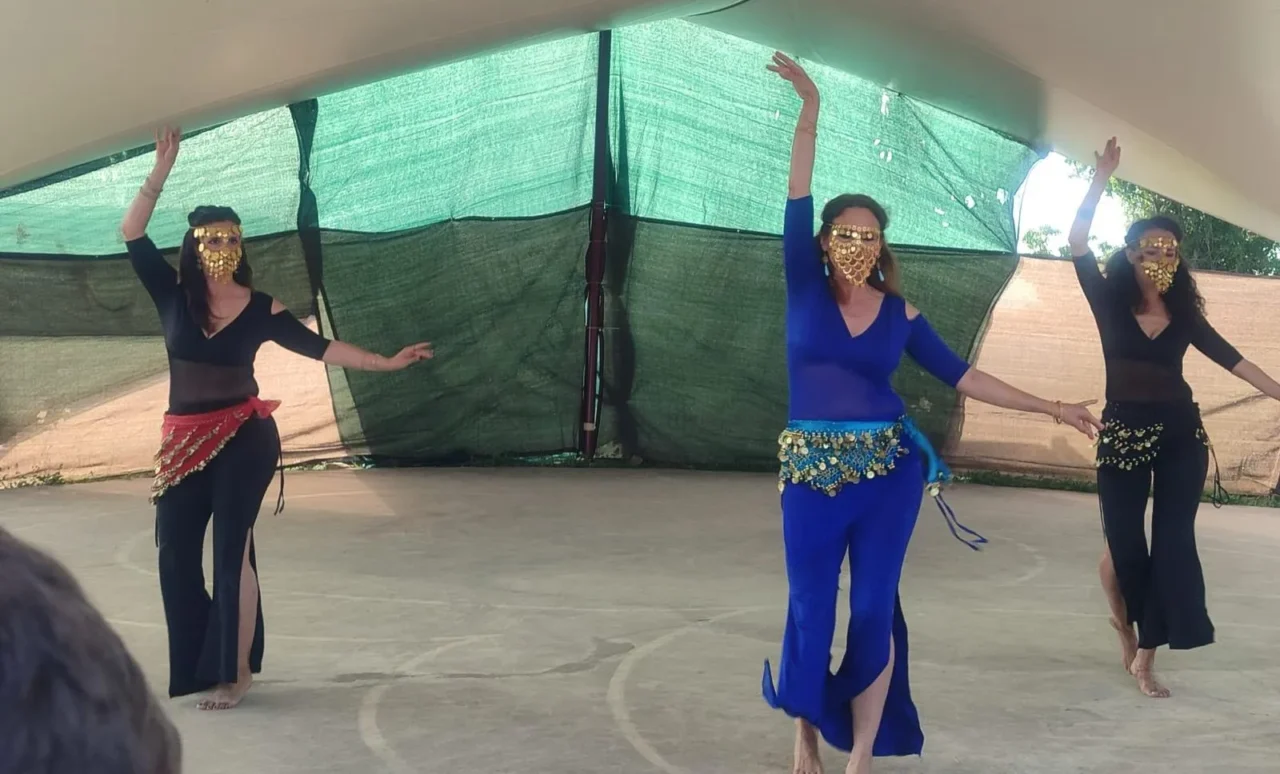
The evening continued with belly dance performed by Natasha Priymak and others, including: Ya Tab Tab, with music by Nancy Ajram and choreography by Natasha Priymak; Baladi Ruh, with music by Orquesta Oriental Al Kamar and choreography by Arun Bhardwaj created especially for Natasha Priymak; and Tabla, with music by Artem Uzunov from Live & Dance, and choreography by Natasha Priymak. The program noted that “belly dance has very ancient origins and is deeply rooted in the traditions of the Middle East and North Africa. It did not originate as a performance, but as a ritual and social dance, connected to fertility, femininity, and the everyday moments of women’s lives. Over the centuries it evolved through the influences of various cultures, including Egyptian, Ottoman, and Arab. During the 19th century, with the arrival of Europeans in the Orient and the World Exhibitions, this dance was ‘discovered’ by the West and transformed into a form of entertainment. Today belly dance is widespread throughout the world, both as an artistic expression and as an activity for physical wellbeing, while still maintaining a strong connection to its cultural origins.”
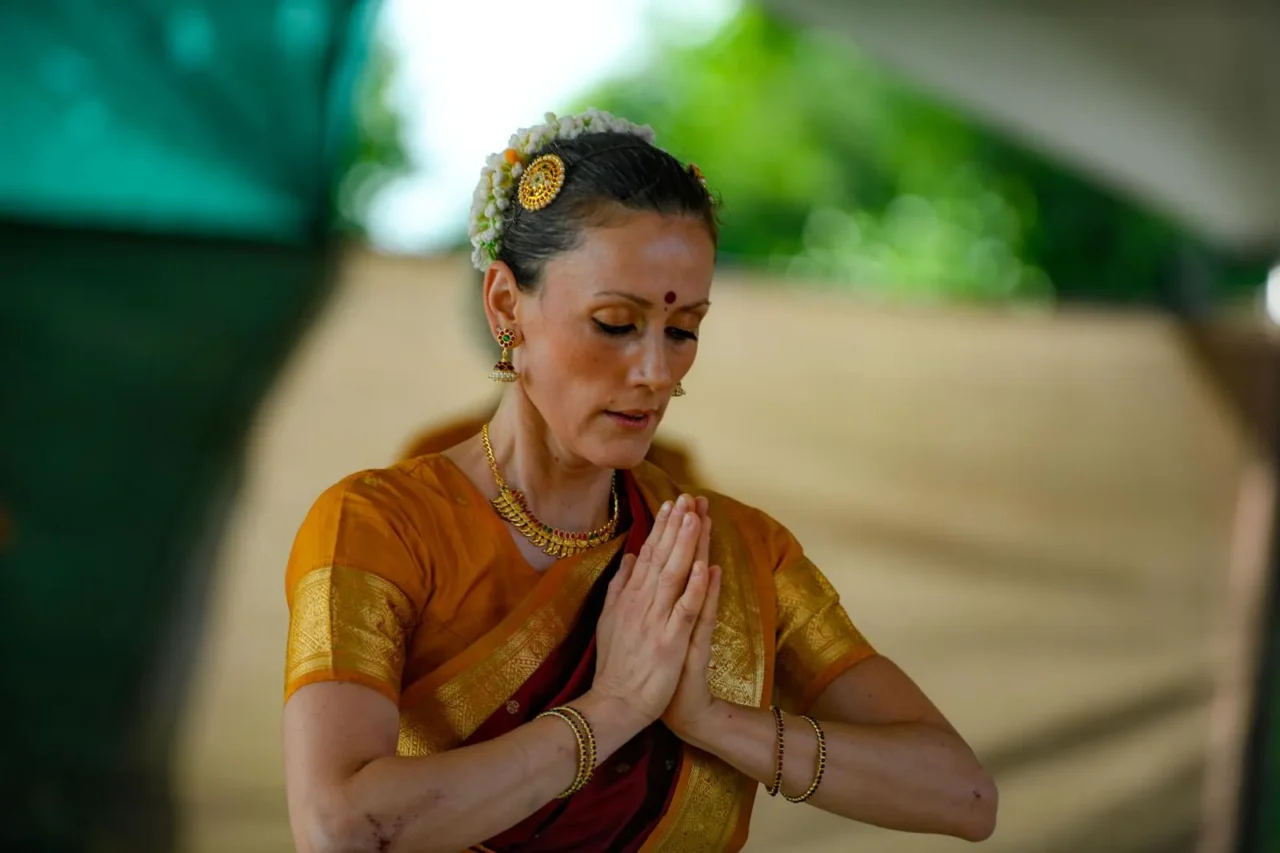
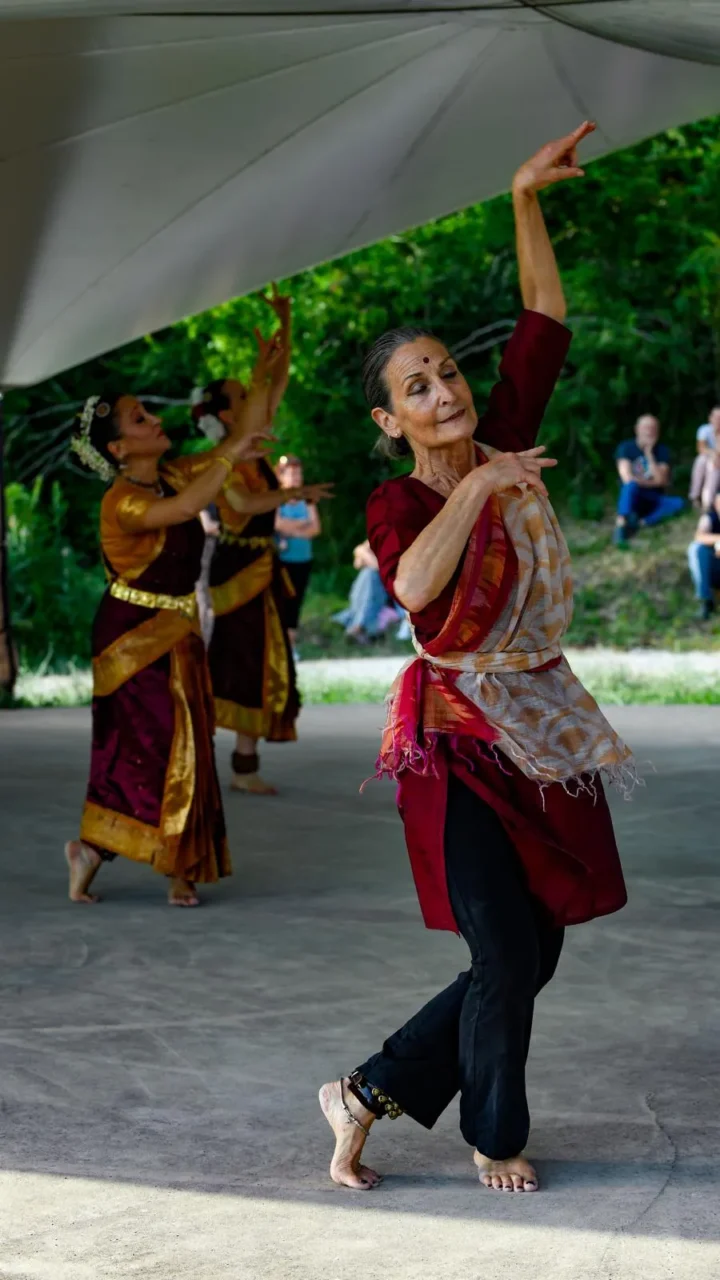
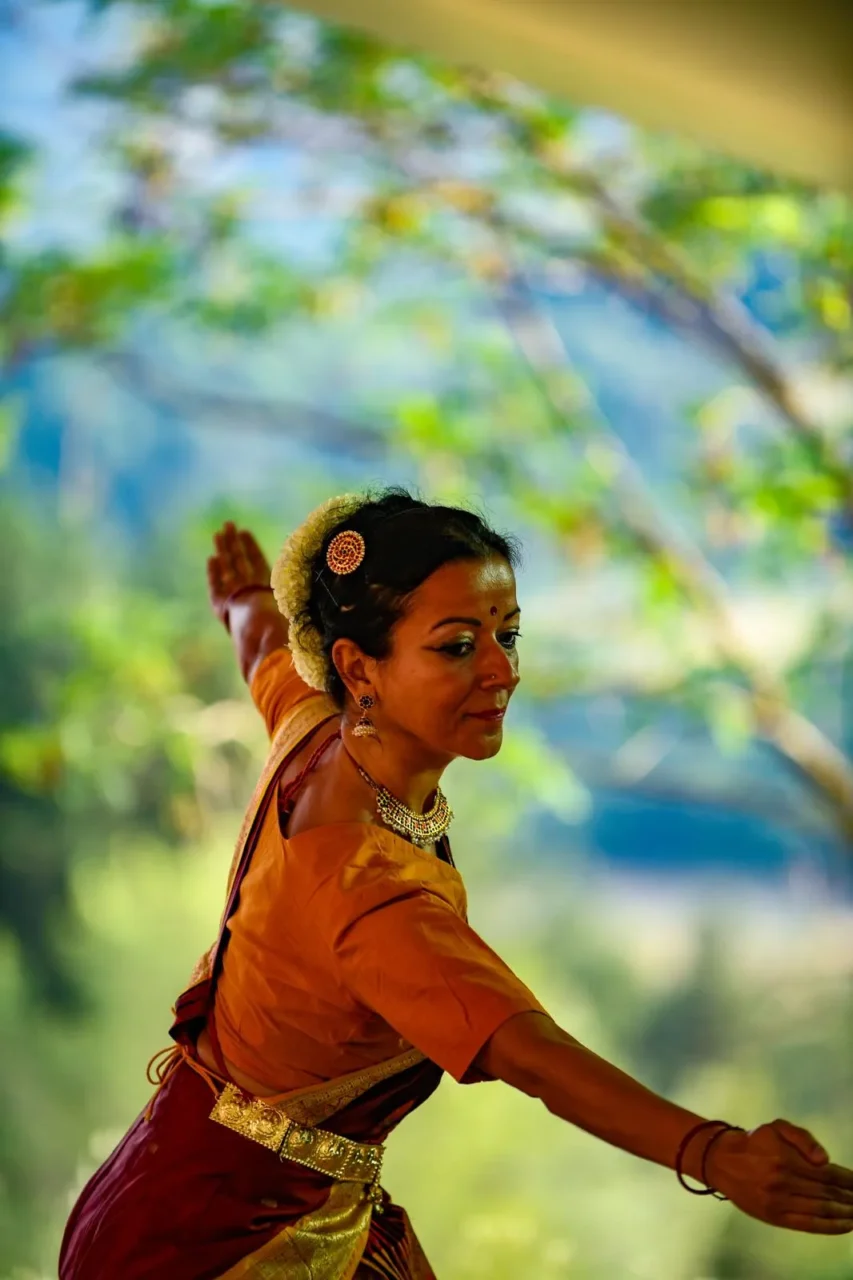
Classical Indian and modern dance teacher Maresa Moglia then brought on her troupe of dedicated dancers from Siena to perform the Classical Indian Dances Bharatanatyam Alarippu, with traditional music and choreography by Maresa Moglia; and Kaveri and Durga Thillana, both with traditional music and choreography by Krishnaveni Lakshmanan. Passed down from master to student over millennia, the rigorous Classical Indian Dance in the Bharatanatyam style originated in Tamil Nadu, India. The dances performed included a symbolic dance in which the dancer offered her body as a flower of a thousand petals, accompanied by sollukuttu, a form of vocalization typical of Indian dance, as well as a dance performed as the Kaveri River, one of the seven sacred rivers of India. In the third, percussive, and technically demanding dance, a moment of pause appears in which a short poem dedicated to Krishna is sung:
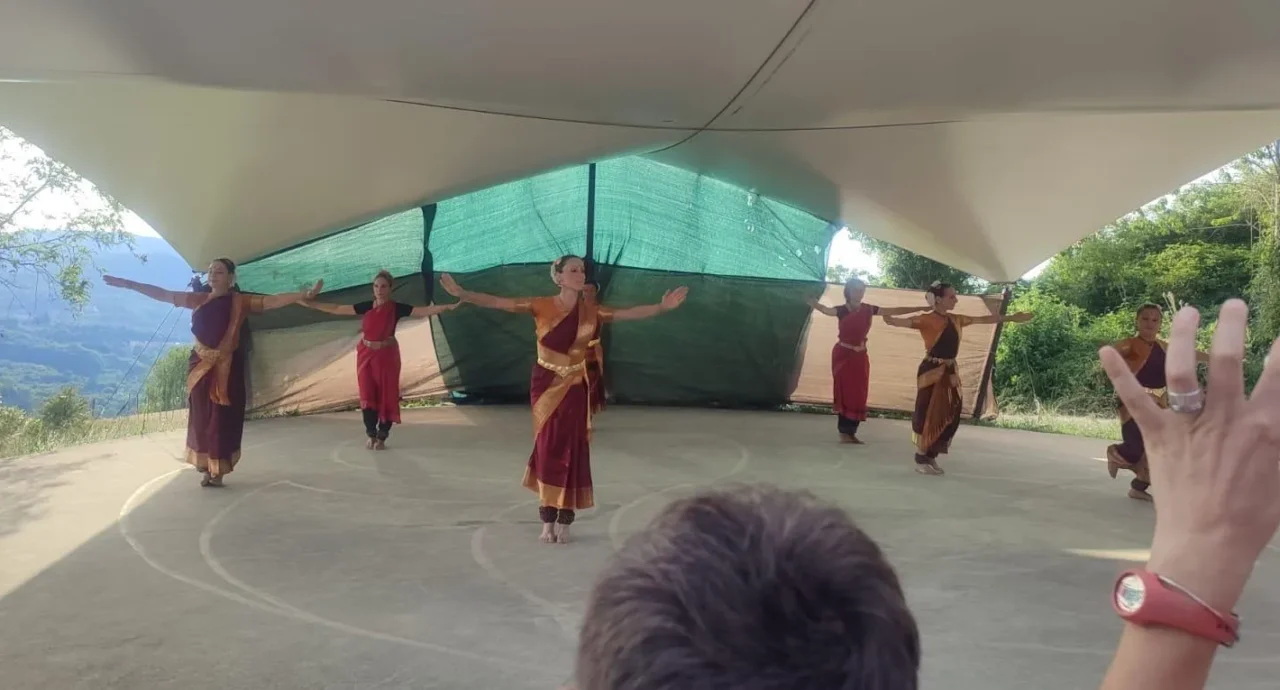
My Krishna, sweet lotus eyes, my song turns praises to You, who from the flute of gleaming jewels draw a wave that steals its way inside me. Bright Moon of Vraja, wrap with Your rays of limpid freshness this humble devotee.
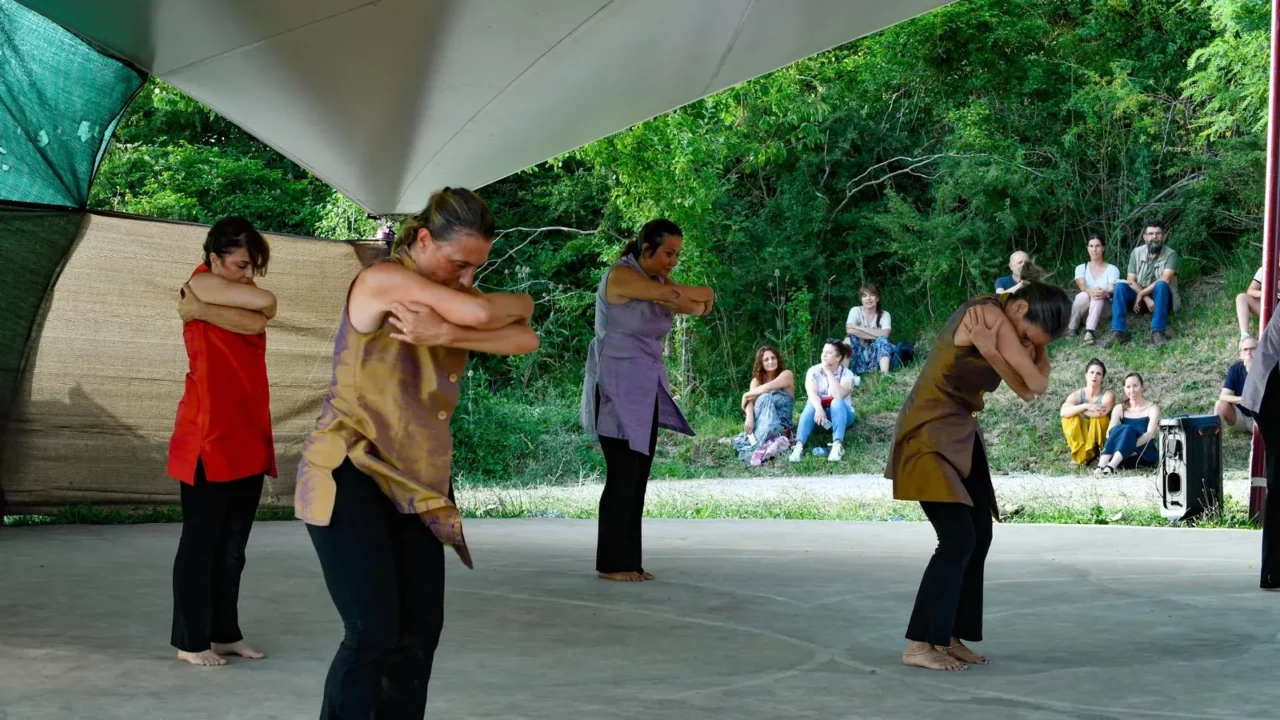
Maresa Moglia and her company also performed her original modern dance choreography in Speaking in Tongues IV, with music by Sheila Chandra, which connected Classical Indian Dance with modern dance through “collage of sound and movement that renders the choreography as a chain of movements with techniques that echo one another, intersecting within each other” (quote from the event program); and Tutto l’universo obbedisce all’amore (All the Universe Obeys Love) with music by Franco Battiato.
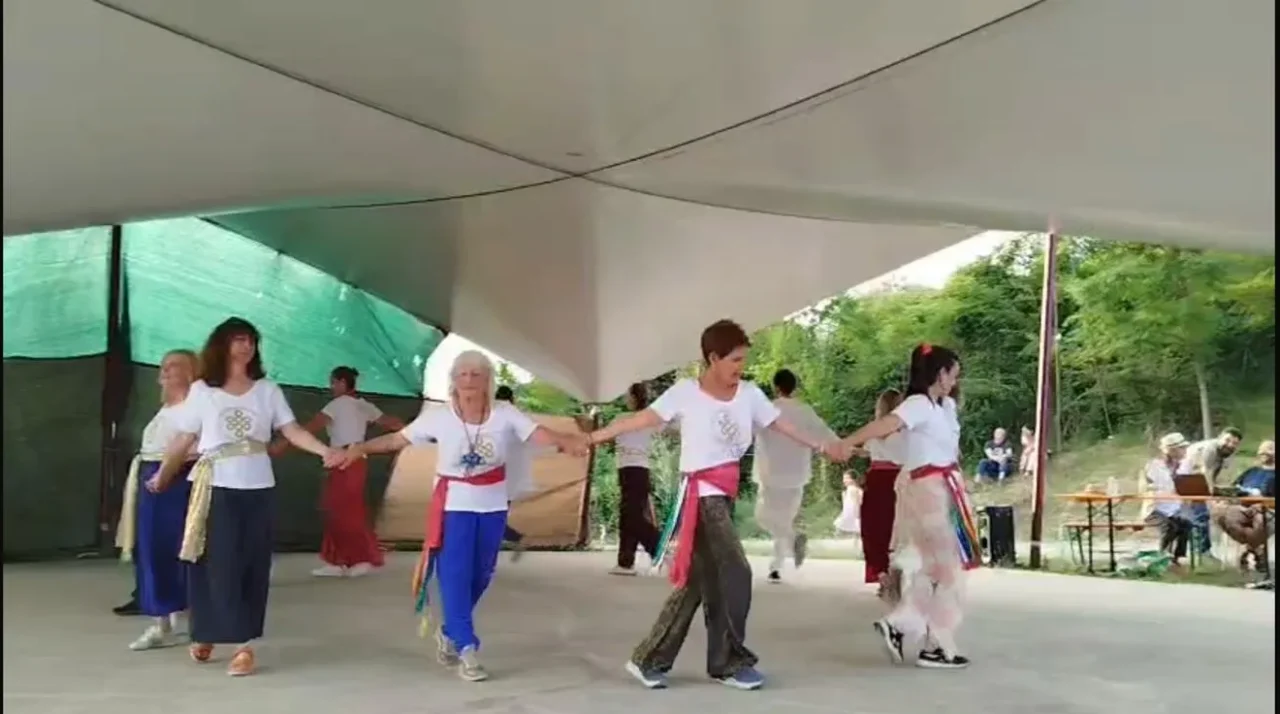
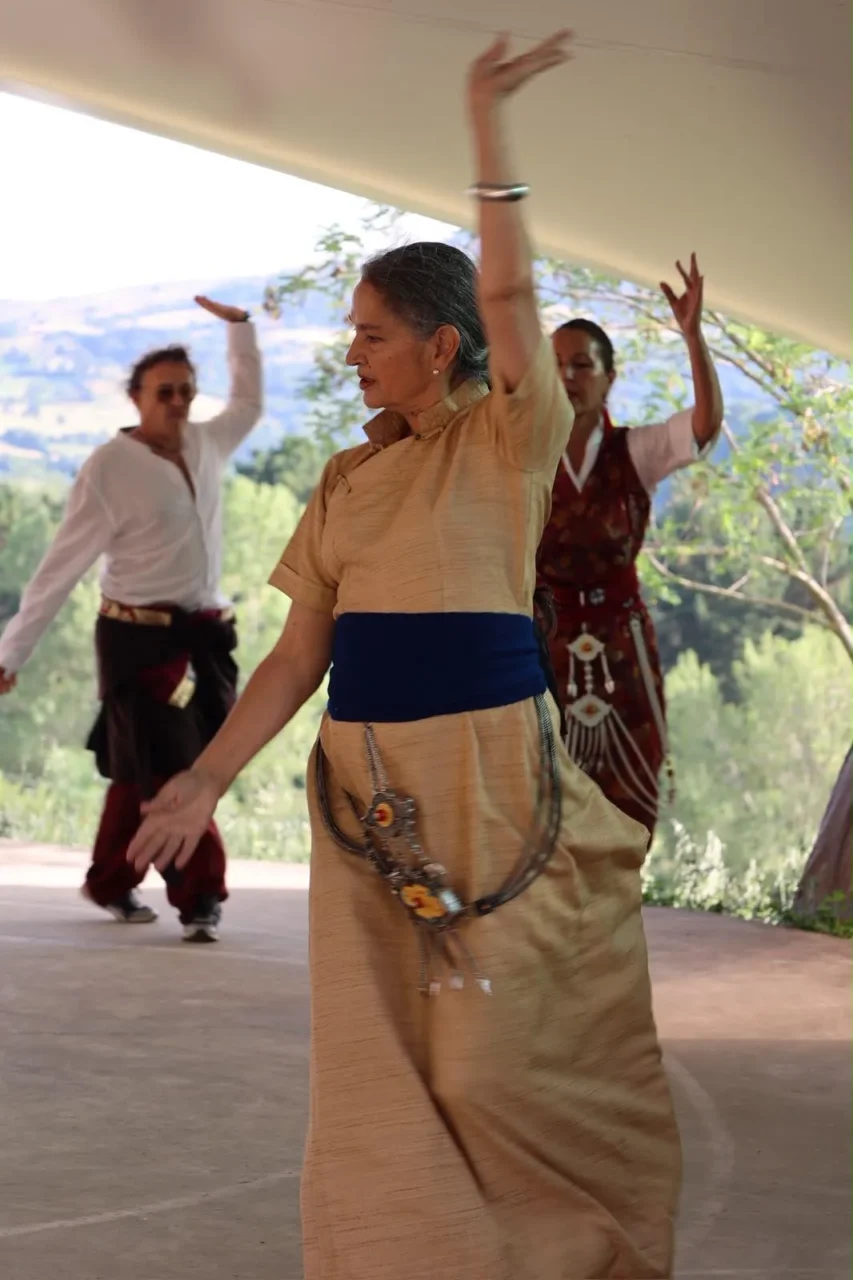
To complete the evening’s performance, the Khaita dancers took the stage. Khaita means “Harmony in Space,” and Khaita Joyful Dance was developed by Chögyal Namkhai Norbu together with his students to foster harmony within the individual and between people and their environment. They performed Sondang Lekmo, Bod La Dro, and Tala Shipa.
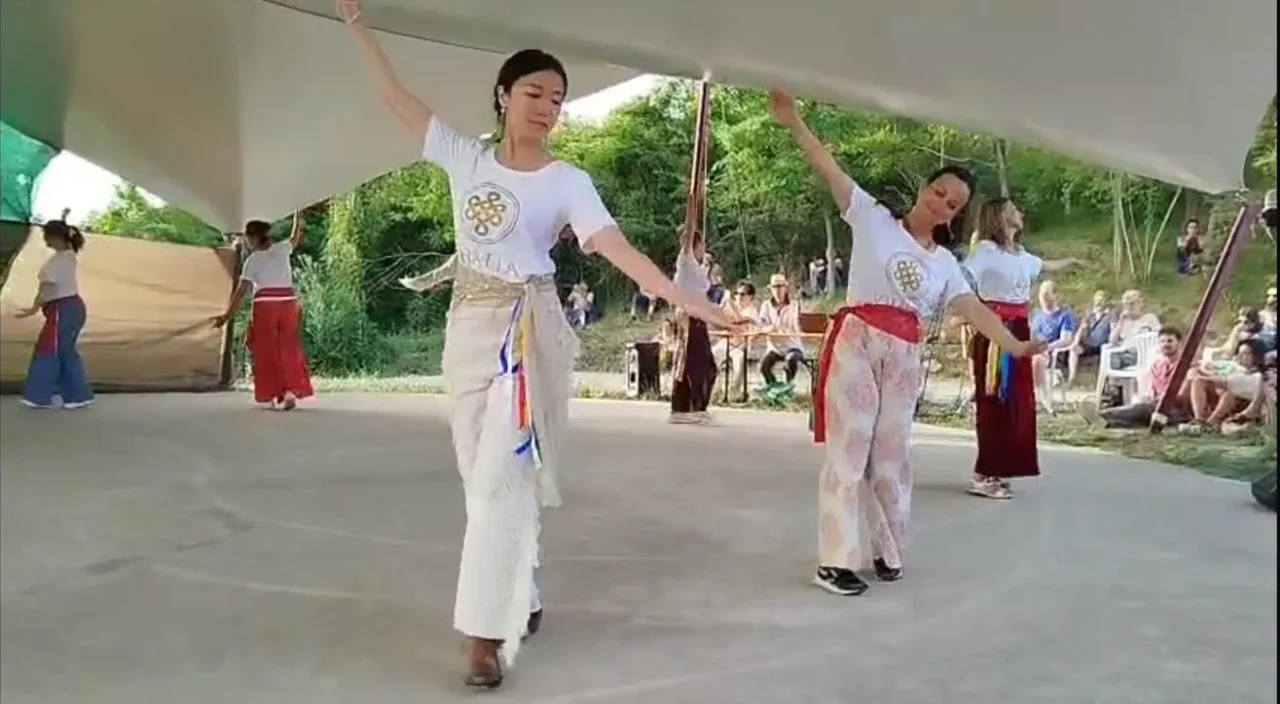
After this performance, the ‘Khaiteros’ asked the audience to join them, and the mandala platform was filled with both new and experienced dancers, including some children. After the dancing, as the sun moved lower in the sky, the dancers and the attendees went deep in conversations at the aperitif in front of the library.
2026 is turning into a bit of a summer of dance at Merigar, as two more Khaita and Gorshey performances are already scheduled, one at Merigar on July 25th at 7:30 pm with the popular singer Lobsang Delek, and one on August 8th during the open-air festival Incontrandosi sotto le stelle, or Meeting Under the Stars, to take place in Bagnoli, a borough of Arcidosso, organized by the Vettoraia Cultural Association. The live event with Lobsang Delek at Merigar will also include Vajra Dance and electronic music performed by Alessandro Di Maio, and Tibetan momos will be served. For that event a live stream is available on the Merigar YouTube livestream channel.
by A. Caroline Hotaling at Merigar, Arcidosso, Italy
This post is also available in:
 Italian