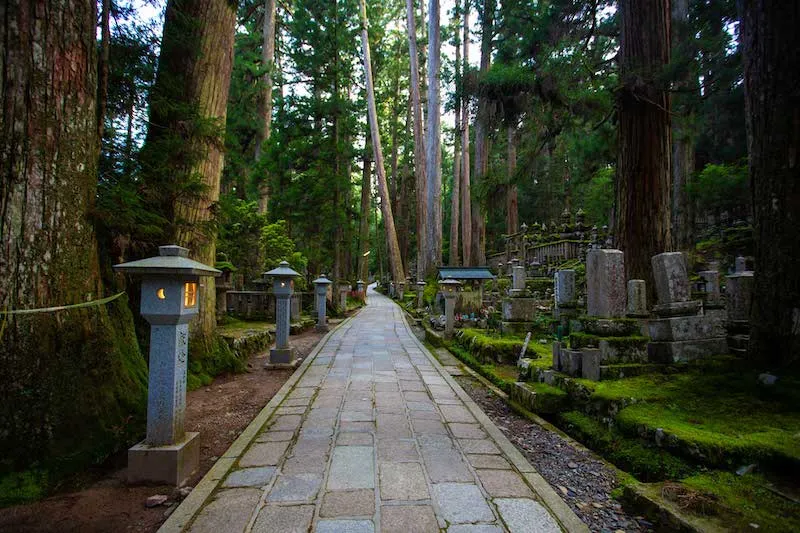
Winter temples, hot springs and the living Buddhist traditions of Japan
20 February – 6 March 2027
Japan is a country I have returned to many times, and there are certain things I never tire of: entering an ancient wooden temple on a cold morning, soaking in an outdoor hot spring with steam rising into the winter air, travelling by train through changing landscapes or, hungry, finding an exceptional tiny restaurant hidden behind a curtain in a doorway.
And then there is Kōyasan, high in the mountains of the Kii Peninsula, surrounded by great cedar forests, where Kūkai established his centre of esoteric Buddhist practice more than twelve centuries ago. Next February, after travelling through Tokyo, Kamakura, Hakone, Kyoto and Nara, this is where our journey will lead us.
We have deliberately chosen the end of February. Because of Japan’s extraordinary popularity, we would rather discover these places during the quieter final weeks of winter. It is a beautiful season: crisp air, gardens reduced to their essential forms, bare branches against temple roofs, vivid pink plum blossom, steaming onsen and perhaps snow beneath the cedars of Kōyasan. As March begins, the first signs of spring appear.
Travelling through Japan
Over fifteen days we travel from Tokyo through Kamakura, Hakone and Mount Fuji to Kyoto and Nara, before leaving the historical cities behind and ascending to Kōyasan. We finish in Osaka.
Throughout the journey we will be accompanied by Tomy-san, our experienced Japanese guide. After many years guiding Japanese travellers in the United States, he now accompanies foreign visitors through Japan and understands both perspectives.
We also hope members of the Japanese Vajra community will join us for parts of the journey, sharing their knowledge of Buddhism and sacred places.
Before Japan: Kūkai and the syllable A
In a sense, our journey begins several months before we leave. In November, Professor David Gardiner will join us online for a special talk about Kūkai, Shingon Buddhism and Mount Kōya, introducing the religious world we will later encounter ourselves.
Kūkai, later known as Kōbō Daishi, travelled to China at the beginning of the ninth century and returned to Japan with transmissions of esoteric Buddhism. The Shingon tradition he established preserved a world of mantra, mudra, mandala, ritual and contemplative practice that will be particularly fascinating for those familiar with Tibetan Vajrayāna.
One practice we hope to experience at Kōyasan is Ajikan, contemplation of the Sanskrit syllable A, which in Shingon has profound significance connected with the originally unborn nature of phenomena. Those familiar with Dzogchen may find it intriguing that A also has such importance there, although the traditions and methods are distinct.
Tokyo, Kamakura and Hakone
We begin with the extraordinary energy of Tokyo, visiting Sensō-ji and the Buddhist collections of the Tokyo National Museum, while leaving time simply to experience the metropolis. Tokyo is full of contrasts: neon and incense, skyscrapers and tiny izakaya, enormous crossings and quiet temple courtyards.
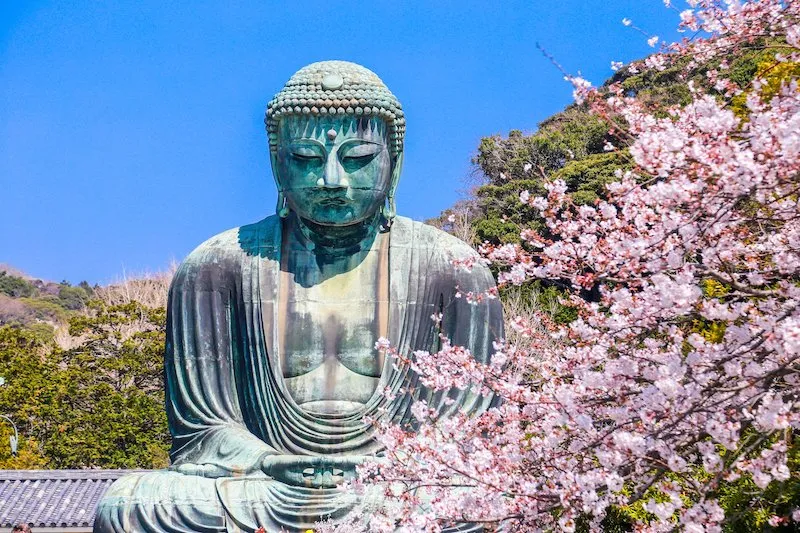
From there we travel to Kamakura, one of my favourite places near Tokyo. Wooded hills surround the old city and temples appear among gardens and small roads. We visit the great bronze Amitābha at Kōtoku-in, the Kannon of Hase-dera and Engaku-ji, where we will have an opportunity to experience zazen.
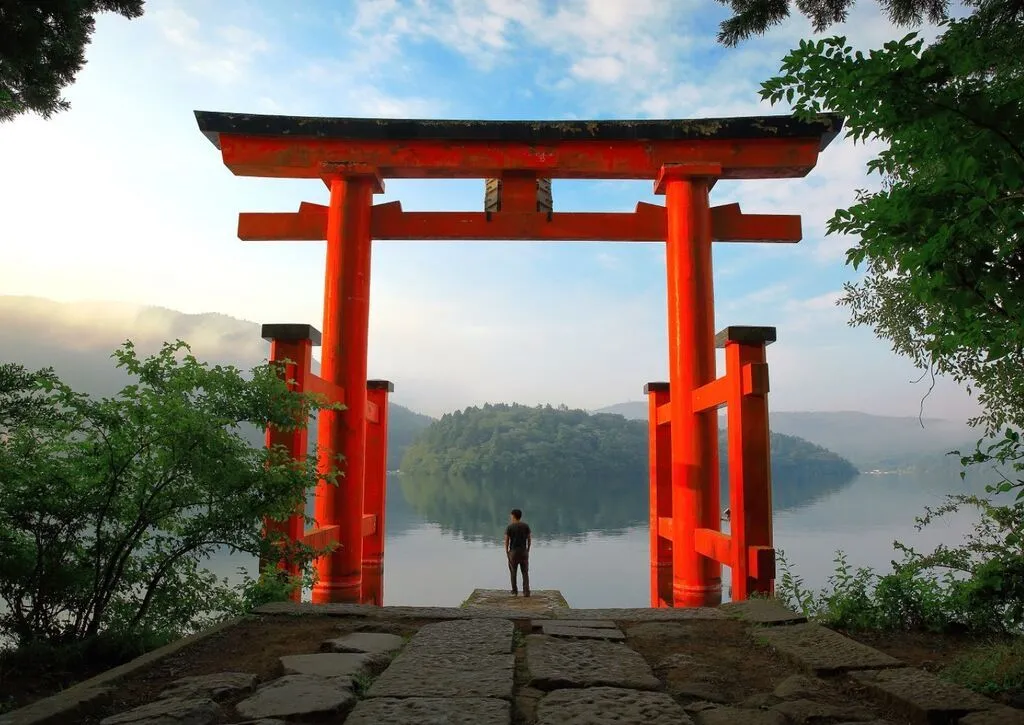
We then continue to Hakone and Mount Fuji. Here we slow down, staying in a traditional ryokan, enjoying a multi-course kaiseki dinner and, after a cold February day, soaking in the hot waters of an onsen.
Kyoto in winter
Then we take the Shinkansen to Kyoto. There are few cities where religion and aesthetics have become so completely intertwined. I am always struck by small things here: moss against an old stone, the grain of a wooden pillar, a painted screen, the reflection of a temple in water or a garden designed to frame a particular view. Winter strips away the superfluous and somehow makes these qualities still more visible.
At Tō-ji, closely associated with Kūkai, we encounter the extraordinary sculptural mandala of Shingon Buddhism. Rather than looking at a mandala on a page, we find ourselves physically standing among its deities.
At Sanjūsangen-dō, the great central Kannon is surrounded by one thousand standing images of the Thousand-Armed Bodhisattva of Compassion. We also visit Kiyomizu-dera and travel up Mount Hiei to Enryaku-ji, the great centre of Tendai Buddhism.
At the Zen temples of Ryōan-ji, Daitoku-ji and Tenryū-ji, stone, moss, water and empty space seem to ask us to pay attention differently. There will also be time for the Philosopher’s Path and wandering through Gion.
Nara
From Kyoto we travel to Nara, the ancient capital. It feels older and more spacious, with deer wandering through the park between some of the greatest surviving monuments of early Japanese Buddhism.
At Tōdai-ji we stand before the enormous bronze Vairocana Buddha. The scale is monumental, yet strangely peaceful, and Vairocana leads us naturally towards Dainichi Nyorai, so central to Shingon.
Up the mountain
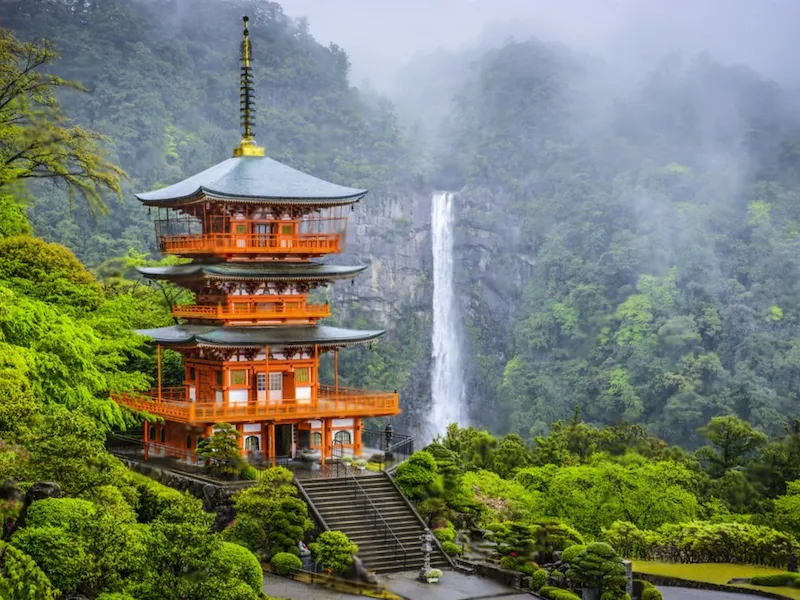
Eventually we leave the cities behind. The journey into the mountains towards Kōyasan feels like entering another world. Kūkai established his centre here more than twelve centuries ago, and the mountain remains one of the principal centres of Shingon Buddhism.
We stay for three nights in a Buddhist temple lodging, waking for morning prayers, eating shōjin ryōri, witnessing the Goma fire ritual and receiving an introduction to Ajikan. We visit the Danjō Garan, Kongōbu-ji and the Reihōkan Museum with its collection of Buddhist art.
But perhaps the place I most look forward to sharing is Okunoin. The path runs for kilometres beneath enormous Japanese cedars. On either side, thousands of tombs and memorial stones disappear into the forest, some centuries old and almost completely covered in moss. At the end lies the mausoleum of Kūkai.
According to Shingon tradition, Kūkai is not dead but remains there in meditation awaiting Maitreya, the future Buddha, and food continues to be ritually offered to him each day.
Whatever one’s beliefs, walking through Okunoin is a powerful experience. The forest, the age of the stones, the silence and the devotion of generations of pilgrims create an atmosphere difficult to describe until one has been there.
Back to ordinary life
Eventually we descend from Kōyasan and rather suddenly return to contemporary Japan, finishing in Osaka among lights, restaurants, noise and life. After the refinement of kaiseki and the simplicity of Buddhist temple cuisine, Osaka gives us yet another Japan: lively, informal and famously enthusiastic about eating.
We can read about Kūkai, study mandalas and hear Professor Gardiner explain Shingon philosophy. But there is another kind of understanding that comes from being there: sitting in a Zen garden on a cold February morning; seeing a thousand images of Kannon together in a dark wooden hall; waking to chanting in a temple on Mount Kōya; walking beneath ancient cedars towards Kūkai’s mausoleum along a path travelled by pilgrims for more than a thousand years.
Our Insight Tours have always tried to bring these two things together: learning and experiencing. We are not trying to see all of Japan in fifteen days. We are trying to experience something of its essence.
The Road to Kōyasan
20 February – 6 March 2027
Shang Shung Institute UK – Insight Tours
A fifteen-day journey through Tokyo, Kamakura, Hakone, Kyoto, Nara, Mount Kōya and Osaka, accompanied throughout by our experienced Japanese guide Tomy-san and including three nights in a Buddhist temple lodging at Kōyasan.
€3,900 per person sharing a double/twin room
€4,800 single room
A €100 reduction is available for those paying the full cost by 31 October 2026.
Full itinerary, practical information and registration:
The Road to Kōyasan – Japan 2027