During the 2025/2026 school year, the Merigar Community promoted two projects within the schools of the Amiata Ovest School District, aimed at the entire school community: students, teachers, and administrative staff.
The initiatives arose from discussions and collaboration with the School Principal and were integrated into programs aimed at promoting well-being at school. The main objective was to foster a culture focused on physical and mental well-being, self-respect and respect for others, and the creation of a more mindful and harmonious school environment.
As for the project aimed at students, it sought to provide useful tools for coping with stress and developing greater self-awareness through the practice of Yantra Yoga. Yantra Yoga is a very ancient teaching with a millennia-old tradition, whose origins trace back to the Dzogchen Teaching, which originated in Tibet and was introduced to Europe 50 years ago by Master Chögyal Namkhai Norbu, who founded the Dzogchen Community in Merigar, in the municipality of Arcidosso.


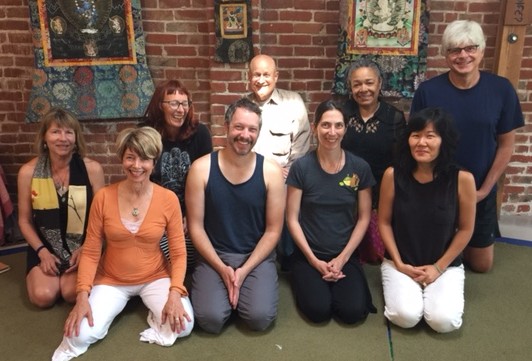
The Yantra Yoga teachers involved were Angelica Siedlecki (who led a total of 6 sessions) and Letizia Pizzetti (who led 5 sessions, plus handled most of the project’s preparation and coordination).
The program was initially structured in two phases: the first, an introductory phase to be held during school hours, aimed at presenting the principles of Yantra Yoga through theoretical sessions and practical activities (breathing exercises and simple movement sequences); and the second, an in-depth phase, held after school. From the very beginning, however, a flexible approach was maintained, allowing for the shared development of the program together with the students and teachers.
Five classes were involved: three from the High School of Human Sciences, one from the High School of Natural Sciences, and one from the Vocational School.
The program began with an initial classroom meeting, during which Merigar and its objectives were briefly presented, with a focus on the cultural and educational activities it promotes. A dialogue-based lesson was conducted, aimed at stimulating active student participation and a shared reflection on the concept of well-being, starting with the guiding question: “What does well-being mean to you?”.
Based on the responses, a discussion ensued regarding the fact that well-being is often viewed in a narrow, partial way, limited to physical or mental aspects; a broader, more integrated understanding of the concept was therefore proposed. In this context, Yantra Yoga was introduced as a practice capable of harmonizing these dimensions.
The second part of the session was dedicated to practical activities, conducted directly in the classroom, which included:
- body mobilization exercises that can be performed while seated,
- moments of self-observation and self-listening,
- and a brief final phase of relaxation and sharing.
The students received the activities with interest and curiosity.
Following these initial sessions, the possibility emerged of continuing the project, particularly in the classes of the Liceo delle Scienze Umane, through additional activities conducted during Physical Education classes, involving the entire class group.
The idea of continuing with sessions during extracurricular hours, however, proved challenging due to the students’ numerous commitments and organizational difficulties related to travel.
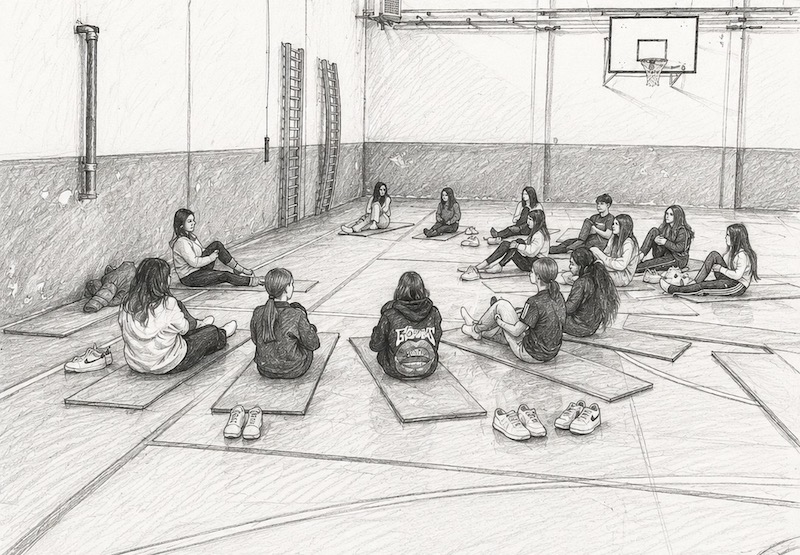
On March 23 and 24 and March 30 and 31, six Yantra Yoga sessions were held at the Liceo delle Scienze Umane, involving three classes (first, second, and third year), with two sessions for each.
The activities took place in the gym during physical education classes, in coordination with the subject teacher. The classes involved consisted of 13, 26, and 13 students, respectively.
Each session, lasting approximately 1 hour and 10 minutes, included preparatory exercises, breathing practices, tsigjong, lungsang, tsadul, several yantras, and a final phase of rhythmic breathing and relaxation.
Overall participation was positive. After initial moments of awkwardness and restlessness, a gradual reduction in noise and interactions among students was observed during the lessons, leading to a final state of greater calm and concentration. At the end of the sessions, some students reported feeling more “calm,” “relaxed,” and “at ease.”
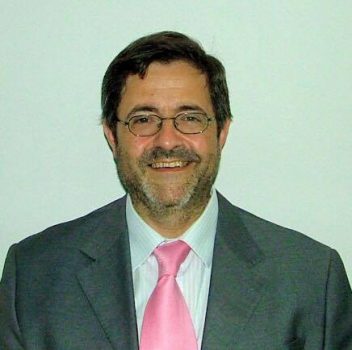

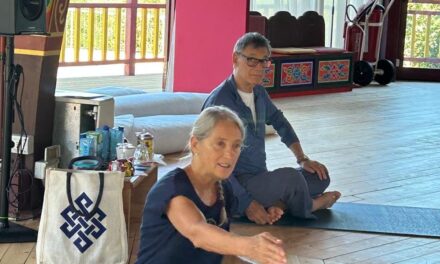
As for the project aimed at the school’s teachers and administrative staff, this consisted of a total of 6 sessions, led by Fabio Maria Risolo and Luigi Vitiello. It began with a general introduction to the principles and benefits of meditation practice, understood as an important tool for achieving a state of calm and relaxation—essential for anyone working in a context where interpersonal relationships and dialogue are paramount.
And this is evidently true in particular for those working in schools. On the other hand, no relaxation or development of dialogical and empathetic skills is possible without a constant attitude of presence and self-observation. All of this can be enhanced through the attitude of attention and understanding, which is inherent to all school staff, but can certainly be greatly developed through the practice of meditation.
The basic aspects of meditative practice were introduced, with appropriate references to Buddhist teachings and Dzogchen. Following a lively discussion with the participants, specific practice sessions were then offered, followed by moments of sharing experiences.
Attendance declined as the sessions progressed; however, a request emerged to continue the proposed program, focusing specifically on the body through the practice of yoga. We propose to continue this aspect next year.
Fabio Maria Risolo, Luigi Vitiello, Letizia Pizzetti, Angelica Siedlecki
This post is also available in:
 Italian