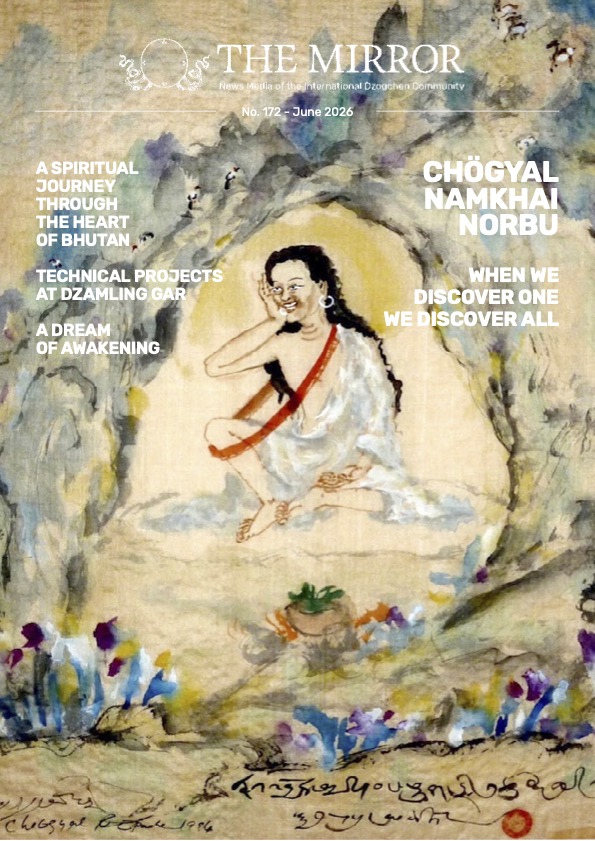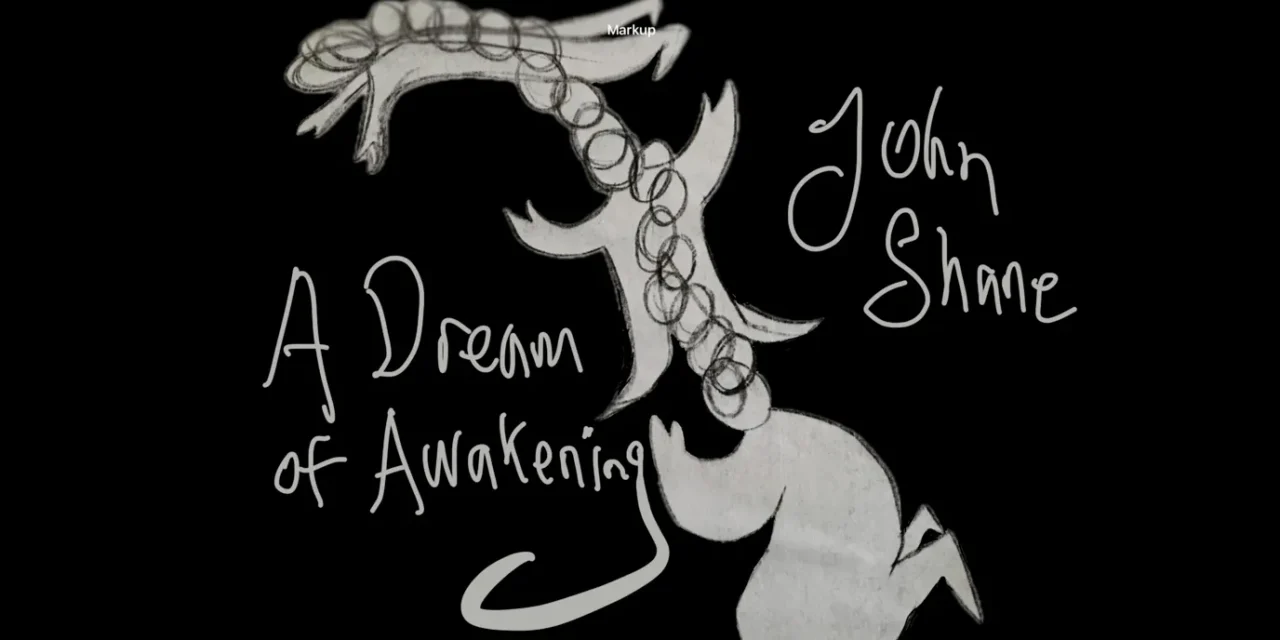
(Night Flights From A London Hospital Bed)
John Shane
Continuing The Celebration Of The 40th Year Of The Publication Of ‘The Crystal And The Way Of Light: Sutra, Tantra, And Dzogchen’.
‘Practice does bring certain advantages….’
Chögyal Namkhai Norbu
I’ve just had the second of what will be a series of three operations, and, lying in a hospital bed in London, I’m trying to think of what I will write about for an article for the next edition of ‘The Mirror’, the magazine of the International Dzogchen Community.
I’ve promised to write an article for the next issue and the deadline is rapidly approaching.
I’ve been writing for ‘The Mirror’ since its very first edition when I was one of the founding editors trying to get a community newspaper – as it was then – started.
At that time, no one would write for ‘The Mirror’, so I had to write nearly everything that went into the paper for the first year’s editions that came out every month back then.
I was, in fact, also the person who chose the name of the newspaper and the symbol of the Tibetan mirror of five precious metals, or ‘Melong’ for its symbol. So I go back a long way with ‘The Mirror’, and I want to write another article for it.
I’m nearly eighty years old, and for some time people have been asking me to write down the stories of my travels with Rinpoche before I die…
Lying in my hospital bed in London, I’m drifting in and out between the states of waking, sleeping, and dream…
Past, present, and future keep mixing in my awareness, and, thinking about what to write for ‘The Mirror’ I find that my mind keeps going back to what happened in Italy, at Formia, over forty years ago…
My body may be lying in a hospital bed in London, but in my mind I’m traveling back forty years and a thousand miles to a time when I was living in my teacher the Dzogchen Master Chögyal Namkhai Norbu’s private family apartment, sleeping on the sofa in the living room at night, and, in the daytime, beginning to work with Chögyal Namkhai Norbu on producing a book of his teachings that would four years later be published with the title ‘The Crystal And The Way Of Light: Sutra, Tantra, and Dzogchen’…
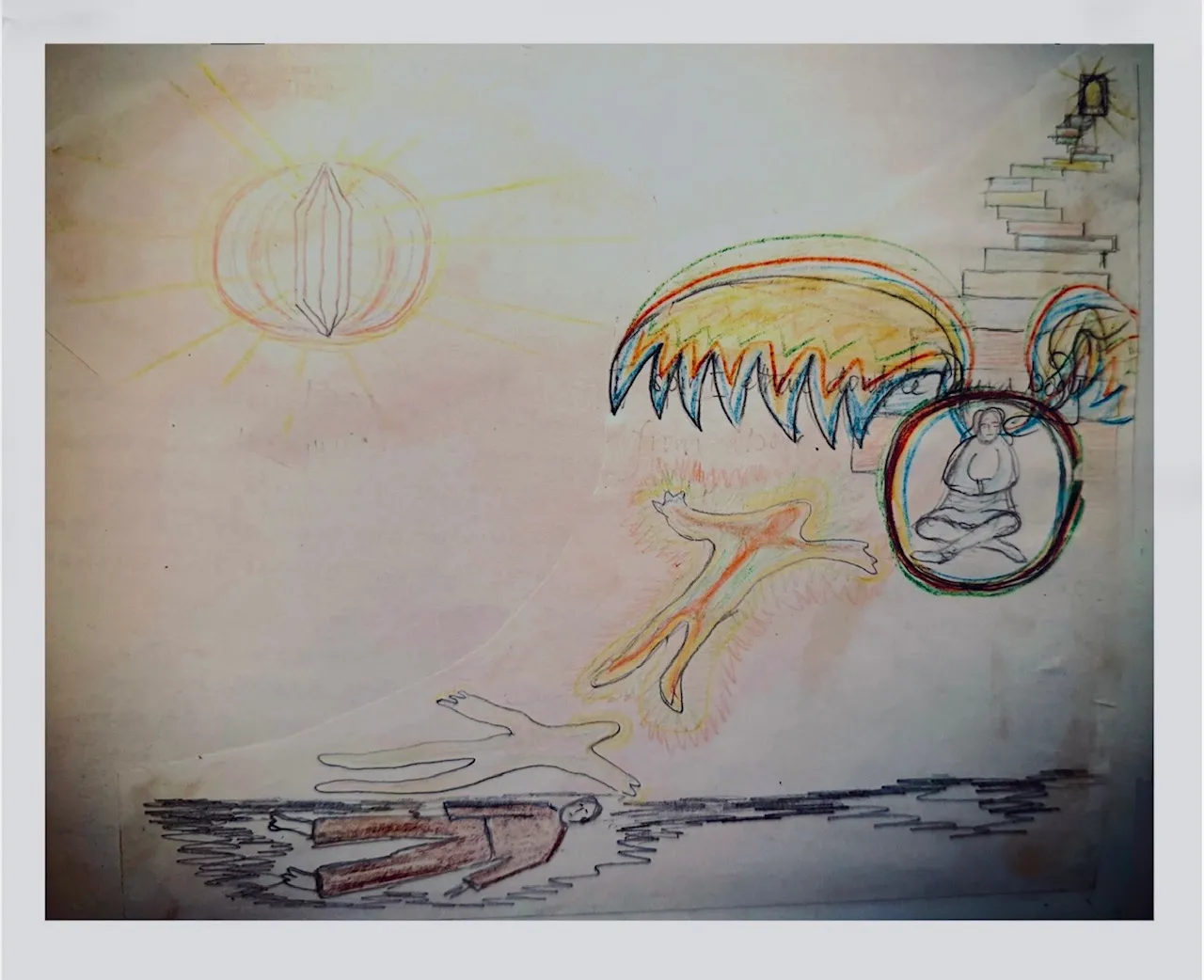
A Dream of Awakening: Night flight, Body Of Light. (Drawing by John Shane. Pencil and crayon.)
I’m sitting with Rinpoche at the dining table in the main room of the apartment in Formia, and Rinpoche is saying to me that it’s time for me to do a solitary retreat on the mountain behind the house….
He’s advising me on what I will need to take in order to do the retreat and what I should practice while I’m up there. He says he is going to lend me a tent for the retreat.
Everything about this situation seems back to front and upside down.
Rinpoche invited me to stay at his private family apartment for a weekend, and I’m still here after about six weeks, sleeping on the sofa in his living room.
Now he’s telling me that he will act as my retreat attendant while I’m up there on the mountain behind the apartment building, and, of course, I realise that this is an honour, but it still feels strange.
I’m the student and Rinpoche is the master, and the student usually serves the master, but this is going to be the other way round.
But then, thing’s have been the other way round ever since I arrived at the apartment in Formia.
Rinpoche has been cooking for me, preparing meals of Tibetan food, and I can’t help but feel that I – the student – should be cooking for him, the master.
The food he cooks is delicious, but he prepares meals in the Tibetan style, and all of the main meals he makes are meat dishes.
My problem is that I’ve been a vegetarian for twelve years, and I felt so honoured when I arrived at the apartment in Formia and found that Rinpoche was going to cook for me that when I first saw what he was preparing for dinner, I didn’t want to tell him that I don’t eat meat.
And – after I’d eaten that first evening meal – I felt it was too late to say anything about my being a vegetarian.
So there you are. I’m now a meat-eater again.
During the weeks I’ve been in Formia, Rinpoche has begun discussing my working with him to produce a book of his teachings.
I studied architecture at Cambridge University for three years before discovering that I wasn’t cut out to be an architect and moving on to study other things.
But, at the apartment in Formia – using skills I learned at the Cambridge Architecture School – I borrow a large sheet of drawing paper, a ruler, and a set of drawing pens and pencils, and, dividing the paper into a grid of rectangular cells, I prepare a graphic analysis of the structure for the book.
That graphic analysis is, of course, something I could have done easily on a computer, but I’m doing this work some time before the age of the home computer.
In each rectangle of the grid on the paper, I write a brief title to indicate one of the topics of the Rinpoche’s teachings as I had heard him teach them or as I had read them in a transcript of one of his talks, and in that way I set out what I think will be a good way to shape and structure the book.
When I show Rinpoche the sheet of paper with my outline for the content of the book on it, he looks at it carefully for a long time, and then says approvingly, ‘Questo e un uomo chi ha finito con la Università.’ ‘This is a man who has finished with the University.’
He’s referring to the fact that I had been talking to him about the possibility of my studying with him at the University in Naples, where he was then working at the Oriental Institute as Professor of Tibetan and Mongolian language and culture.
But, unfortunately, when I had gone to Naples from Formia with Rinpoche by train, a few weeks earlier to monitor some Tibetan language classes that Rinpoche was teaching to his students, I had found that although I could speak Italian quite well, my Italian wasn’t good enough for me to be able to follow lessons in Italian about learning a complex oriental language like Tibetan.
So I had had to give up my plans to study with Rinpoche at the University in Naples, and that had disappointed me a great deal.
Now, though, back in Formia, Rinpoche is showing me that my not being able to study the Tibetan language with him at the University of Naples doesn’t matter that much as I already have other skills that can be useful in helping him with his work.
But – whatever else was going on – Rinpoche is always first and foremost a Dzogchen master, and as such he’s interested above all in his students spiritual development.
So – it’s early one morning a couple of days after he’s seen from the outline I had produced that I have a firm grasp of a possible overall structure for a book of his teachings – and he looks at me and says, ‘Non si realizà solo scrivendo un libro’. ‘We don’t get realised only by writing a book.’
Then he says: ‘John, you must know that – in Dzogchen – real knowledge and understanding is more important than meditation that involves working with the mind. I know you like to sit in formal meditation, but, more than just doing sessions of sitting meditation, you need to fully understand the nature of reality in your own experience.’
And then he tells me that I should begin doing retreats on the mountain which I can see clearly from the apartment building where he lives with his family, an apartment building that looks, in one direction, towards the Mediterranean Sea, and, in the other direction, towards the mountains…
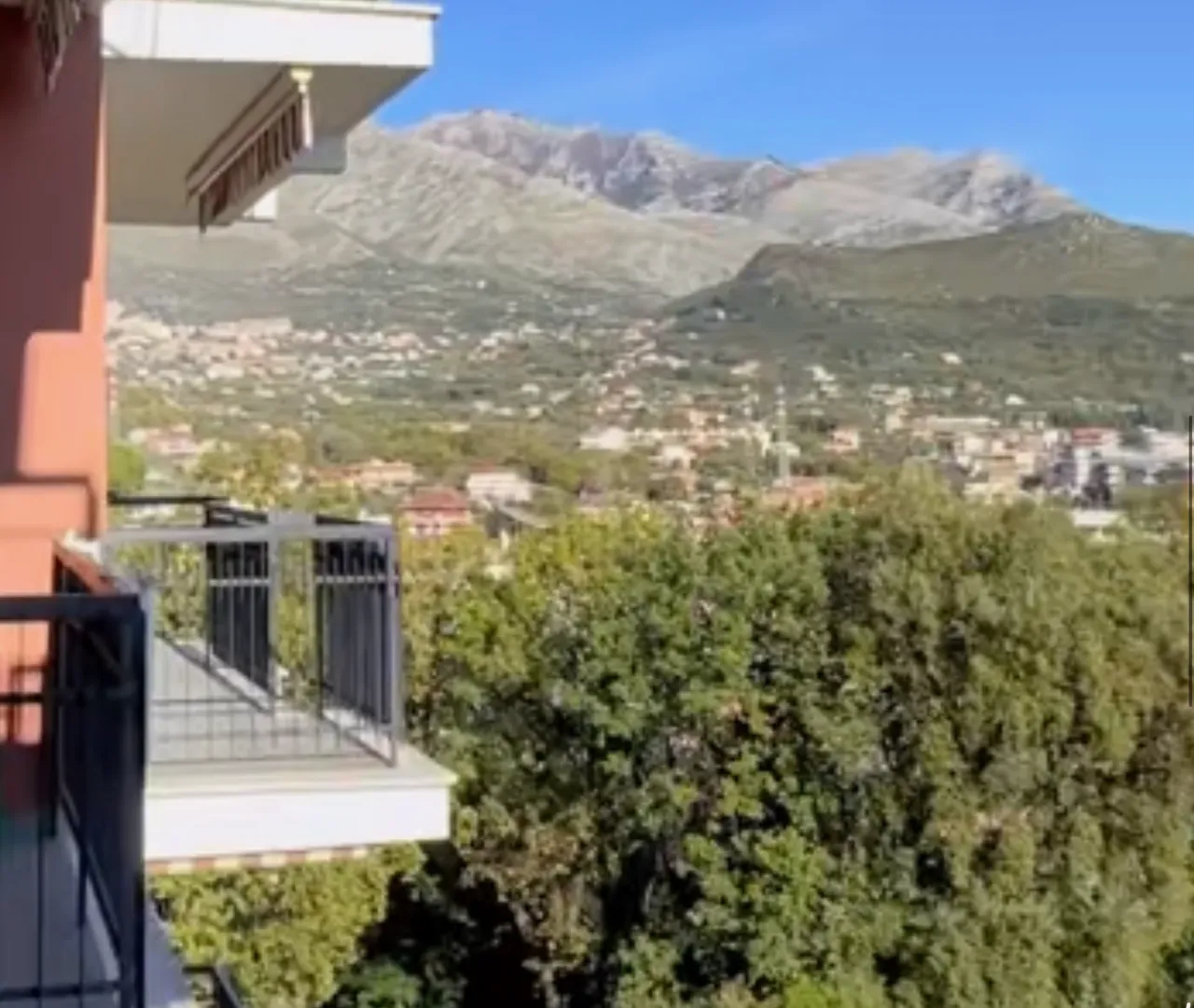
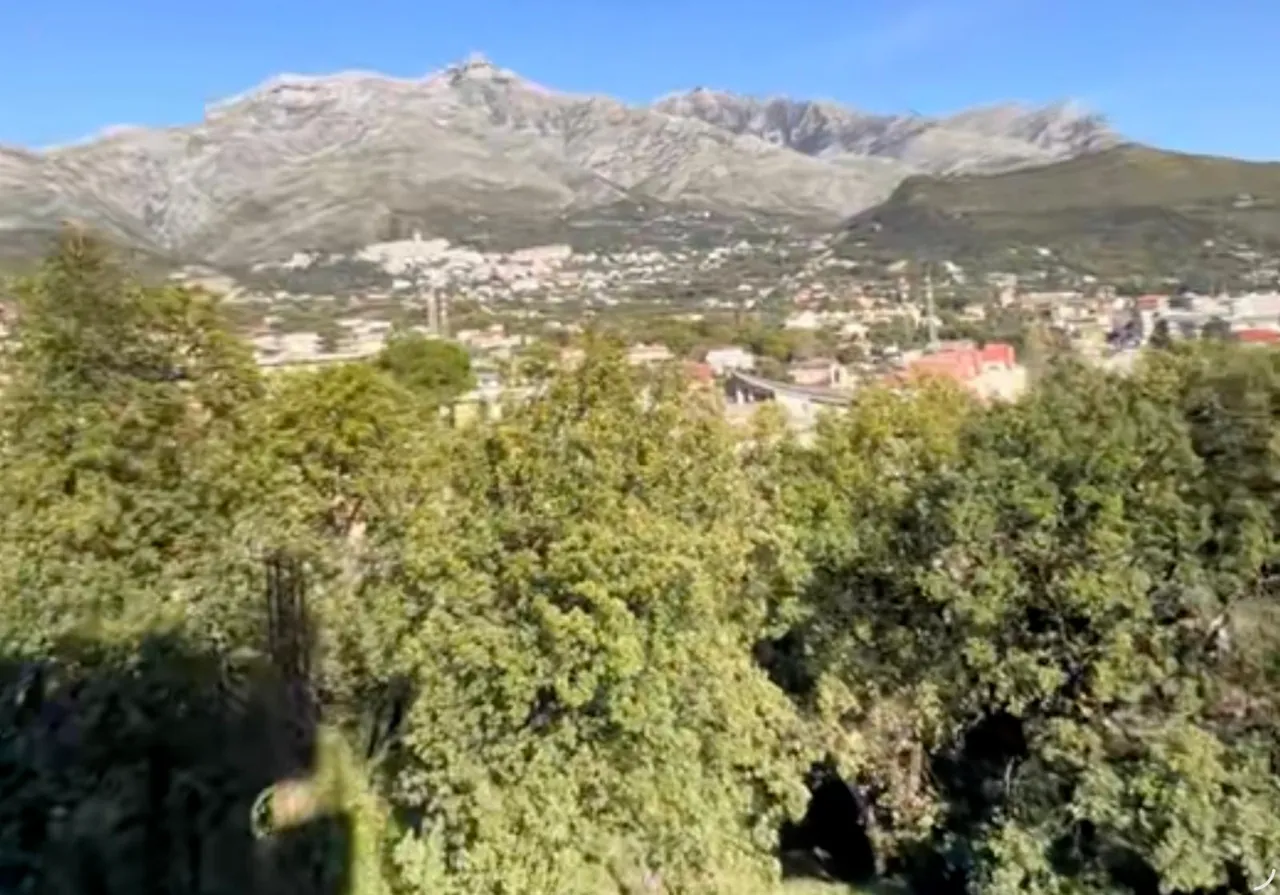
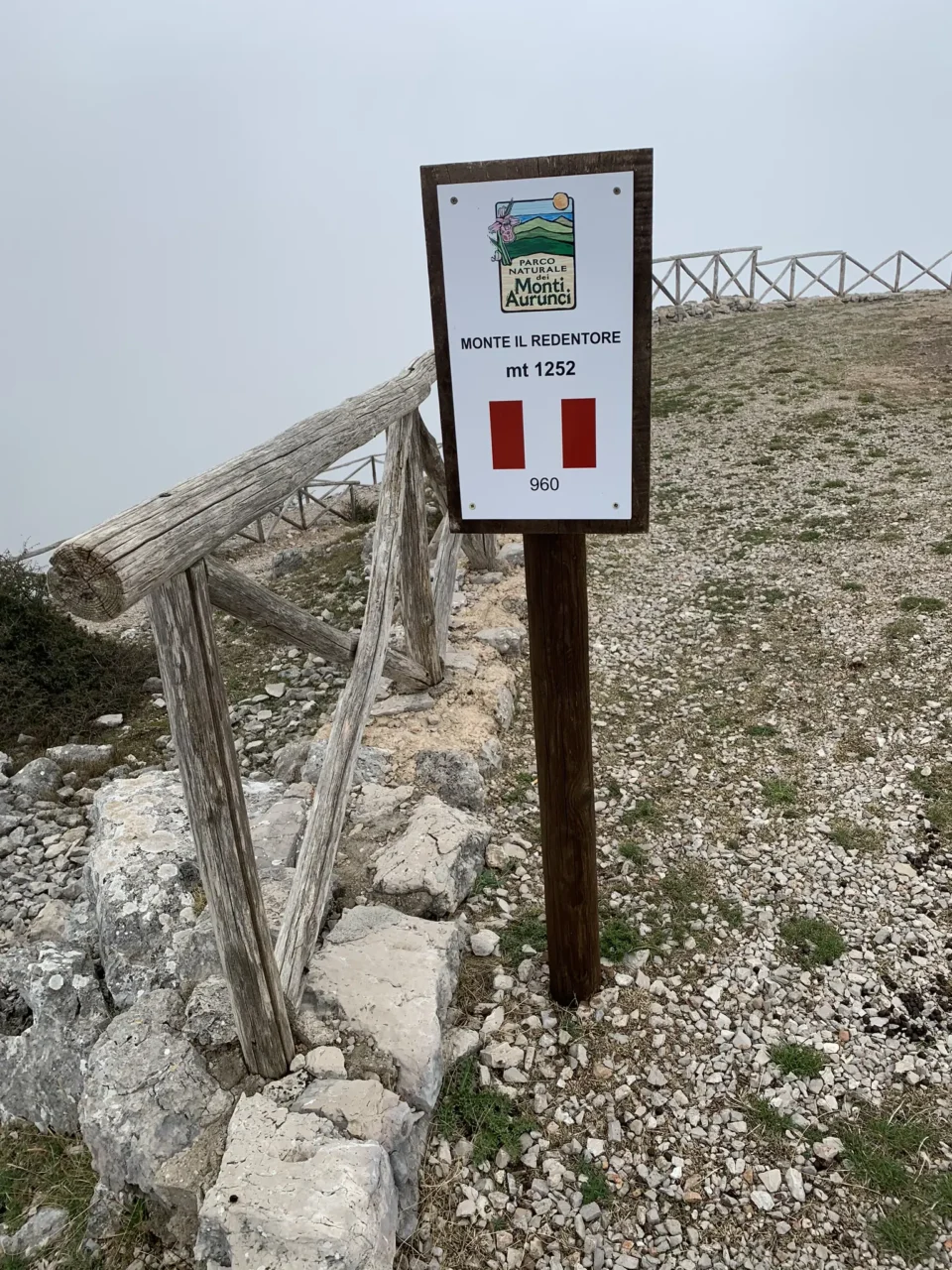
View of Monte il Redentore, the peak of the Arunci mountain range, in the distance, as seen from the Namkhai family’s apartment building, Residenza Parco degli Ulivi, in Formia.
But now… I’m awake again, back in the hospital bed, and there’s pain…and I’m remembering that I’ve just had an operation… and despite having been told all those years ago ‘Non si realizà solo scrivendo un libro’, it seems that I’m still a writer and I want to write.
I’m in hospital after a serious surgical procedure that is the second of what will be a series of three operations, and I’m still thinking about how I want to write an article.
I tell all this to the kind young Romanian nurse who’s caring for me when she comes to check the machines at my bedside.
And she asks, ‘So you like to write?’
‘Well,’ I reply, ‘Hemmingway said, “Writing is easy. Just sit down and open a vein’.
Hearing that, the nurse just looks at me and laughs.
‘All my life I’ve practised the habit and discipline of the notation of consciousness, and, over the years, along with meditation, I’ve found it very useful and worthwhile, so it’s still important to me,’ I tell the nurse,
As she leaves the room, she turns back with a smile, giving me a thumbs up, laughing again, and mouthing the words, ‘Good luck..!’
I have bruises on my arm from where she and other nurses have inserted needles to take blood for tests, and I still have a canola inserted in my right hand, so I won’t be writing anything with that hand for a while.
And I also have a catheter inserted, attached to a tube that disappears to some place under the bed, so I won’t be going anywhere else to write any time soon either.
I’m falling asleep, thinking about the article I want to write, but then my surgeon comes to visit me and he tells me that the operation went well.
He asks me how I’m doing, and I tell him that I can’t keep awake. He tells me to take it easy, and leaves, saying that I’ll feel better the next day.
But the night is hard.
The room isn’t completely dark and there’s the humming of machines around me with flashing lights. I’m aslo only able to half recline, so I find it difficult to sleep.
I have a kind of remote control at my bedside to call a nurse if I need help or more pain medication, but I don’t want to have to use much of that, preferring to practice to handle the pain instead – at least as much as I can – so I don’t want to use the remote.
Lying there in the semi-darkness in a hospital room in the centre of London, whether I’m awake or dreaming, my mind can travel anywhere, and, in that sense, even though I’m confined to bed, I’m free.
Half way between sleep and waking – in the hypnagogic state – everything becomes a blur.
But then when it becomes clear again, I seem to be rising above my body lying on the bed, I seem to be flying…
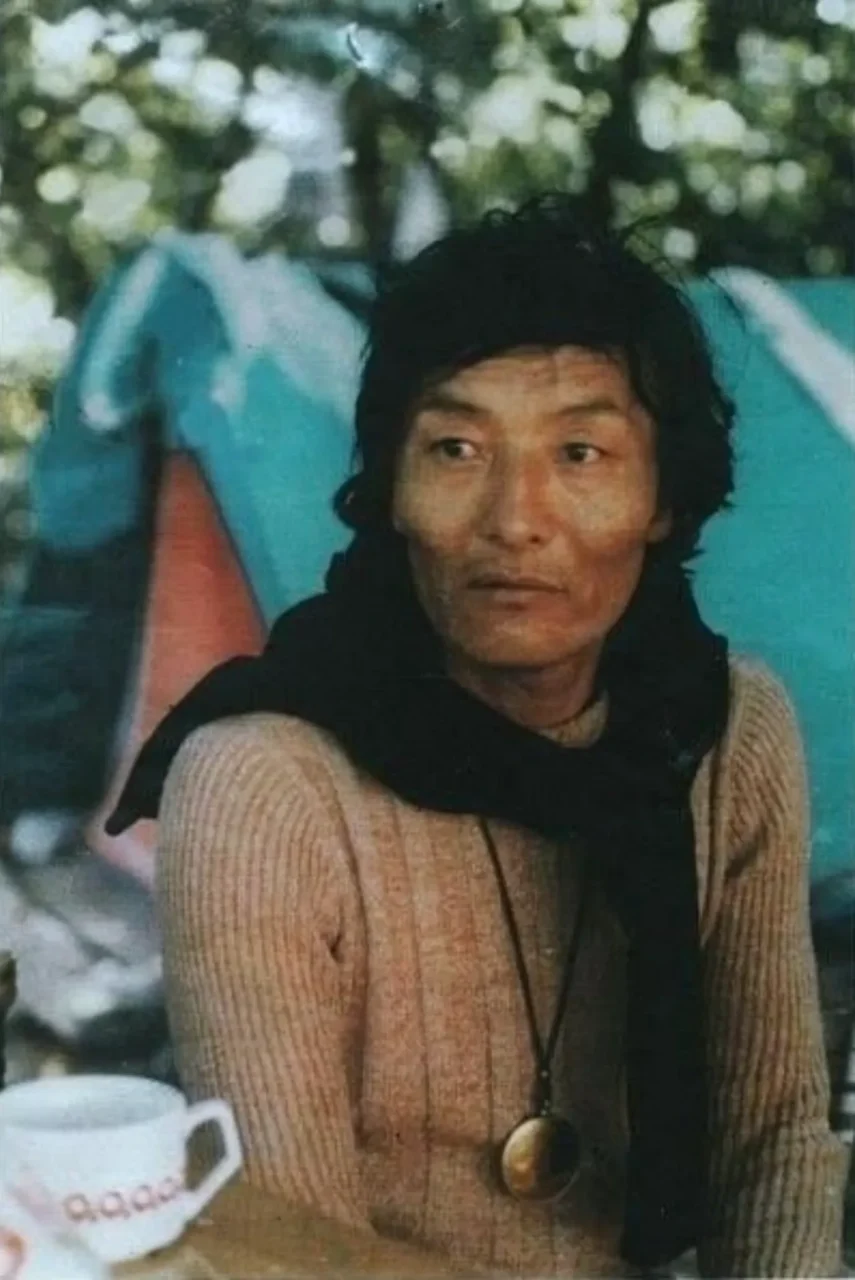
And then – in a flash – I’m back in the Namkhai family’s apartment in Formia.
Rinpoche is helping me prepare for my first retreat on the mountain.
I have a sleeping bag, but he is lending me a small tent.
Rinpoche has helped me prepare bottles of water and plastic bags of food. I have a small camping-gas stove. I have my washing kit.
I’ve packed everything into a hold-all bag and am preparing to go carry it out to Rinpoche’s car – an old and rather battered Fiat – in which he’s going to drive me up to the top of the mountain, but then – at the last moment, just as I’m about to zip up the hold-all – Rinpoche comes into the living room from his bedroom and, without saying a word, pushes a plastic folder containing a bunch of papers into my bag.
Then we get into the car and drive off.
Another view of the Arunci mountain range above Formia where Norbu Rinpoche took John Shane to do his solitary retreats – as seen from the apartment building in which the Namkhai family then lived…
The whir and hum of the machines in the hospital room seem to turn into the sound of the engine of Rinpoche’s car and in my mind’s eye I can see myself sitting in the passenger seat looking out the window at the landscape scorched bone-dry by the searing Italian summer sun while Rinpoche drives us out of the town and around the hair-pin bends as we go up the increasingly steep and winding road – on and on – up the mountain, the number of trees diminishing as we climb higher and higher towards the clear blue summer sky on the horizon.
When we finally reach an area near the top of the mountain, Rinpoche stops the car and we get out.
We’ve arrived at a kind of rocky plateau with a sparse smattering of parched grass here and there among the rocks, and this is where Rinpoche helps me set up the small two man tent.
There is one lone tree that creates a small patch of shade, and I tie the plastic bags containing my food to one of its branches to shelter it from the sun and to keep it out of reach of roaming animals.
After giving me some final instructions, Rinpoche leaves, waving to me from the window of the car, and I’m alone on the mountaintop outside my little tent…
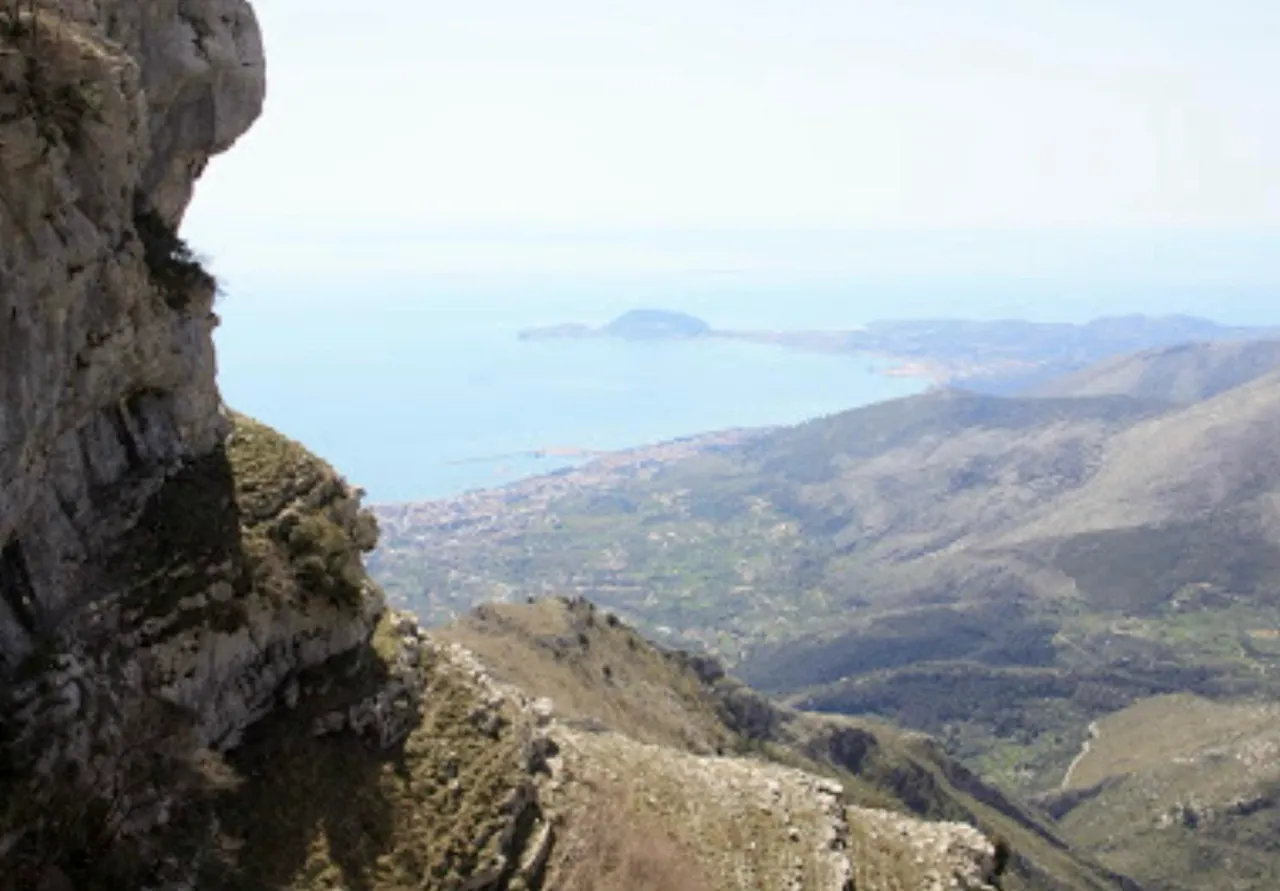
Looking down from the mountain over the town Formia across the Mediterranean Sea towards the port of Gaeta where there is a US Navy base.
I’m trying to get comfortable in the hospital bed, but – because I’m all wired up – I can’t move much and it’s hard to find a position to lie in that doesn’t make me get cramps in my back.
I press the button to call the night nurse and when she comes she helps me settle better into the pillows that are propping me up.
The nurse tells me to keep drinking water to keep my fluids up, and then she leaves…
In the town of Formia it gets very hot in summer even though it’s at sea level.
You might expect it to be cooler at the top of the mountain, but there’s not much shade up there, and with the sun beating down on my retreat place, it seems even hotter up here than it was back down at the coast.
Because I was going to be doing my retreat in such an isolated place, among the practices Rinpoche had suggested I do was Outer Rushen, which involves behaving like a crazy person, and acting out in the instant whatever comes into mind at any moment, to help one get past one’s conditioning.
So, after I finish putting everything into my tent and setting up my little camping gas stove, the next thing I do in my lone mountain top camp is to strip off all my clothes except for my skimpy black swimming trunks and my sandals.
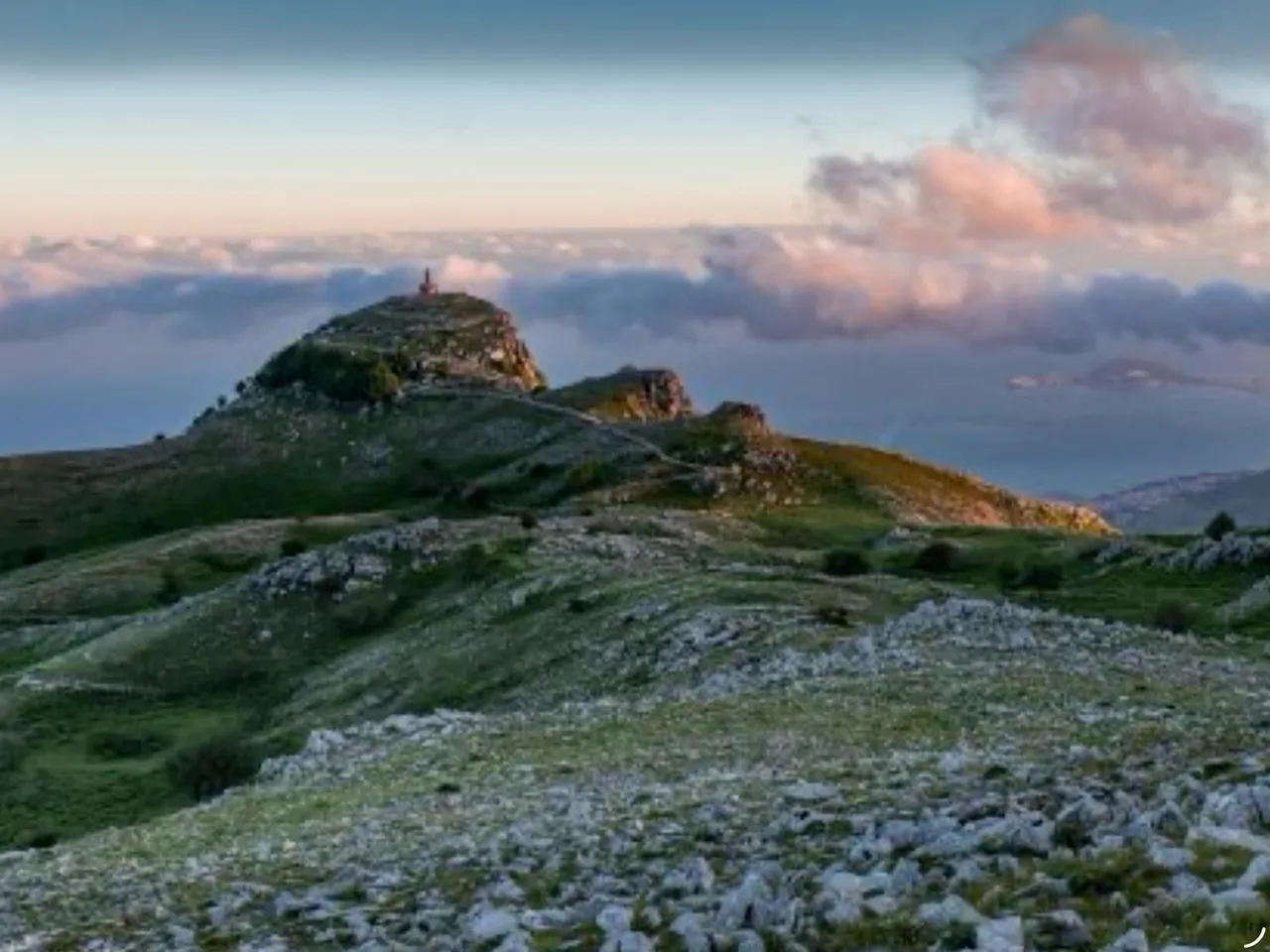
The rocky terrain at the top of the mountain where John Shane did his retreats, with the cupola on the peak of Monte il Redentore seen in the distance.
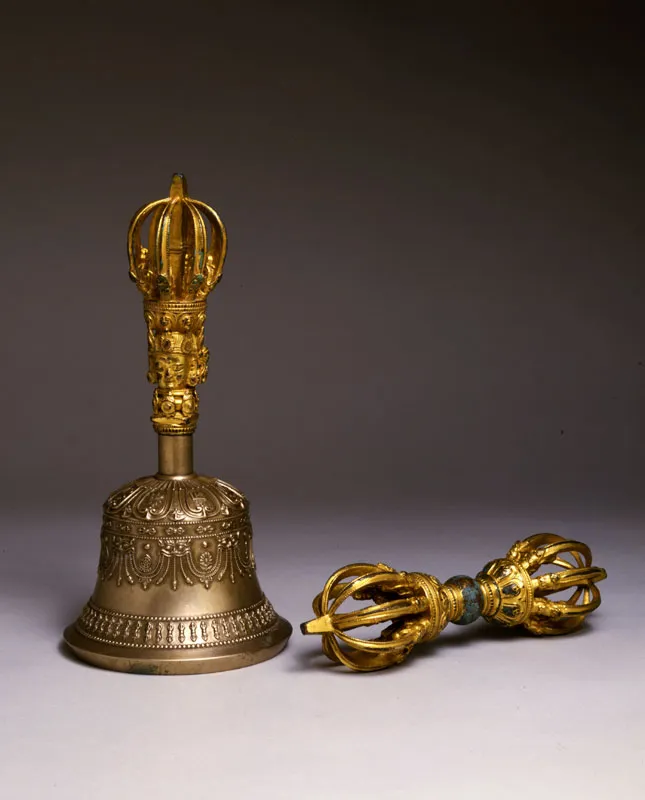
In the dim light of my hospital room, in my mind’s eye, I can see myself – semi-naked – dancing around as it grows dark on the rocky mountain top plateau, and – emerging from the hum of the machines by my bedside sounding a drone – I can hear the sound of my chanting voice as I recite the mantra to invoke Dorje Legpa – one of the principal wrathful guardians of the Dzogchen teachings – while at the same time I wave my dorje, or copper and brass ritual ‘thunderbolt sceptre’, in my right hand, and ring my tantric bell, made of the same metals, in the other.
There I am, as the sun sets, dancing and chanting for about half an hour spinning round and round, and soon I’m covered in sweat, and, as the sweat cools, I begin to feel the chill of the night air.
When I had first arrived at the top of the mountain, I’d noticed that around the rocky plateau where I was going to set up my camp, there were a lot of old scraps of paper that the wind had blown up there.
So, now, wanting to clean up my camp, I wander around gathering up all the bits of paper I can find, and I pile it up in the middle of a rocky outcrop and, adding a few old dry twigs and branches lying on the ground, I light a small fire that I think will help keep me warm.
It’s getting dark, and – still calling on Dorje Legpa with his mantra, invoking his guardian energy – I begin dancing around the fire, wildly waving my ritual vajra in the air with one hand while keeping my bell jangling loudly in the twilight with the other.
Finding that I’m still sweating, I quickly take off my skimpy swim suit, which is the only thing I’m wearing, and continue to dance naked as the day I was born, feeling a sense of wild freedom as I do so, my hair flowing around my shoulders.
I go on dancing around the fire naked like this for quite a while, acting out whatever random facial expression, spontaneous physical gesture, or impromptu bodily movement comes into my mind.
But then….I suddenly notice that I no longer have my vajra in my right hand.
I can’t see it anywhere. Where on Earth can it have gone?
I stop dancing and put the bell down on a rock.
After looking everywhere within the radius of about ten yards from where I last remember having the vajra, but still not finding it, it occurs to me that the only place the vajra can have ended up must be in the fire.
So I grab a stick from under the tree and I begin to push at the pieces of burning wood, poking them around until I can see into the centre of the fire.
And that’s where I see the vajra, which has become red hot.
Using a long stick, I flick the vajra out of the fire, and, as it bounces across the dry earth, it leaves burnt vajra-shaped marks on the spots where it lands.
When it finally stops bouncing, it lies on the ground glowing fiery red.
I’m still practising Outer Rushen, acting out whatever comes into my mind, and thinking I should try to cool the vajra down, I begin to piss on it.
The vajra sizzles and steams under the shower of pee.
As I crawl into my sleeping bag in the tent that night, I remember that, in English, the Tibetan name ‘Dorje Legpa’ means ‘flaming vajra’, and it seems to me that I have successfully called the guardian for protection in that lonely spot.
And I think to myself that in some mysterious way, perhaps what has happened is that – after and invoking the guardian by visualising him clearly in my ‘inner world’ in that wild way – he has, in fact, revealed the power of his energy to me in the ‘outer world’, reminding me that the concept of ‘inner’ and ‘outer’ is just that – a concept, a mental construct – while what is truly ‘real’ is beyond concepts, and that reality is beyond any notion of ‘inner’ and ‘outer’…
Dozing in the dim hospital room in the middle of London – laughing in the semi-darkness at the vision of my younger self dancing naked on a mountaintop in Italy that is clear in my mind – I remember what William Blake wrote:
‘If the fool persists in his folly, he will grow wise’.
Then I recall that I wasn’t only practicing Outer Rushen in that retreat.
As well as relaxing in the Natural State, the principal practice of Dzogchen, I was also carrying out other preliminary, or secondary, practices of the Dzogchen tradition, including doing a lot of sessions of Vajrasattva purification practice throughout every day.
Over the days that followed my wild experience with the flaming vajra, I sat cross-legged for hours in the shade to shelter from the blazing heat, visualising the form of Vajrasattva and reciting his mantra, known as ‘the hundred syllable mantra’.
I’m silently reciting that same mantra in the hospital, too.
And I was doing the same thing when I was being prepared for the operation I’ve just undergone, so the words of the mantra were the last thing in my mind before the anaesthetist put me out as I lay waiting to be wheeled into the operating theatre.
Recovering after the operation, lying in the bed in my recovery room, I integrate the recitation of the mantra with the hum of the machines…
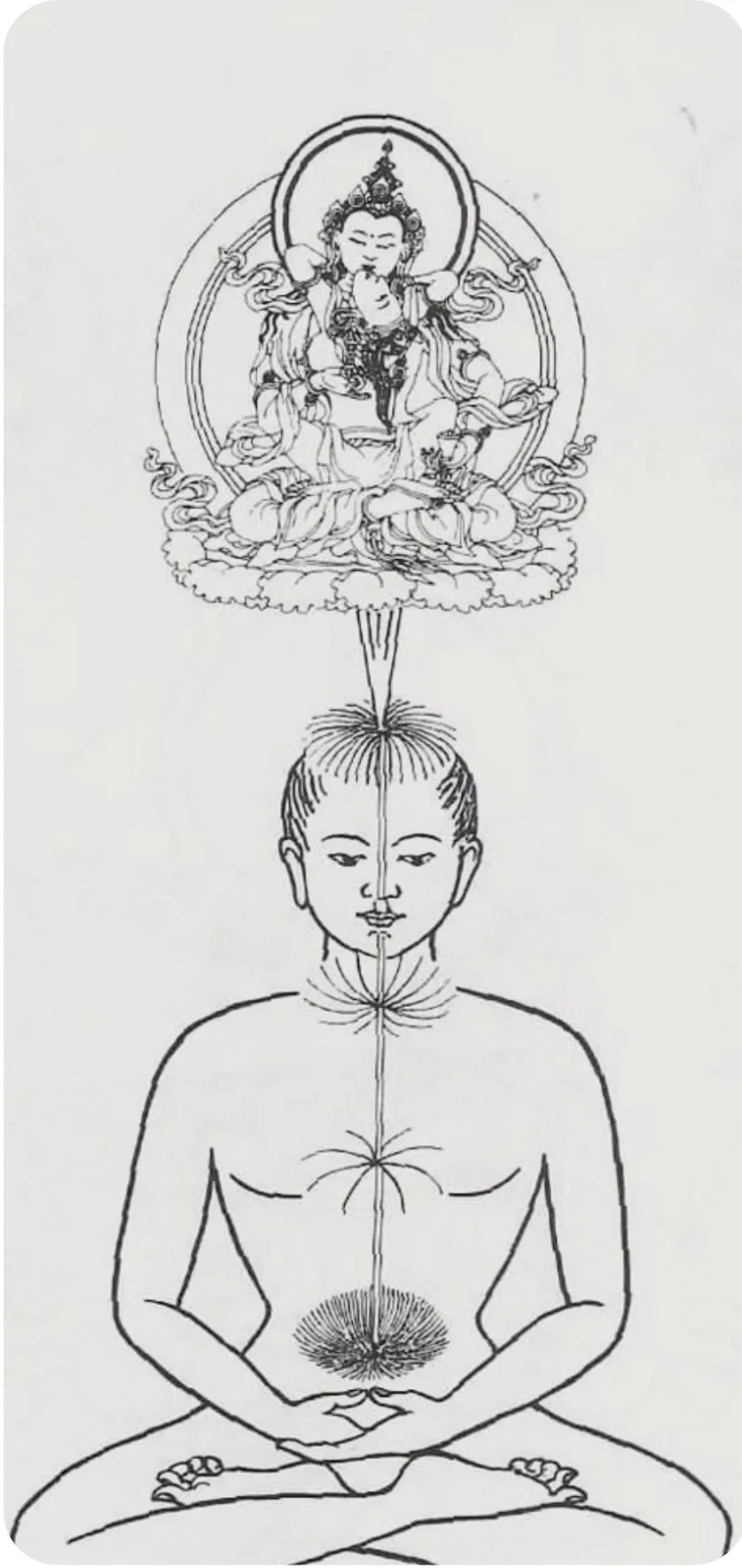
… and in my mind I drift back to the mountaintop above Formia, where I’ve been doing intense Vajrasattva practice, reciting the 100 syllable mantra and visualising the form of Vajrasattva above myself with white light descends from his visualised form into me to purify all the obscurations of my mind…
When I wake up one morning on the third morning of my retreat, I find a surprise waiting for me.
I untie the doors of my small tent and peer out at my surroundings, and the first thing I see outside the door flaps of the tent that I’d pitched with Rinpoche in that isolated spot – where I’d never seen a soul on any of the days or nights that I had been there – is a perfectly white, pure, and perfectly clean, king-size double bed sheet, without even the slightest mark or stain on it, that looks as if it has just been delivered fresh from a laundry.
How on Earth has this appeared?
My first thought is that this – like the flaming vajra event on the first evening of my retreat – is another example of intense inner practice manifesting in the external world, which can be seen as a sign that a practice has been at least been activated, even if it’s not yet been fully realised, in the mindstream of an individual.
Then, when I examine the pure white sheet more thoroughly, I notice that it has a tiny red label stitched to one corner of it, and when l look closely at the label, I realise that it’s a US Navy identification marker.
I know that there is a US naval base at Gaeta, just around the bay from Formia, so it occurs to me that someone from that base must have left the sheet outside my tent.
But what could they have been doing in the night on the mountaintop?
And why would they have brought a perfectly clean white sheet with them? Why would they have left the sheet outside my tent laid out flat on the ground in a perfect rectangle placed outside my tent’s door in a perfectly symmetrical arrangement?
After a while I stop wondering about how the sheet has got there and begin to use it in the extreme heat of the days to keep the sun’s rays off my body by wrapping it around my shoulders when I’m sitting in meditation, imagining myself to be like the famous Tibetan cave-dwelling yogi Milarepa, who always wore a white robe, and whose spontaneously recited contemplative poems were written down by his disciple Rechungpa as ‘The Hundred Thousand Songs Of Milarepa’, which led to Milarepa becoming the patron poet of Tibet.
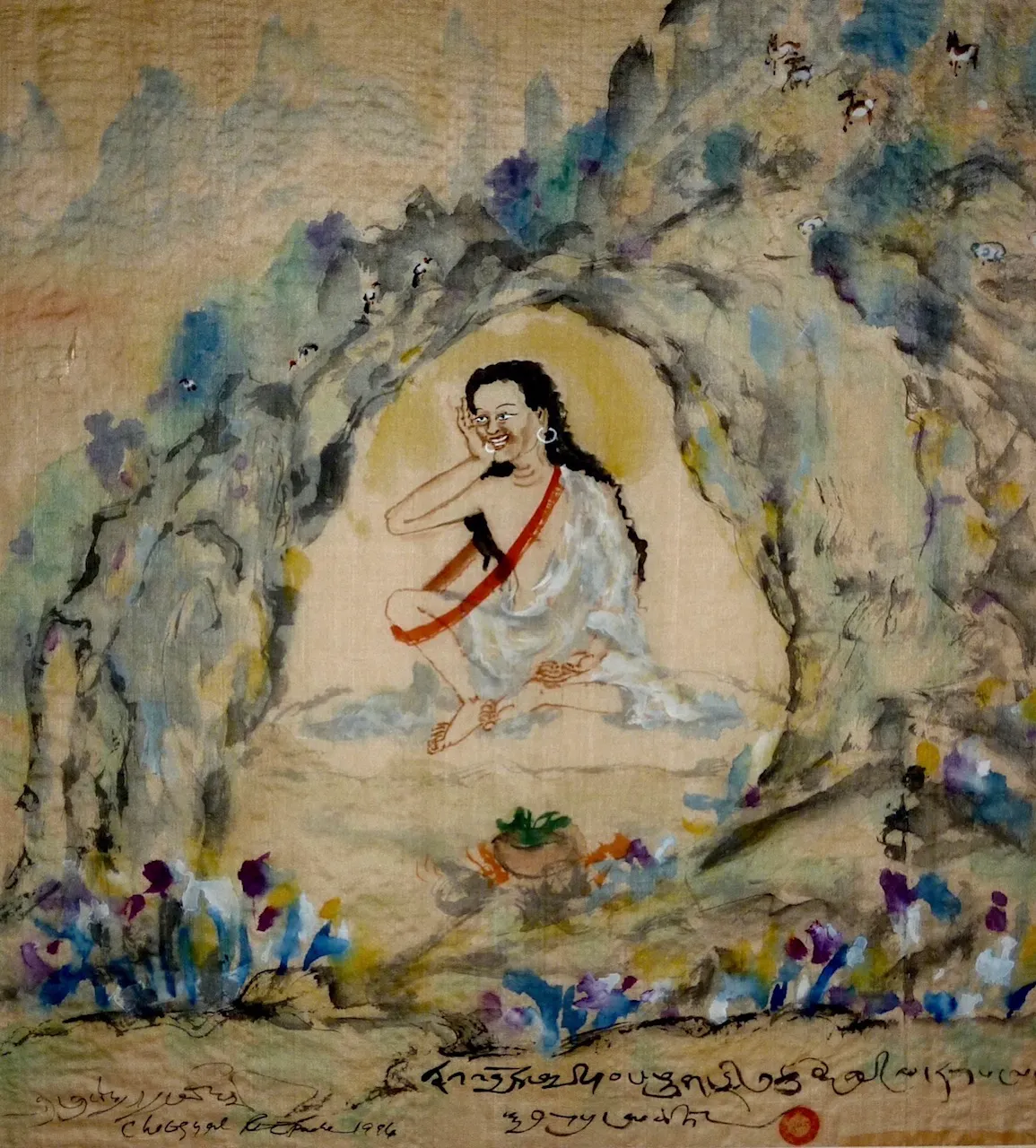
Milarepa, the ‘Cotton-Clad Yogi’, patron poet of Tibet, on retreat in his cave in the mountains.
(Painting by Dugu Chogyal Rinpoche. Collection: John Shane)
As a published poet myself, I’m vain enough to like the idea that, on this mountaintop, I’m following in the footsteps of Milarepa, whose name literally translated means, ‘the cotton-clad one’.
Milarepa famously only wore a white cotton robe even in the depths of the freezing Tibetan winter while living in an isolated cave on the side of a high mountain.
The fact that the sky is so clear from a mountaintop makes such a place ideal for the practice of sky-gazing, or Namkha Arte, in which the practitioner allows their mind to merge with empty space, relaxing into the natural spaciousness of mind, and on the mountaintop above Formia, I feel further linked to Milarepa when I’m practising sky-gazing there.
One day sitting on a rock, wrapped in the white cotton sheet, I’m so completely absorbed in gazing into space that I don’t notice that, behind me, a herd of the goats that roam that mountain has crept up.
It’s only when I hear the clanging of the bells around their necks that I turn round.
Then – to my alarm and dismay – I see that one of the goats has picked up in its mouth the cotton shoulder bag in which I carry around my hand-written books of notes on Rinpoche’s teachings along with my practice texts, and the goat is running off into the distance, presumably to eat my notes, the texts, and the bag somewhere.
I jump up, and, in the heat of the day wearing just my black swimming trunks with the white cotton sheet around my shoulders, I begin to chase the goat, and as I’m running after him, I remember that – in paintings and drawings of Dorje Legpa – he’s often shown riding on a goat, and I start to recite Dorje Legpa’s mantra out loud, thinking to myself, ‘A-ha, maybe Dorje Legpa’s trying to tell me I’m too attached to my to books and texts and he’s sent this goat as a messanger to steal them to remind me to let go of all that stuff…But I really need my books..!! Hey, goat, come back..!!’
When, after running around for about ten minutes, I finally get the bag back, I check what’s in it to make sure nothing has been lost, and I’m relieved to find that everything is there.
At this point I notice, among the other books and texts, the mysterious folder that I had seen Rinpoche put into my hold-all at the last minute just as we were leaving his apartment without saying anything about what it was or why he was putting it in there.
I hadn’t yet opened the folder to look at what was in it, but now, after nearly losing it, I decide it’s time that I should, and when I do I’m really surprised at what Rinpoche put in my bag.
It’s a complete set of notes in a hand-writing that I don’t recognize but I know is not Rinpoche’s giving detailed instructions in English on how to practice Togyal (often translated as ‘leap-over’ or ‘surpassing the uppermost’), one of the principal practices of the Dzogchen teachings that is generally kept reserved until a practioner is fully developed in the practice of Trichod (often translated as ‘Direct Cut’), cutting their mind sufficiently free from being completely conditioned by the antics of the never-still ‘monkey-mind’, the continual mental chatter of distracted thought and from disturbing emotions, so that they are able to go beyond the kind of meditation that is an action of the mind and begin to explore what’s called in Dzogchen ‘non-meditation’, in which Togyal opens up the visionary aspects of nondual contemplation.
Why had Rinpoche, without a word, put the instructions for the practice of Togyal into my bag before driving me up to the top of a mountain and leaving me there to do a retreat of personal practice?
I can’t know that.
But, having read the instructions, I assume that he must have intended me to begin the practice Togyal, a practice for which he had previously given me the all-important transmission, as well as showing me the Togyal body positions, but for which he had not previously given me the practice instructions.
So, in the next days, I begin to follow the instructions I’ve now received.
Back down in Rinpoche’s apartment, I’d been working with him on a book that introduces the ultimate Dzogchen realisations of The Rainbow Body and The Body of Light.
Now, in solitary retreat, I’m beginning to practice working with light and vision beyond what I’d done before when I’d done tantric visualisation practices, and I begin to enter more fully into the visionary aspects of working with light according to the Dzogchen teachings.
Just beginning a practice and fully realising a practice are, of course, two different things, and from any realistic point of view, I have remained a beginner in the advanced practices of Togyal practice that works with light and in the Yantig practice which is carried out in the dark in a specially prepared room from which all light is completely excluded…
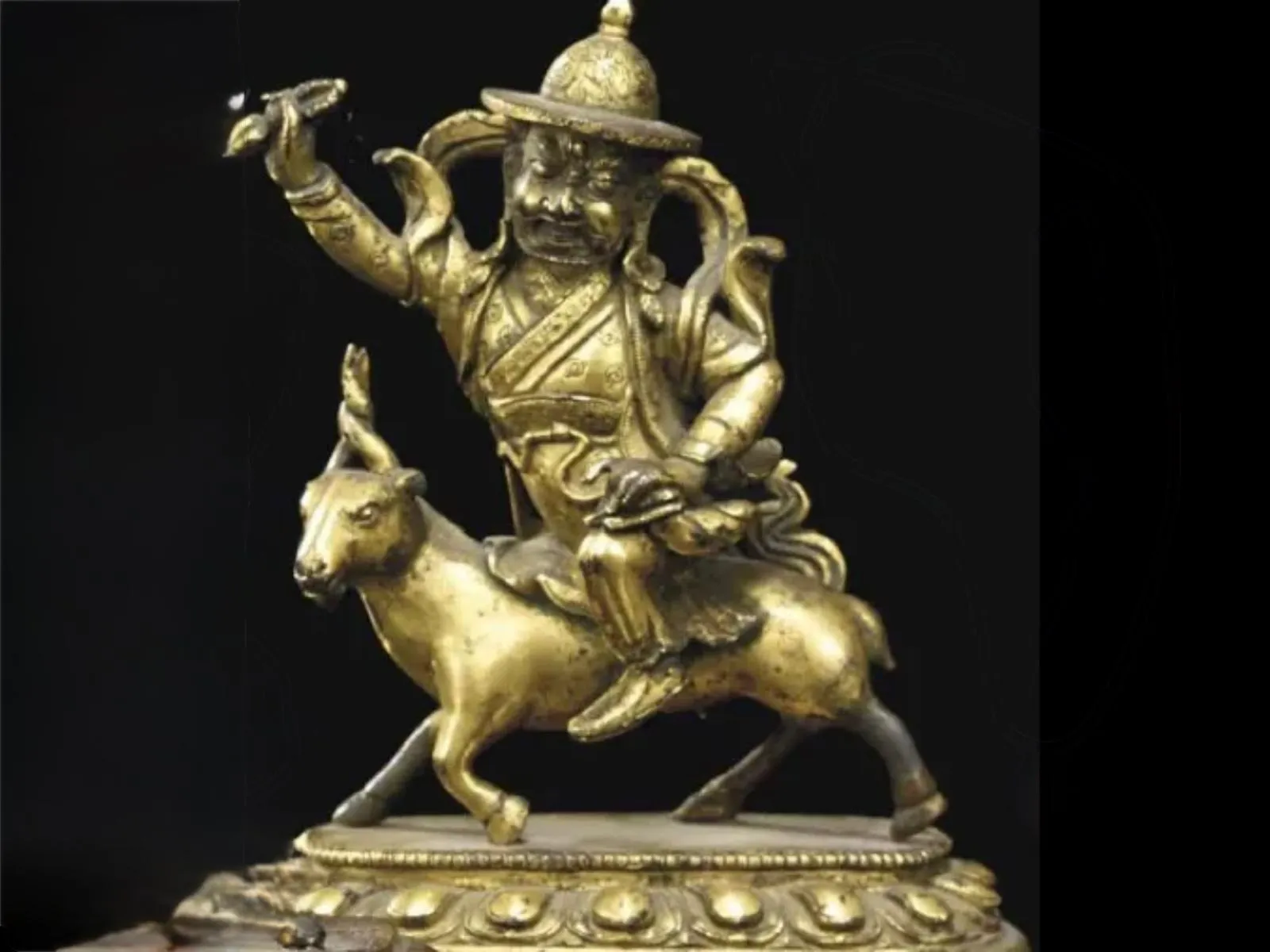
Bronze statue of the guardian Dorje Legpa riding on a goat with a vajra in his right hand.
I’m drifting between sleep and waking in a hospital in London, dealing with quite a lot of pain – and I find myself asking what benefit can I consider myself to have derived from entering into these practices even if I have not fully realised them?
Can I say that these practices are helping me in some way to deal with the difficult situation that I find myself in?
Lying here in my hospital bed, I’m asking myself: ‘What is my actual experience now, in this moment?’
Is what I know as ‘I’ – this psychosocial self which has an apparent but clearly relative, temporary existence – a function of and derived from this vulnerable and aching material body?
Or is this sense of ‘I’ and this vulnerable aching body an appearance in awareness that is my real nature, at the ontological level, at the level of pure being, rather than at the level of thought and emotion?
What do I know?
Fundamentally, do I really – can I really – know anything other than awareness, the knowing that knows itself, and to which everything appears ‘as if’ a magical display?
And in the lived experience of this magical display of awareness, which I know as my fundamental nature, isn’t the body appearing to me here in this hospital bed in the form of impressions and sensations of heaviness and pain actually only known by me as impulses of energy that the mind assembles into the image of physical form that I become so attached that I forget that the mental impression of form that my senses have assembled is actually the radiance of awareness – really and truly already a rainbow body, a body of light – even if I am not at the level at which I am able to dissolve the actual form of this physical body back into its essence as light?
But I’m dozing off again…
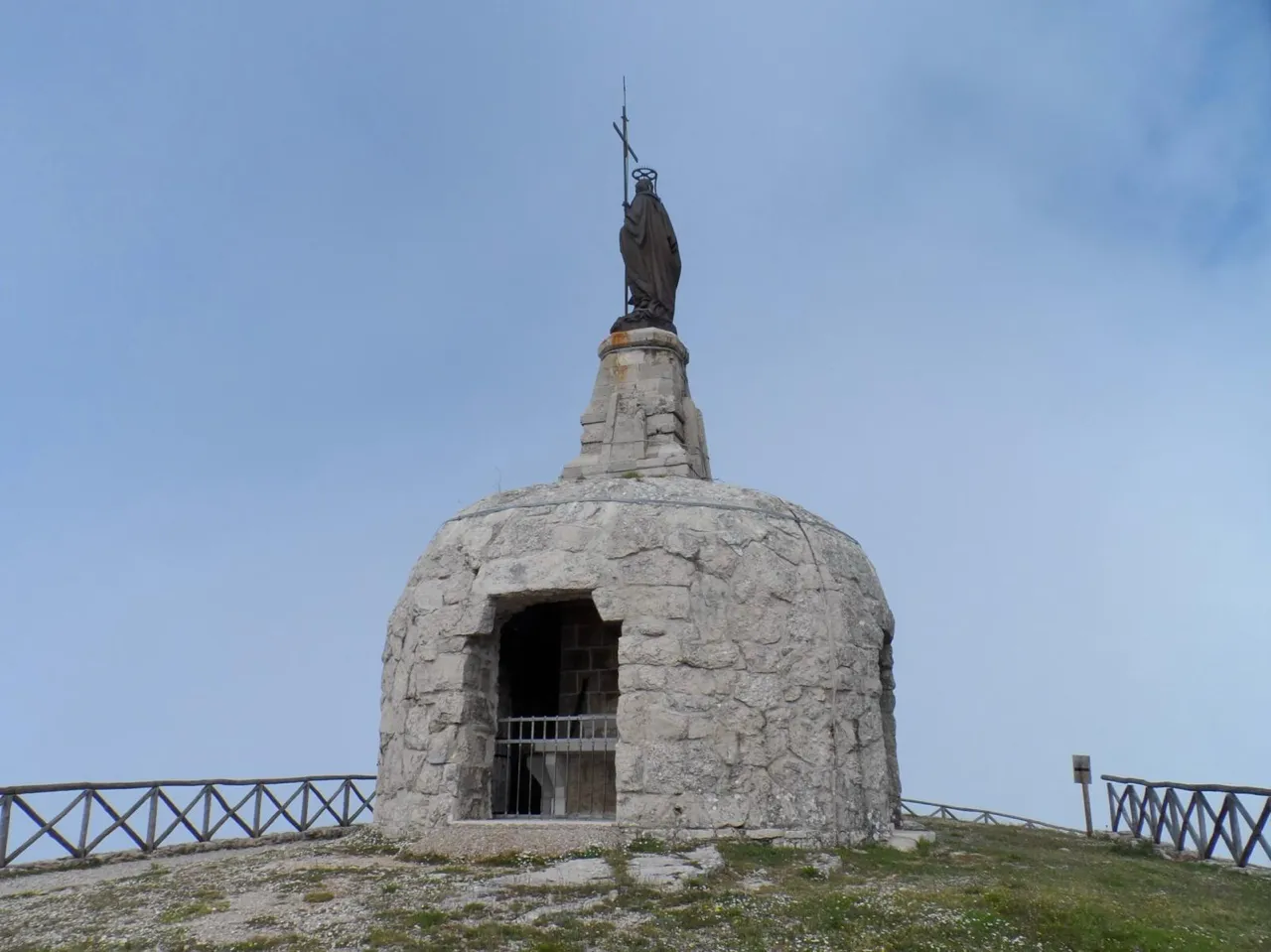
Close up of the cupola on the summit of Monte il Redentore….showing the entrance to its interior.
I’m back in my retreat above Formia, where I see myself wearing only my skimpy black swim suit and the white sheet that I found outside my tent door now draped over my shoulders.
I’m at the very top of the mountain, under the blazing hot midday Italian summer sun, and for some time I’ve been walking round and round, going beyond limits, circumambulating, as if it was a Buddhist stupa or a statue of the Buddha, the concrete cupola that was built on the moutain’s peak and has a statue of Christ on its roof that shows him looking out over the town and towards the sea sparkling in the far distance.
I’ve not seen anyone at all since Rinpoche brought me up here in the car, so I’m feeling completely alone. I’ve been alone up here on the mountain for days, with only the goats and a few birds for occasional company.
I’ve forgotten to bring my water bottle with me from where my camp is set up further down the mountain, and I’m beginning to feel dizzy.
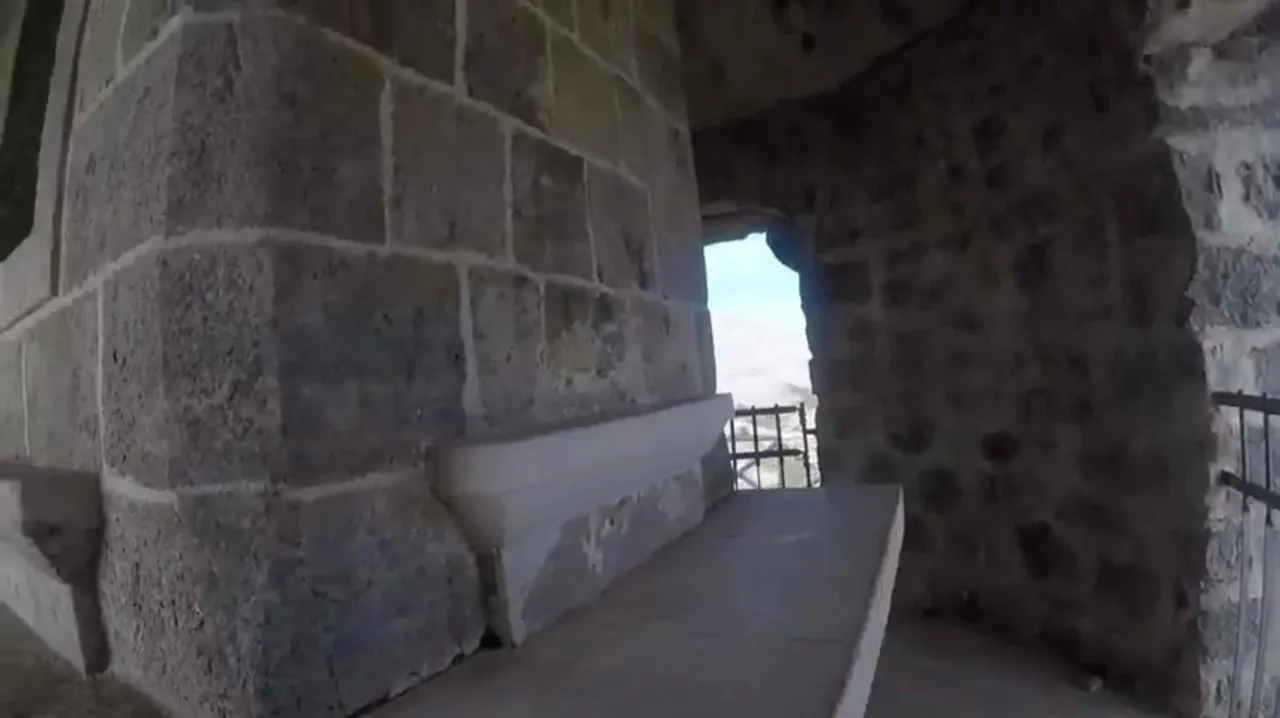
There’s no shade to be found anywhere on the peak of the mountain other than inside the concrete cupola, so – wrapped in my clean white sheet – I wander in there.
It’s cool inside the cupola, and I’m tired and dehydrated.
There’s a stone shelf in the centre of the single room that forms the interior of the cupola that serves as a kind of altar, but there’s nothing on it. It’s completely unadorned and empty.
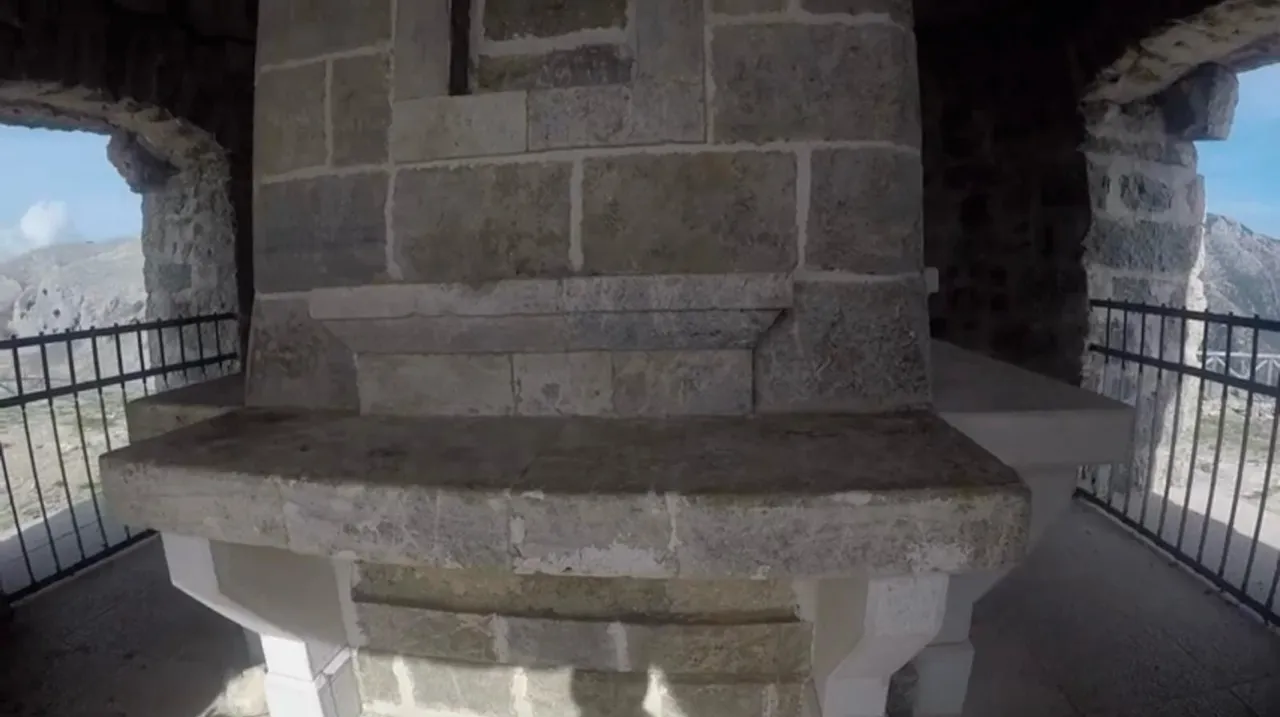
I’m still continuing with the Outer Rushen practice of doing whatever comes into my head, so I climb up onto the stone shelf and lie there resting, feeling the cool of the stone under my back, and before long I begin to fall asleep.
After a few minutes, I’m startled awake by the sound of a female voice coming from somewhere nearby, and, I quickly move from my prone position so that I’m sitting up, bolt upright, with crossed legs on the stone slab, looking towards the door, and in a kind of state of shock, wondering what’s about to happen…
In that moment, in a flash of light, I see the wrinkled and kindly face of an elderly Italian woman with her white hair tied back in a tidy bun, appearing in the doorway of the cupola.
She’s dressed entirely in black, and she’s peering with great curiosity into the dim interior, where – all of a sudden !! – she catches a glimpse of me sitting there in the shadows on the raised stone altar-like slab, my long dark hair that falls around my shoulders and my dark beard making a complete contrast with the pure white sheet that’s draped over my shoulders and covers the rest of my body.
As soon as she catches sight of me sitting there like that, the elderly lady lets out a piercing shriek of alarm.
She turns and runs away down the hill, and, as she goes, I can hear her shouting out in a shrill voice, ‘Una visione…!! Ho visto una visione…!! Un apparizione dentro la cupola..!!’, ‘A vision…!! A vision…!! I’ve seen a vision…!! An apparition inside the cupola..!!’
I jump down from the stone slab, and rush out the door, from where I can see that the elderly lady who looked in the doorway of the cupola has now reached a group of maybe a dozen other grey-haired ladies also all dressed entirely in black who have been following their friend up the steep rocky track.
She is now pointing up towards the cupola on the very peak of the mountain and talking nineteen to the dozen, while they all stand looking up towards where she’s pointing.
But they haven’t seen me yet.
So I think I’d better disappear.
I run off and hide behind a group of large rocks, from where I watch as the ladies and one elderly man – who I decide must be a priest leading a coach party from a local church – finish their climb and approach the cupola, which, of course, they now find to be completely empty.
I can hear the lady who burst in on me as I was sleeping still talking excitedly to the others, insisting in a loud voice that she’s seen a vision.
It must be Jesus himself, risen from the dead, his body wrapped in a white shroud, who has appeared to her, I hear her say.
But no one believes her, so she soon quietens down and – while her friends stand around her teasing her and telling her that her vivid imagination must be getting the better of her or maybe she must have had too much wine at their picnic lunch so that she thought she saw a figure where there was only a shadow – I slip away along the other track that leads down towards my camp, hurrying off in the opposite direction to the one which the ladies climbed up to reach the peak.
When I get back to my camp, what has just happened seems so improbable that – dehydrated as I am from the intense heat – I wonder if I’m the one who has been suffering from some kind of hallucination, a heat mirage, or perhaps it was a dream I had while I fell asleep inside the cupola.
‘Maybe’,I think to myself, ‘I’m the one who saw a vision? Maybe that group of elderly women in black weren’t there at all? Maybe it was another ‘nyam’, another illusory manifestation appearing as my energy relaxes in meditation.’
Not long after this incident with the ladies in black, Rinpoche comes up with the car to bring me back down to his apartment, where, of course, he’s interested to know how I’d got on in my retreat.
He asks me a lot of questions about what I experienced and gives me detailed advice as to what I should do when he takes me back up the mountain to do another retreat, which he proposes should happen after a further couple of weeks working on the book and on his other projects. When I tell him about what happened at the cupola, he laughs a lot.
I’m still drifting in and out of sleep in the hospital in the centre of London…I wake briefly and see that outside the window of my recovery room a new day is about to begin. I look at the digital clock among the glowing lights of the medical machinery that surrounds me and I see that it’s still at least an hour until they’ll be bringing my breakfast…
Although my body is still aching, the pain has diminished, and I’m falling asleep again…
In Formia… ten days after my first retreat on the mountain… my friend Andy Lukianovitz arrives for a visit at the Namkhai family’s apartment.
Andy’s mother was Italian, so he’s completely bilingual, and, while I was able to translate from Italian into English at Rinpoche’s public talks and retreats, Andy could also translate from English into Italian as well, which I couldn’t do.
As it turned out, the next time Rinpoche decides it’s time for a me to do a retreat on the mountain, Andy comes up there with me.
I’m glad to have company this time, and Andy and I get along well during out time on the mountain.
At the end of this second retreat, Rinpoche comes with his car again to bring us back down into town, and when he arrives in our camp, he surprises me by handing me my passport, which I had left with him for safe-keeping.
As I pocket my passport, Rinpoche says, out of the blue, ‘Come on, John. We’re going to America.’
I knew that Rinpoche was going to go on a teaching tour across the United States but I didn’t for a moment think I’d be going with him, and I say, ‘I don’t even have the money for plane tickets, let alone anything else.’
At which point Rinpoche gives me a knowing look and hands me some mail that had been forwarded to me at his home address.
When we get back to the apartment, I open the letters and find that one of them is a notification that several thousand pounds have been added to my bank account as royalty payments for the use, in a TV documentary about gypsies, of some of the songs that I had written for my album ‘Cross My Palm With Silver’
When I tell Rinpoche about this development, strangely, he doesn’t seem at all surprised.
He just says, ‘Good. So you will be coming with me to America as I said.’
Andy tells me he is temporarily short of cash and asks me if I can lend him a small amount of money, which I tell him I will be happy to do.
So the two of us walk into the centre of the town to go to a bank where I would be able to withdraw the amount that Andy needed and give it to him.
When we get to the bank, we find that it’s empty except for a bank clerk sitting behind a glass screen.
Andy and I walk up to the counter and say ‘Buon Giorno’ to the clerk.
Then I notice that there’s a small pile of bank notes on the counter on the client side of the glass screen.
I pick up the bank notes and show them to the bank clerk, asking if they were his, but he just shrugs and says he doesn’t know what they’re doing there.
When I ask him what I should do with the notes, he shrugs again and says, ‘Ma, fai come ti pare.’ ‘Well, just do whatever you like.’
I count the notes and find that they amount to the exact figure that Andy has asked me to lend him.
As I hand the money to him, I say, ‘Here you go, Andy!! A present from Dorje Legpa..!!’
When we get back the apartment and tell Rinpoche what has happened, he laughs and jokingly says, ‘Vedete, la practica porta certi vantaggi…!!’ ‘So you see, practice does bring certain advantages..!!’
Andy has the money he needs, and I have enough money to travel to America with Rinpoche and to follow him from one retreat to another across the United States for the rest of the summer…
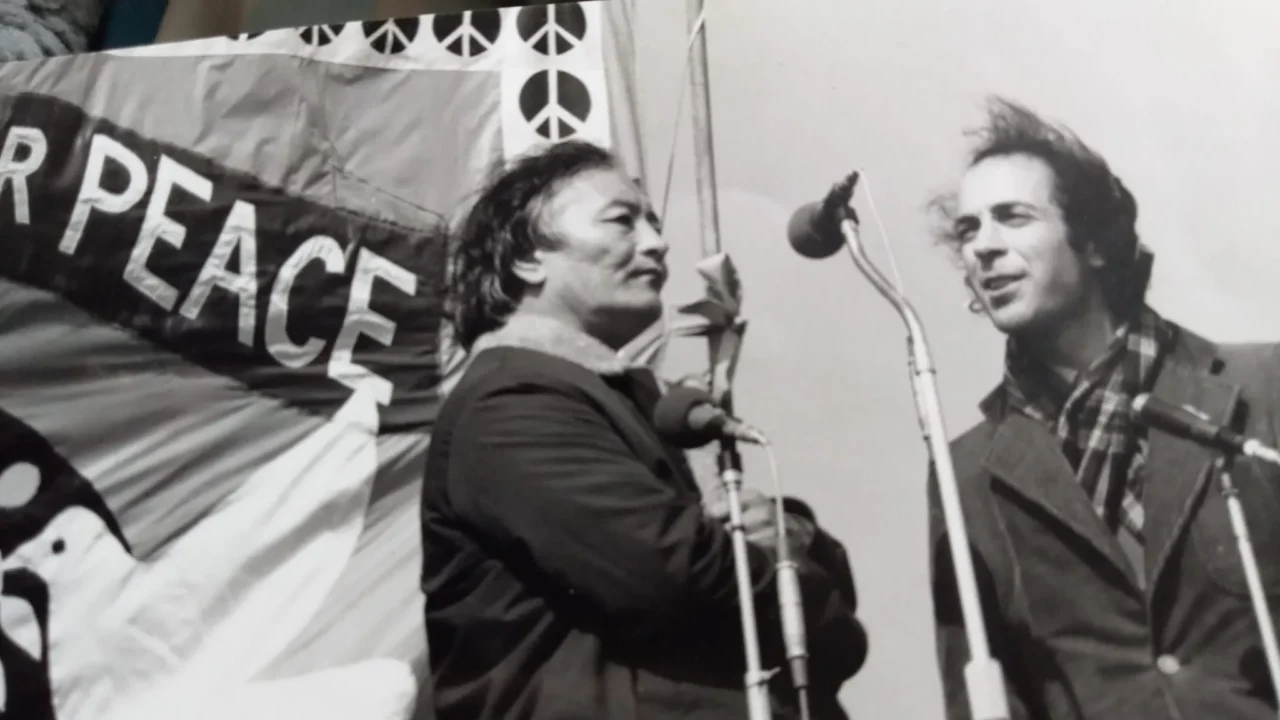
Lying in my hospital bed, I’m now accompanying Rinpoche on an extraordinary ten day road-trip during which we travel thousands of miles by car – leaving from Berkeley, California – to visit Native Americans in reservations all over the South Western part of the US, stopping over in Las Vegas on the way, and ending up in Disneyland in L.A. before Rinpoche flies back to Italy…
In pain after my second operation, and with the prospect of third operation six weeks after I recover from this one – as all the things that we did together during the time I was privileged to spend with Rinpoche come into my mind – I can’t help but agree wholeheartedly with the remark he laughingly made when Andy and I returned from our trip to the bank downtown in Formia and told him what happened there…
Yes….as Rinpoche said, ‘…practice does bring certain advantages.’
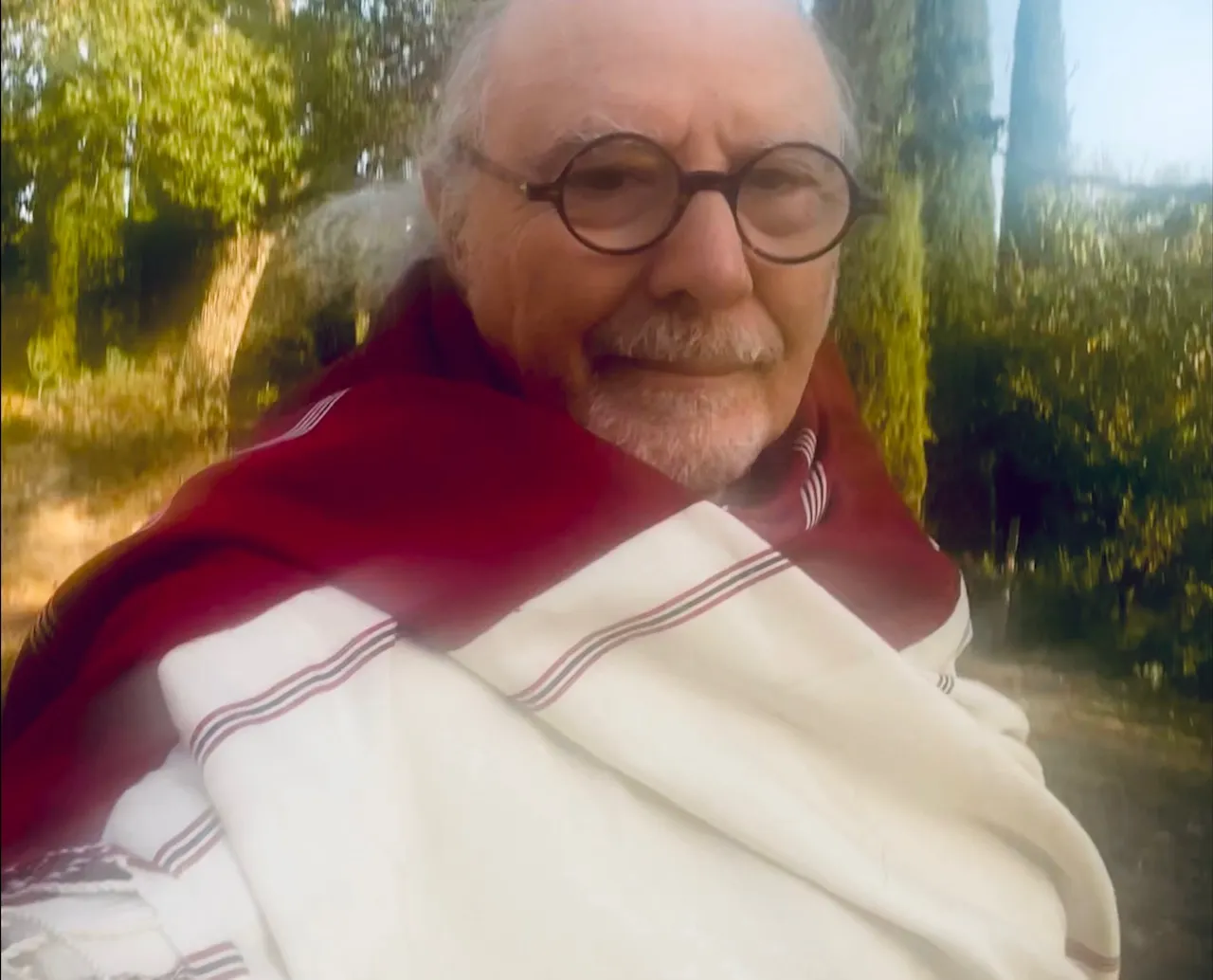
[Note: John Shane wishes to thank those who have written to him in the
last months to wish him well. He is now at home after his third and (hopefully)
last surgical operation, recovering well from the operation, and waiting for the results of further tests about further treatment he will need. Apart from the specific ongoing health problems for which he is receiving treatment, his doctors tell him that he is otherwise in relatively good shape for a man his age.]
You can also find more of John’s work at his Substack publication (https://johnshanewayofthepoet.substack.com.) where you can add comments to articles or write to him.