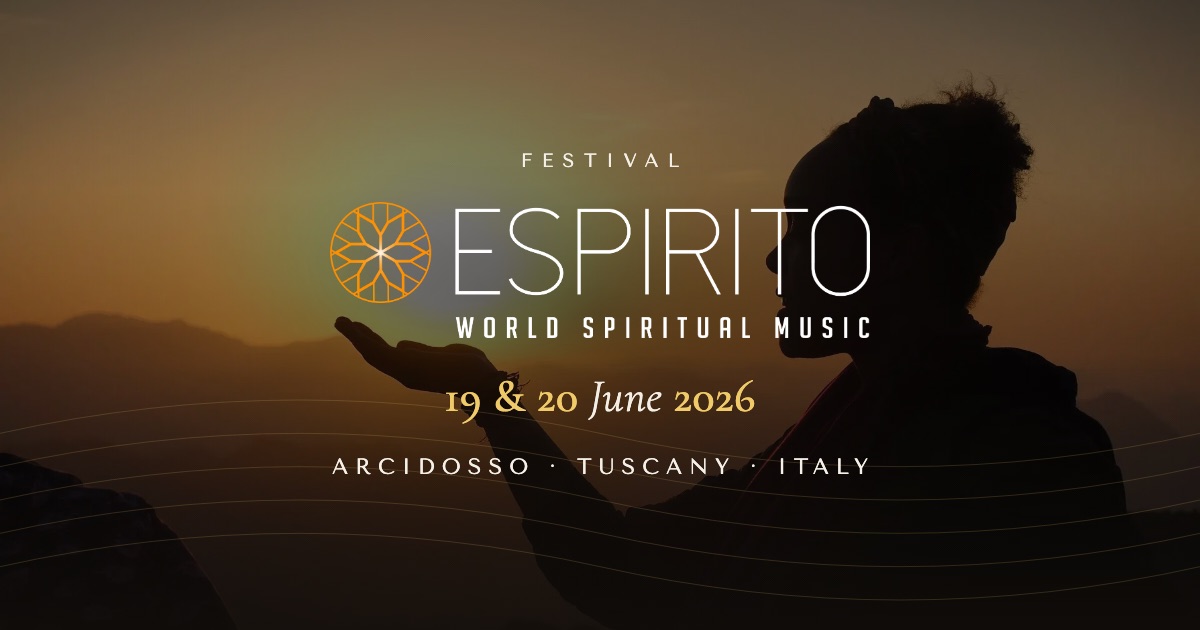
June 19–20 – 7:00 PM – Arcidosso – Toscana – Italy
An artistic gathering dedicated to spiritual music as a universal language of consciousness and connection.
ESPÍRITO brings together ancestral traditions and contemporary artistic expressions from diverse, authentic cultures around the world:
- Dzogchen of Tibet
- Tribal Central Africa
- Amazonia of South America
- India
- Native North America
- Christian Choir of Europe
interwoven in a single space, creating a sonic dialogue that unites lands, eras, and spiritual wisdom.
An intimate experience to live and savor the richness of the world’s cultural diversity, where art expresses the spiritual essence of our nature, using music as a vehicle to nurture bonds of connection, peace, and collective transformation.
OFFICIAL LINE UP
FRIDAY, JUNE 19 – 7:00 PM
| MADRIGALISTI SENESI Renaissance choral polyphony performance |
| IVAN CECI Native American flutes sound meditation |
| ALESSANDRO CIPRIANI & BISMANI Avant-garde electronic and soundscape performance |
| HUNI KUÎ & ISAKAYAWEI Traditional medicine songs and ancestral Amazonian rhythms |
| ATI SPHERE: Ambient live set and deep sensory soundscapes |
SATURDAY, JUNE 20 – 7:00 PM
| GIANNI RICCHIZZI & SARASWATI HOUSE ENSEMBLE Classical Indian music and meditative ragas |
| NAMKHAI YESHI, ALESSANDRO DI MAIO, MATILDE NAMKHAI Live Set: Music of the Present Time, Vajra Dance & Khaita |
| URNA CHAHAR-TUGCHI Traditional Mongolian chanting and avant-garde vocal improvisation |
| MARCEL CAPRICE & AVENTURE COMLANVI VIGNON African tribal rhythms, master percussion, and fusion dance ATI SPHERE: Ambient live set and deep sensory soundscapes |
Artists
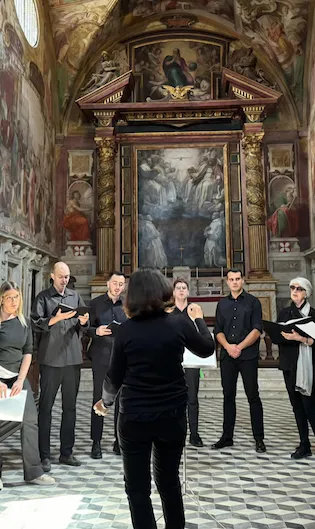
Madrigalisti Senesi
The Gruppo Polifonico Madrigalisti Senesi is a choir with a long historical tradition, founded in 1950 by Count Guido Chigi Saracini with the aim of promoting Italian and foreign polyphonic music. Since 1992, the ensemble has been directed by Maestro Elisabetta Miraldi.
The group specializes in the study of Renaissance polyphony, both sacred and secular, while also cultivating a diverse repertoire spanning Gregorian chant and lauda to ancient classical polyphony and modern choral music.
Composed exclusively of amateurs, the choir carries out an intensive teaching and concert schedule both in Italy and abroad, undertaking numerous world tours.
Renaissance sacred polyphony arouses profound spiritual emotion through the harmonious interweaving of voices that seem to ascend together toward a higher dimension, creating a sense of balance, peace and contemplation.
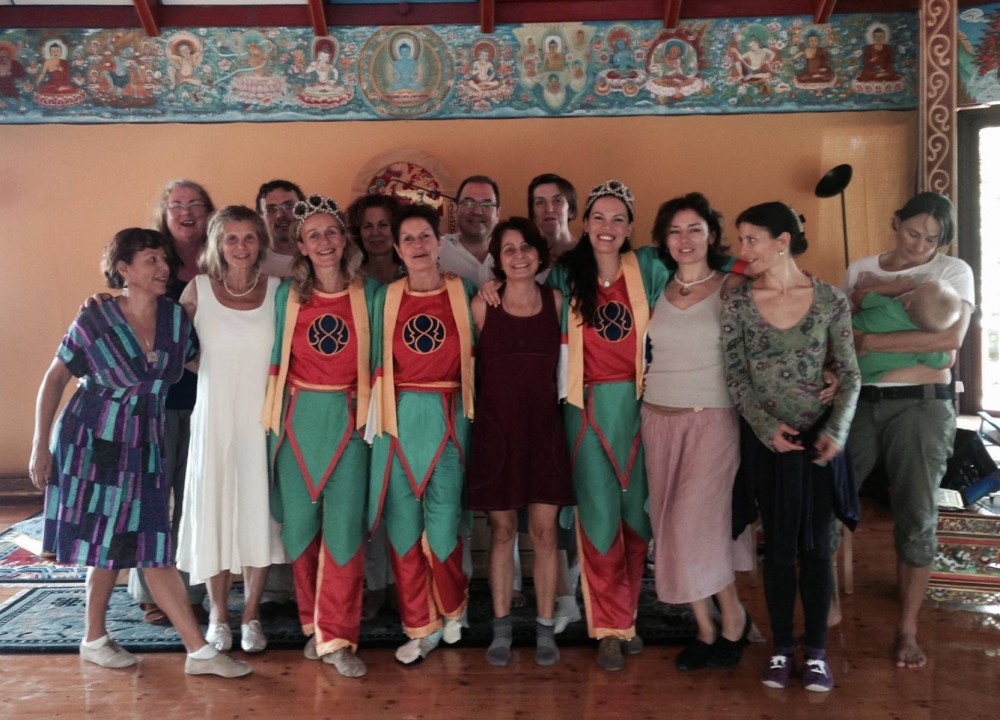
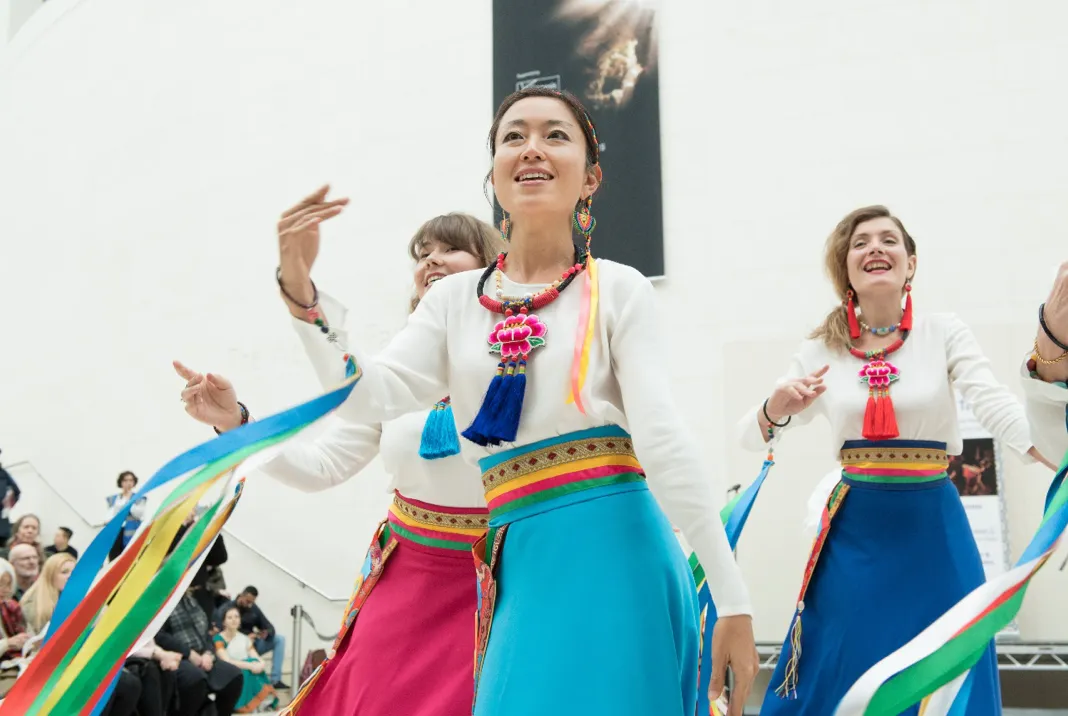
Namkhai Yeshi, Alessandro di Maio, Matilde Namkhai, Vajra and Khaita dancers
The live set designed for the Espirito festival is a continuous flow that integrates the traditional dances of the Dzogchen Community with contemporary electronic sounds.
The repertoire develops as an uninterrupted evolution: it opens with the active contemplation of the Vajra Dance, moves through the melodies of the joyful Khaita dances, and culminates in an Electronic Dance Music (EDM) live set.
This approach embodies the concept of ‘Music of the present time’. The electronic rhythms are not a mere playful interlude, but the culmination of the celebration through presence in the current moment: a time when the practice of integration, fundamental to the Dzogchen teaching, unites with movement and dance, flowing seamlessly into the expressions of our time while keeping awareness alive and continuous.
On stage, the performance will come to life through the presentations of the Vajra and Khaita dancers, while the musical component will be performed live by master Namkhai Yeshi, Alessandro Di Maio and Matilde Namkhai.
To enrich the sonic architecture, there will be special field recordings taken from David Attenborough’s BBC archives, chosen and processed live to celebrate his 100 years.
Through this modern and layered musical language, they will give life to a direct expression of the integration of presence in the immediate moment and within movement.
The Vajra Dance is a sacred dance that leads to a path of inner discovery and the development of consciousness through the use of special sounds —mantras— and a mandala of five colors.
The Vajra Dance and the Khaita Joyful Dances are recognized by the International Dance Council (CID), an official organization affiliated with UNESCO.
https://soundcloud.com/yeshisilvanonamkhai
https://soundcloud.com/alessandro-di-maio
https://www.youtube.com/watch?v=var4yRB1Fnc
https://www.youtube.com/watch?v=xRNCCd2JmEM
Alessandro Cipriani
Video: Giulio Latini | Music, sound design and texts: Alessandro Cipriani
Inspired by Géricault’s The Raft of the Medusa, Shipwrecks/Naufragi evokes, through images of bodies scattered at sea and a complex sonic texture, the theme of real and symbolic shipwreck in our time. Between the visible and invisible, the audiovisual journey questions our capacity to welcome the vulnerability of the Other, in a spiritual dimension open to hope.
In the sound, echoes of contemporary life interweave with electroacoustic variations on the first sixteen bars of Johann Sebastian Bach’s St. Matthew Passion (BWV 244, No. 1).
Giulio Latini (1960–2025)
Giulio Latini was professor of Multimedia Communication at the University of Rome “Tor Vergata” for over twenty years. He produced numerous videos, short films and documentaries presented at international festivals including the Venice Music Biennale, the MAXXI, the IDFA (Amsterdam) and the Torino Film Festival.
Alessandro Cipriani (1959)
His works have received numerous awards and have been performed at festivals including Bourges, ICMC, Musica Nova (Prague), the Venice Biennale, and the Beijing Opera Theatre. He is a tenured professor of Electroacoustic Music Composition at the Conservatory of Frosinone and a founding member of the Edison Studio collective.

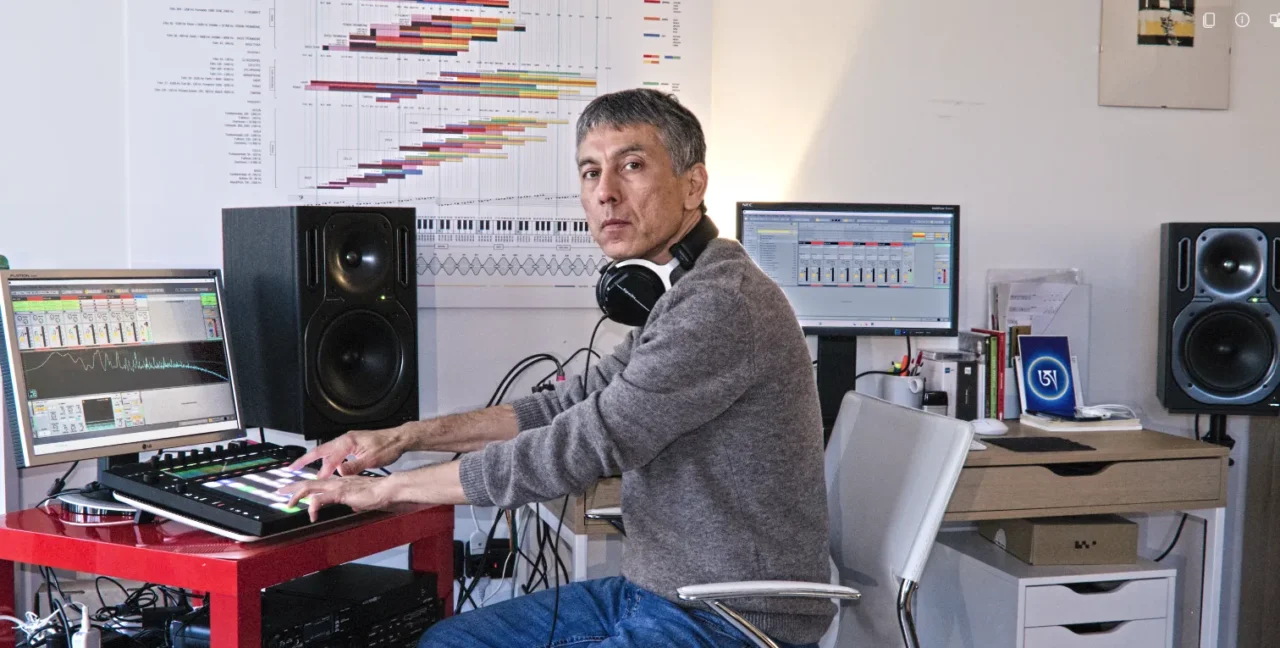
Gianni Ricchizzi & Saraswati House Ensemble
India has a millennial musical tradition that, while evolving over the centuries, has managed to remain alive to this day. Khyal (“imagination”), belonging to the Hindustani music of northern India, emerged in the Middle Ages from the encounter between Islamic and Hindu culture during the Persian invasions.
Saraswati House is the first Italian centre dedicated to Indian music. Founded in Italy in 1990 and located in Porziano, among the hills of Assisi, it was created by Maestro Gianni Ricchizzi, the only Italian to have obtained a master’s degree in Indian Music and Sitar at the prestigious Benares Hindu University.
The ensemble consists of Maestro Gianni Ricchizzi (sitar), Alessandro Coccia (bansuri), Valerio Bruni (santur) and Fabio Chiari (tabla).
https://www.youtube.com/watch?v=2mGgEmeFLUI&t=16s
Ati Sphere
Ati Sphere is a digital artist and director specializing in the creation of interactive installations and video mapping shows. His innovative creative process combines visual art with kinetic experience, integrating artistic creativity with contemporary technologies.
Through interactive projections, he creates images that react instantly to the movements of spectators, turning them into active co-creators of the work.
Over the last decade, Ati Sphere has also specialized in video mapping installations across Europe, transforming static architectures through light projections and three-dimensional animations.
https://www.instagram.com/ati.sphere
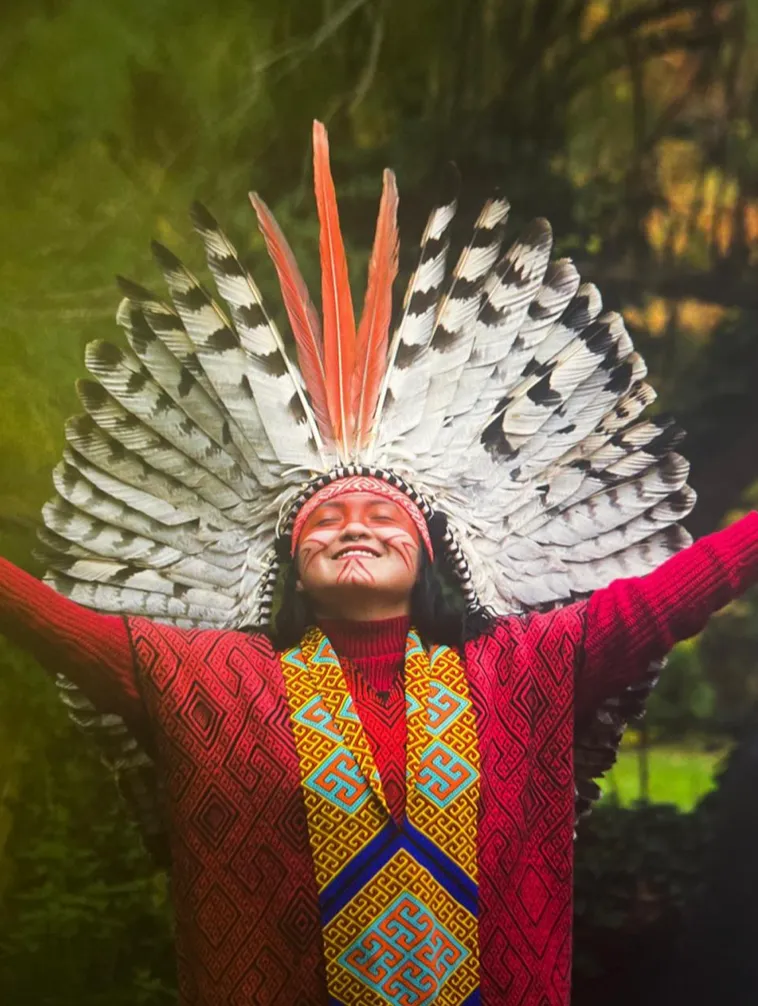
Bismani Huni Kuî & Isakayawei
Bismani Huni Kuî is a young indigenous woman of the Huni Kuî people, native to the heart of the Amazon rainforest in the state of Acre. On her path, she shares the ancestral knowledge of her people through prayers, traditional chants, listening and the living word of the forest.
Together with her husband Isakayawei, from the Chapada dos Veadeiros in the heart of the Cerrado, they present an experience that unites memory, spirituality, music and tradition.
Isakayawei is a master of ceremonies and researcher of forest medicines. Together, Bismani and Isakayawei weave an encounter between Amazonian diversity and the knowledge of the Cerrado, offering the audience storytelling, traditional singing and instrumental music.
https://mail.google.com/mail/u/4/#inbox/FMfcgzQgMCdzsngCnsQtbTDkWNTGFcJH?projector=1
Marcel Caprice Aventure Comlanvi Vignon
For four years I have lived in Arcidosso with my wife, Petra Baudis. Together, in our Casa del Arte, we develop cultural projects linked to dance, music and the arts.
I was born in Ouidah, in a small fishing village. My ancestors, like my mother, were initiated into Vodún and lived this spiritual tradition as an essential part of their daily life.
Among the deities whose traditions were passed on to me during my initiation are Hevioso (god of thunder), Sakpata (deity of the earth), Ogun (god of iron) and Oro (god of the wind). I also practice the cult of the Zangbeto, guardians of the night.
This evening I wish to present a part of a ceremony dedicated to Sakpata. It is a prayer that, within my tradition, is expressed through dance and song.
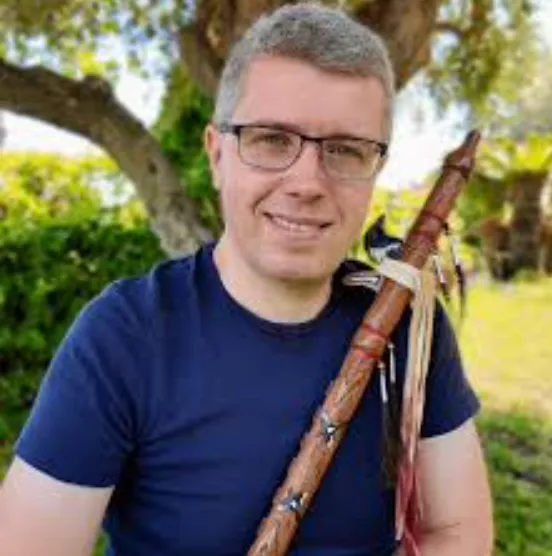
Ivan Ceci
A passionate expert in Native American flutes, Ivan Ceci is dedicated to spreading the history and tradition of these magical instruments in Italy, with a focus on their benefits in modern meditation and wellness practices.
A recognized member and instructor of the World Flute Society, he organizes courses and workshops, outdoor musical events, flute circles and interspecies concerts, playing his flutes in harmony with plants and trees.
In 2023, he released two albums of sound meditations, available on Spotify, Apple Music, Tidal and Amazon Music.
https://www.lavocedelvento.com
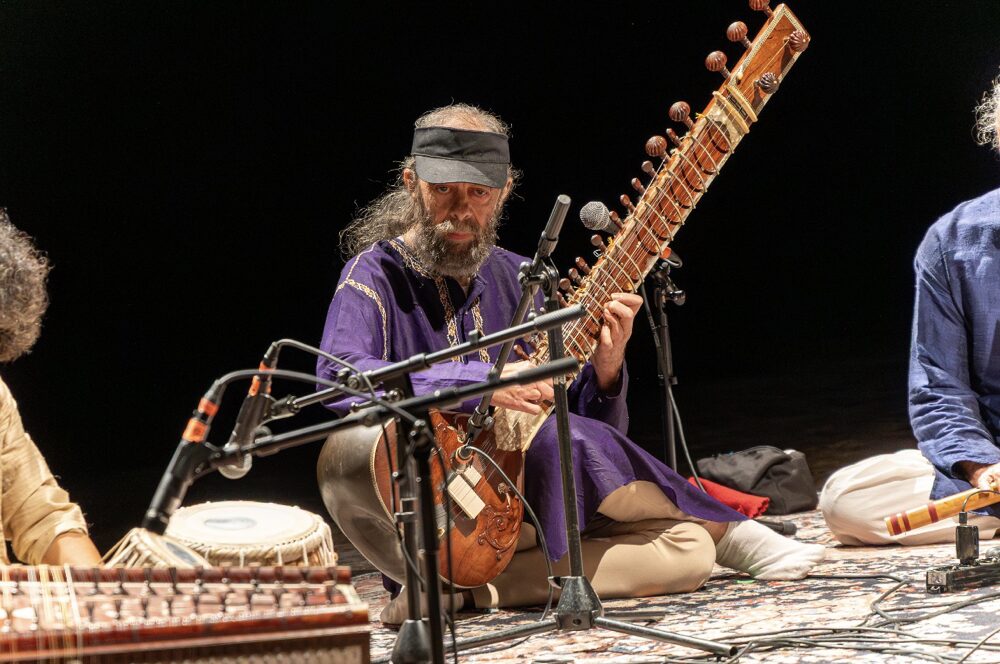
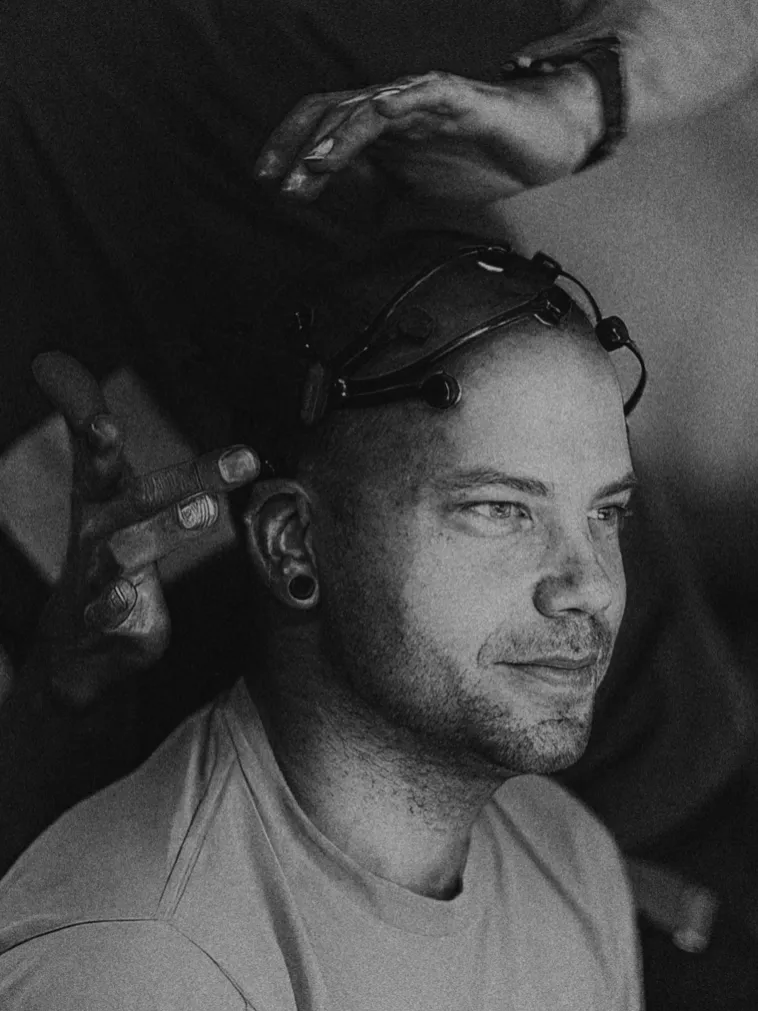

Urna Chahar Tugchi
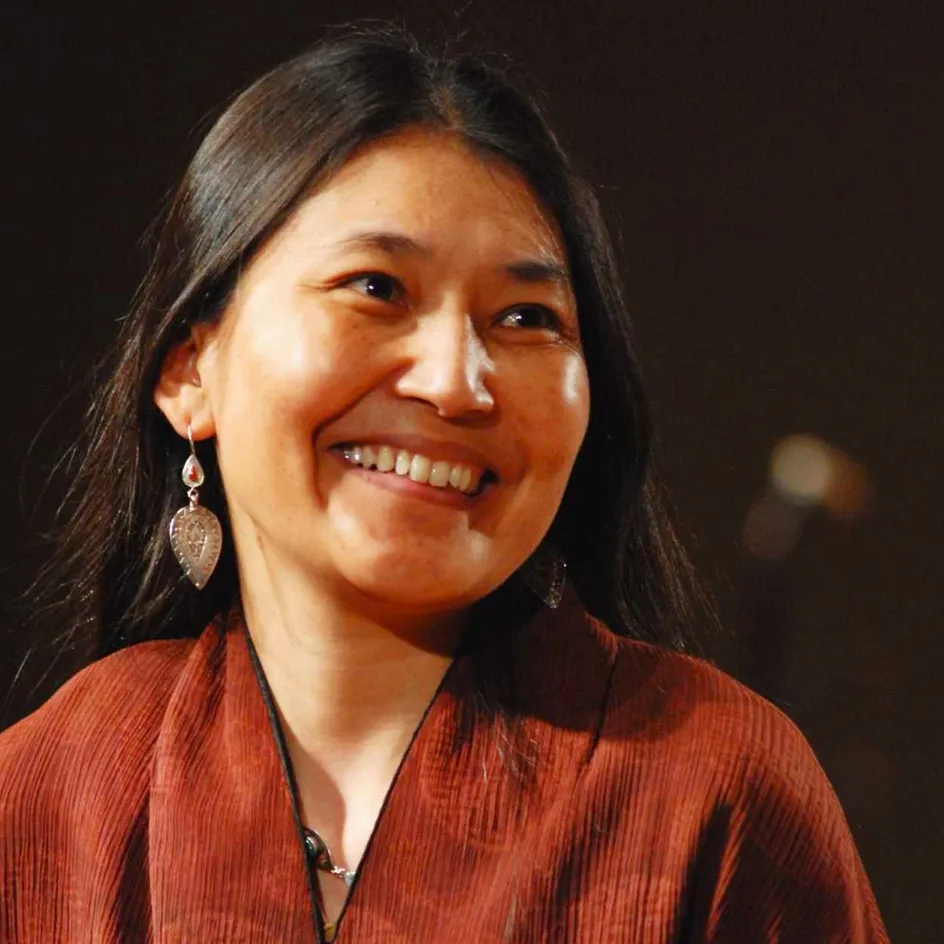
Urna Chahar Tugchi is much more than a singer; she is a global cultural ambassador whose art transcends the boundaries of space, time, and genre.
With an extraordinary voice—a force of nature spanning more than four octaves—she brings the philosophical wisdom and the infinite echoes of her homeland, the Ordos Plateau in Inner Mongolia, to some of the world’s most prestigious concert halls.
In Urna’s voice live on the rhythm of wandering herds and the whisper of the steppe wind. Her songs are not relics of the past, but powerful and vibrant prayers that resonate with the new life of the here and now.
For Urna, tradition never means stillness; it is the solid foundation for a boundless flight into the contemporary era. When she sings, ancestral wisdom merges with the wonder of a child gazing for the first time at the deep blue of the sky. It is an art of infinity.
https://www.youtube.com/watch?v=25qdIPCpMLQ&list=RD25qdIPCpMLQ&start_radio=1
More information on the website of the Festival: https://espirito2026.netlify.app/