by Vicky Sidley
A hurricane had wreaked havoc on the long dirt road to this remote Tsegyalgar West in Baja California, Mexico. Jan Böhm, the assistant Gecko, drove slowly, not only to avoid the gaping ruts and crevices but also to try to avoid the thousands of white, yellow and orange butterflies flitting about everywhere.
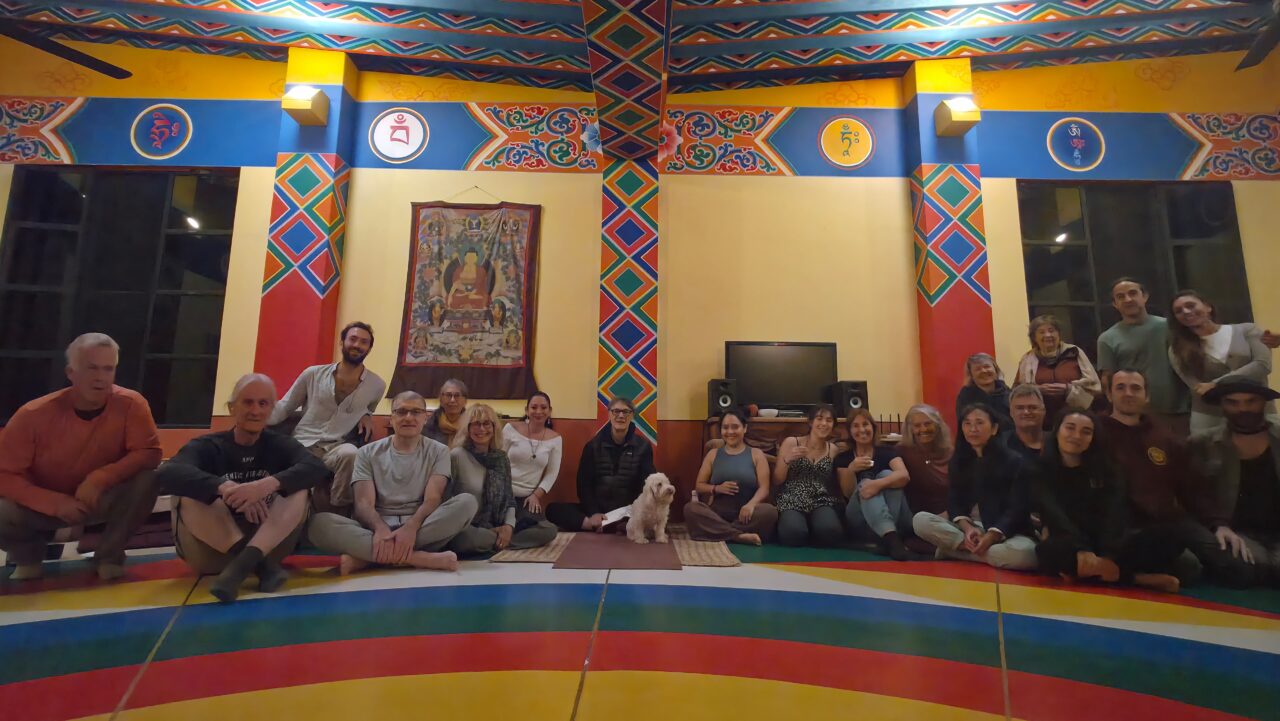
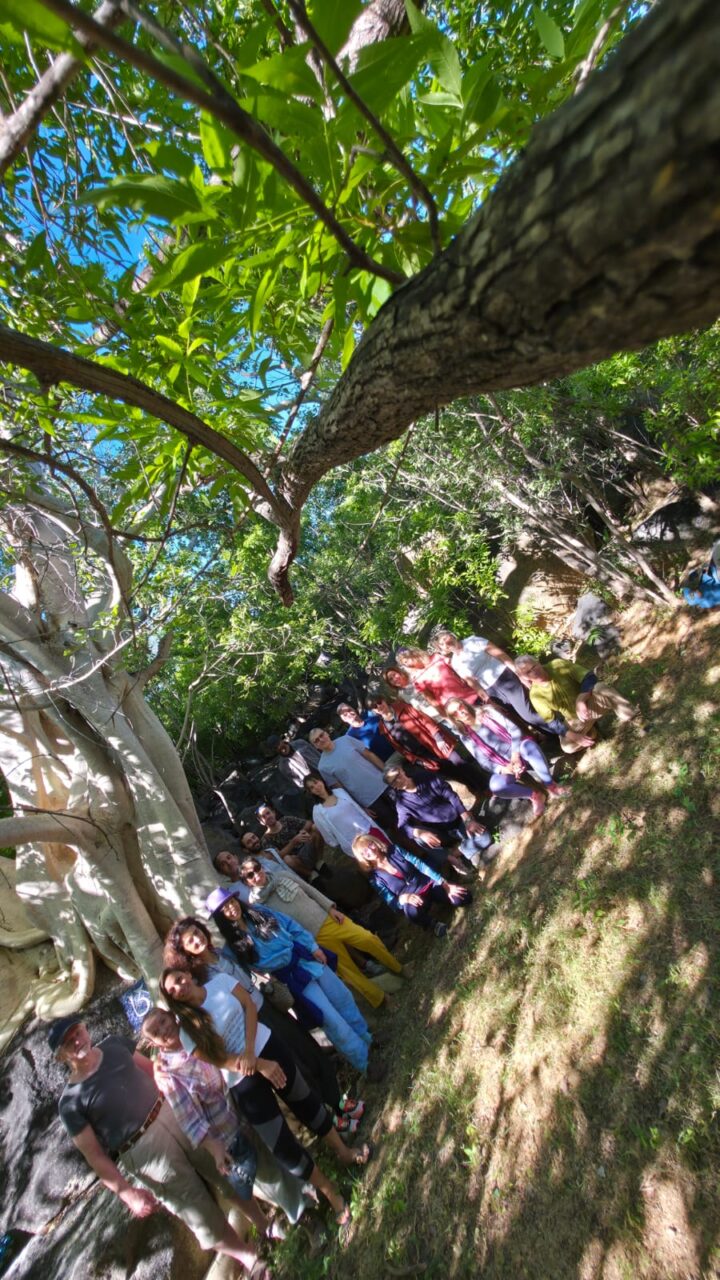
In early October, twenty-two practitioners born in twelve different countries gathered at the Gar for Fabio’s Longde retreat. We seemed to be a mere sprinkling of human life in this vast 3,000-acre land, lush with greenery and vibrant with insect and animal inhabitants. Lazuli, the Gekö, called it a luxury place in nature. It was indeed luxurious to have hot water in the public showers, and solar-provided electricity in the casitas, (which was not the case when I visited the Gar in 2021.)
Our first practice session took place a short walk from the wonderfully colorful Gönpa, where we arranged ourselves on the stones around the river for a session of Rushen of the Voice. Back inside the Gönpa we were treated to a video of Fabio up on a stage. Recorded in 2012 at Dzamling Gar, it showed him explaining the body positions of the Longde practice. The current-day Fabio ridiculed his former self, mimicking the toss of his erstwhile long braid over to the other shoulder. From Fabio also came stories of an even earlier time in his life when he and three others shared a hut in the country and practiced Longde all day for many weeks. “It was like being in love” he said.
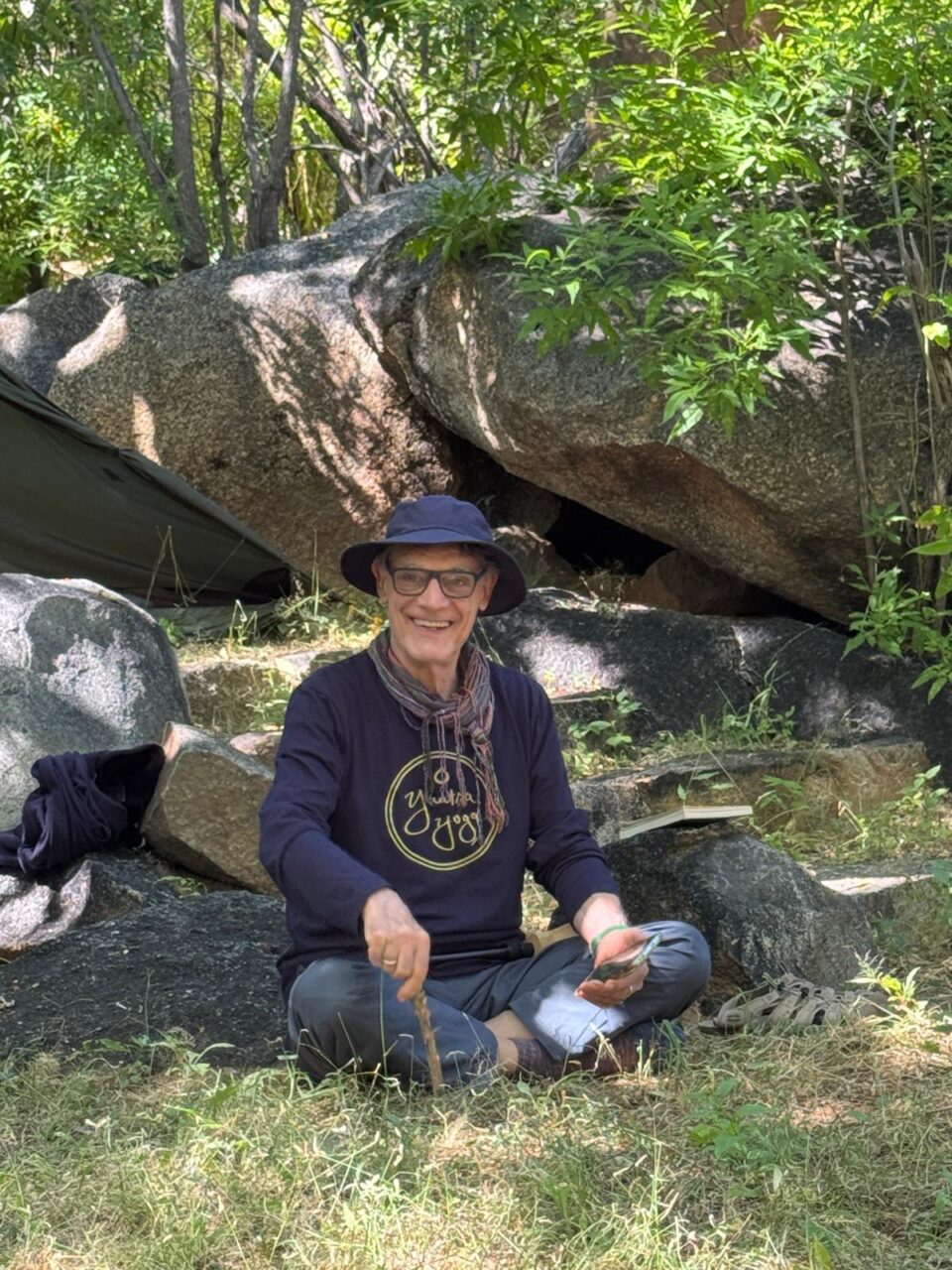
The middle of the day was quite hot and the sun still quite strong. On the third and fourth day the group gathered at what is referred to as the “outside Gönpa” a shady area next to the pallid muscular trunk of an enormous fig tree and with a view of an even older, exquisite fig tree. Here Fabio continued to clarify the practice of Longde. After that we were asked to practice on our own.
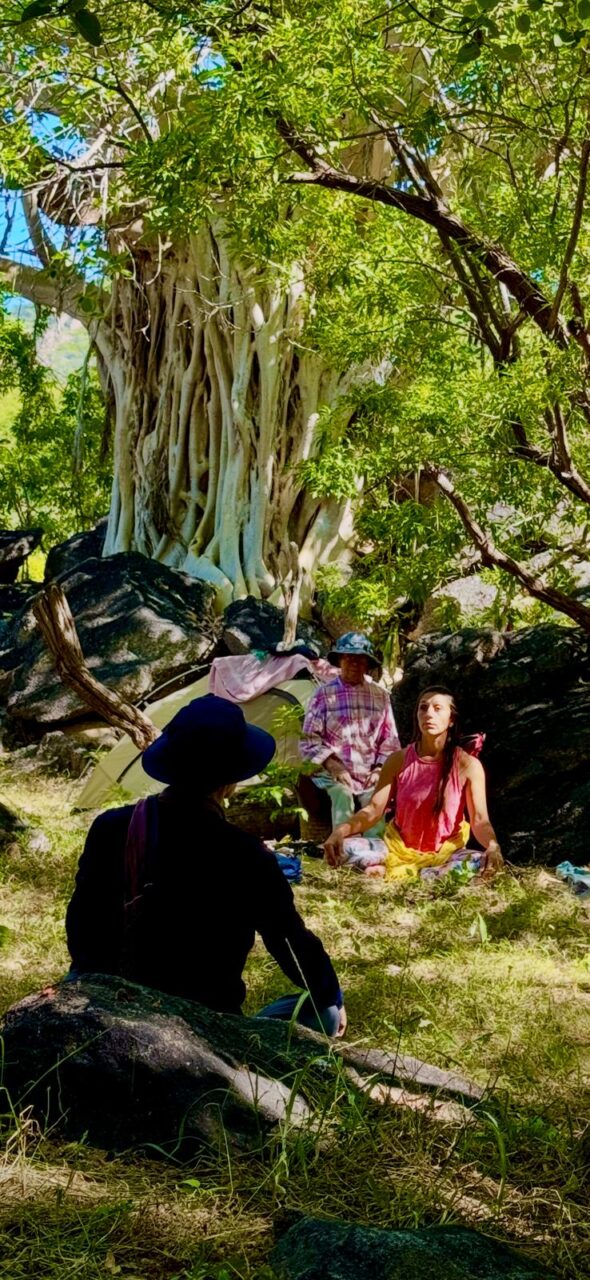
We would wake well before sunrise and in this quiet we could practice, either in a casita or anywhere outside. One early morning, in the darkness, I was sitting outside the Gönpa and heard the distinct sound of the purr of a cat, several times. I was confused because I knew that there were unlikely to be cats wandering about. It was only many days later while practicing on the balcony of our casita that I was alerted to the sound again. This time there was a little more light, and now I could perceive that it was a hummingbird, hovering around my head, darting away, and returning with the beat of its wings making a purring sound.
Talking of sound, while ambling around the gar one was aware of the sound of bells that hang around the necks of many cows, mostly unseen, that wander freely in the area. The dull clinking was lovely and reminded me of the sound of water. Other notable sounds were the nightly bellowing groan of a lone cow, calling out for its mate, and the occasional yip-yip howl of distant coyotes.
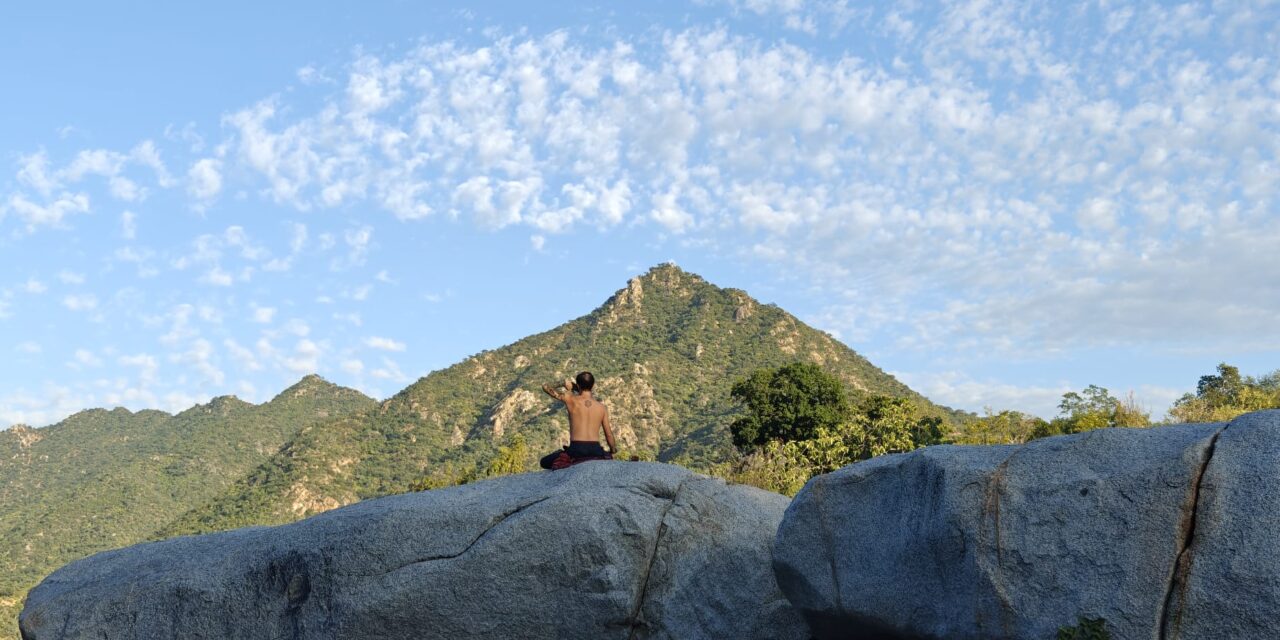
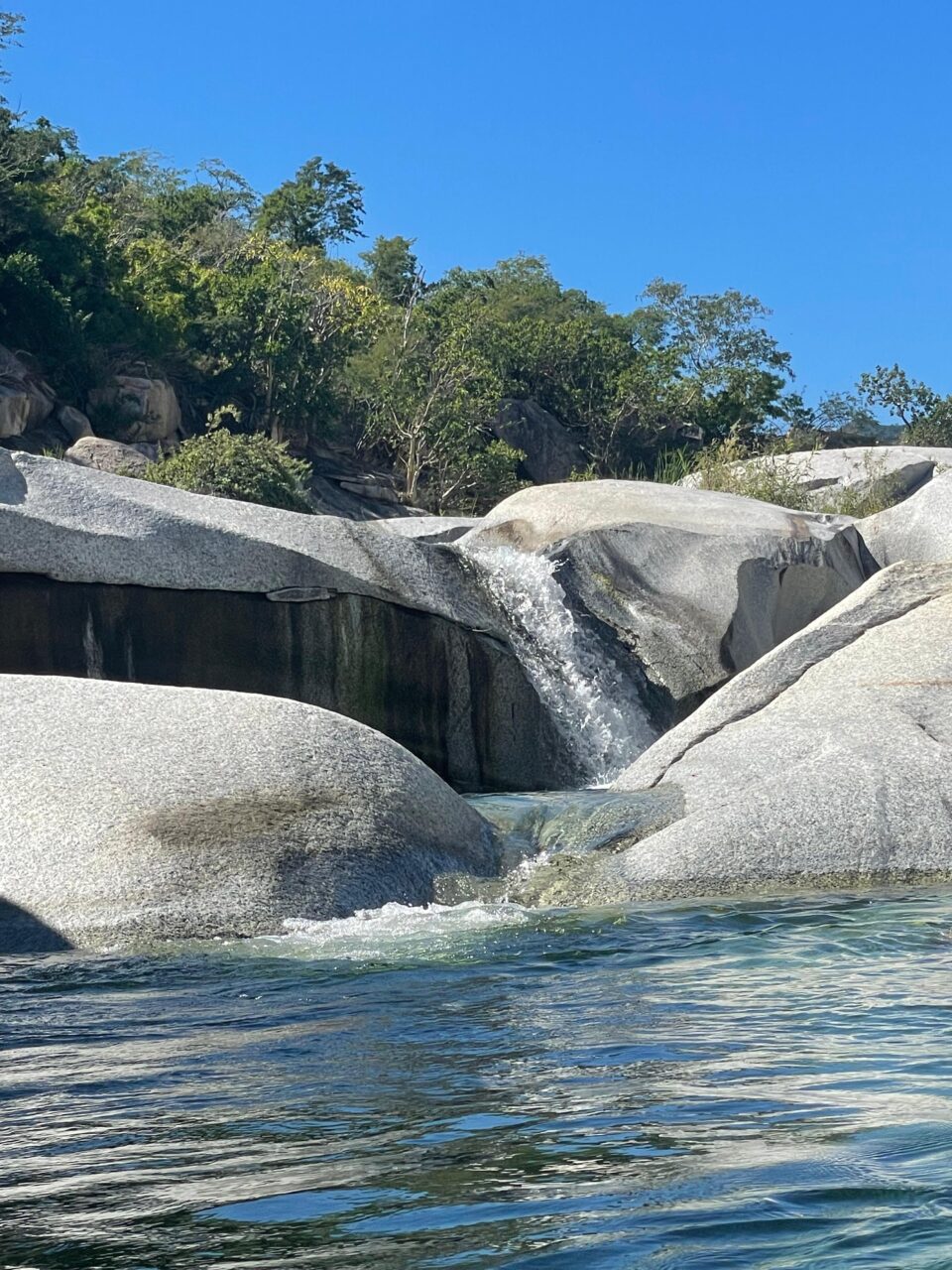
In the later afternoons many of the group walked down to another part of the river, about twenty minutes away. This very special place is marked by an enormous stone on which one can find the red handprints of small hands high up on the rock. The rock formations are beautiful – large, rounded, and smooth and mostly white flecked with dark spots. The river flows rapidly and forming waterfalls here and there, and pools beneath them. The area is large and afforded a spaciousness for the practice, and a bounty of all the elements with which to integrate.
At Fabio’s suggestion, most every morning between 7:00 and 8:00 those who wanted to, could join in a Yantra Yoga session offered by Yantra Yoga teachers Christina of Spain, Dannae of Mexico, and myself (of California). The Yantra Yoga practice was supportive of the Longde practice, and also, I discovered, that the Longde is supportive of the Yantra Yoga practice.
In the latter part of the retreat Fabio offered Yantra classes the mid to late afternoon, reminding us with great gusto of the salient points of the Nine Breathings, Lungsang, and the Tsandul practices of Yantra Yoga. This still left enough time for a Longde session in the late afternoon/evening before dinner.
Mealtimes were always a delight. It was a chance to socialize and get to know one another. We enjoyed delicious dishes prepared by Ulises who lives in the Mexican state of Oaxaca, famous for its rich mole sauces, a complex of chili and spice, nuts and sometimes chocolate. We were the treated to several variations of these sauces.
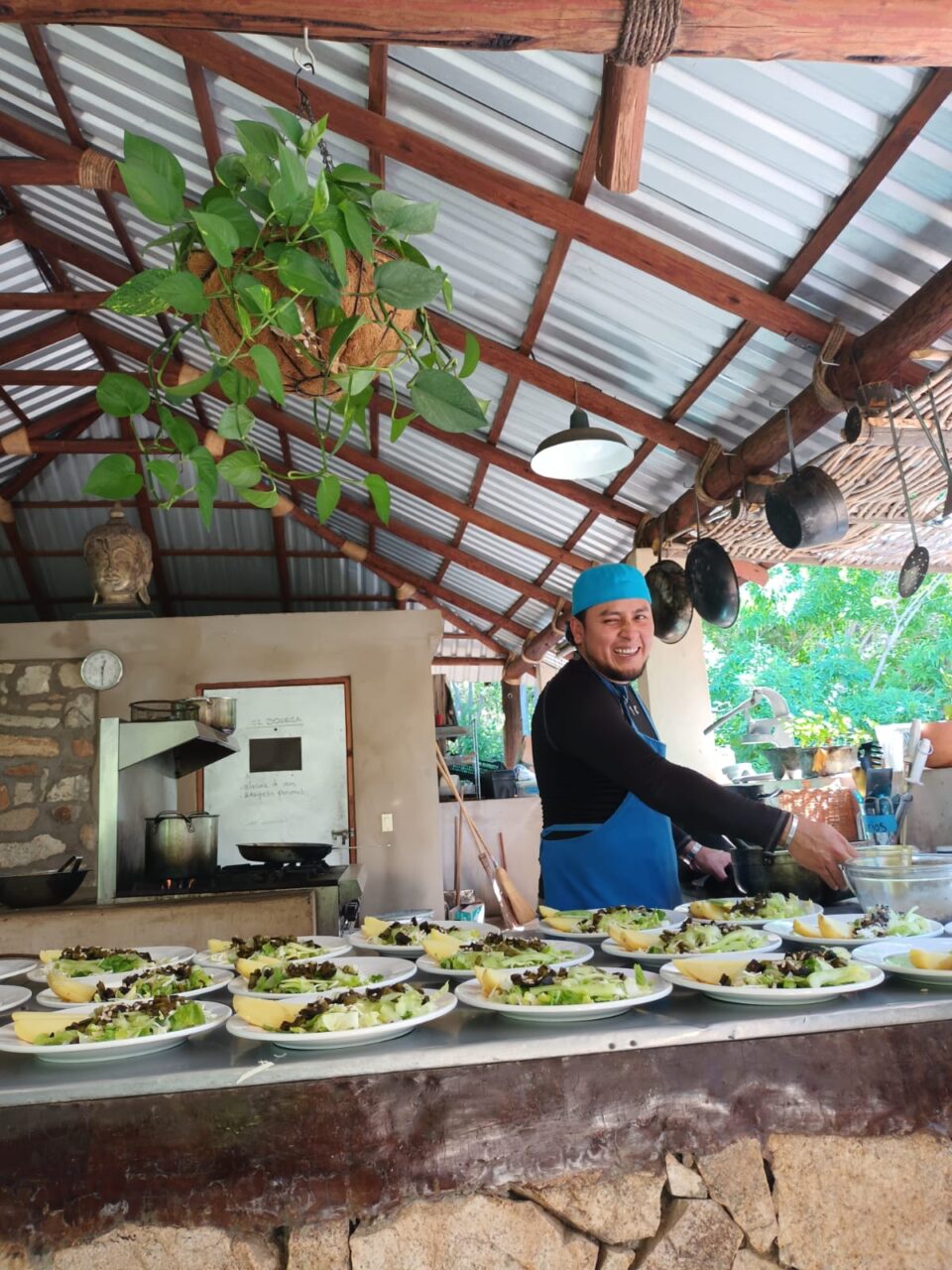
Every meal was accompanied by a deep pink Mexican version of sauerkraut. Once, at a meal, I was offered fried crickets, and despite my being told they were delicious, I refused. Later, when I found them on my Ganapuja plate, I ate them, and discovered that they were, in fact, quite tasty. I believe we all felt extremely lucky to have had the opportunity to learn this special, subtle practice from Fabio in this unique and beautiful place, and to have shared the experience of practicing together with other vajra brothers and sisters.
You can also read this article in:
 Italian