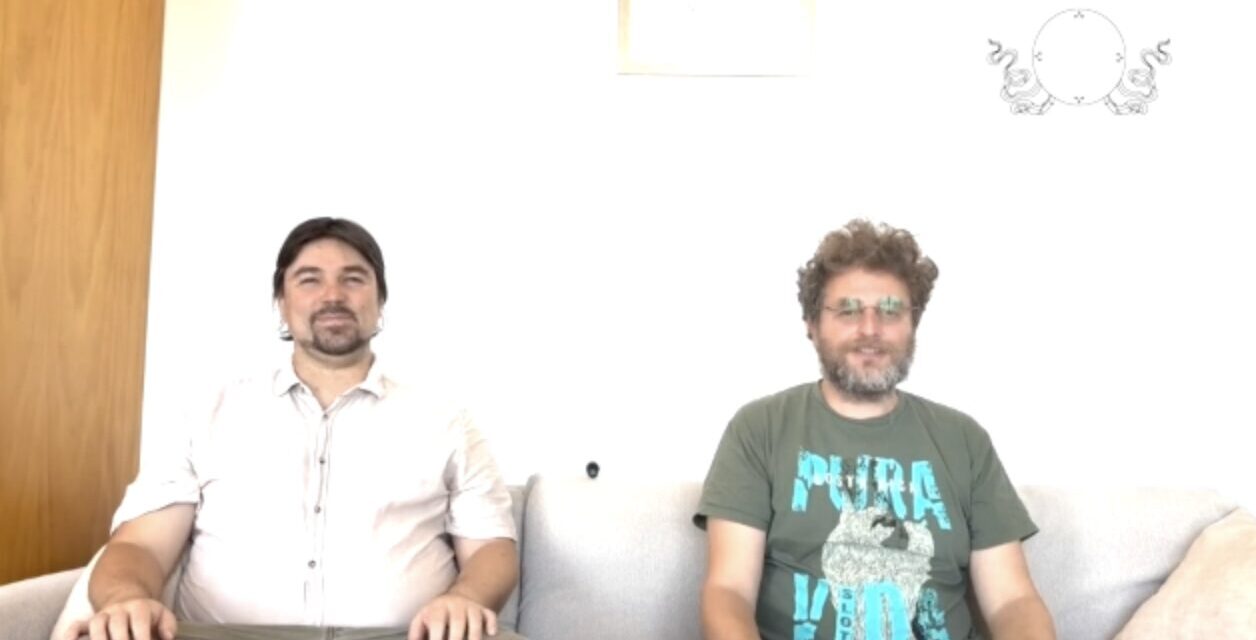
Excerpts from an Interview with Thinley Koblensky and Gabriele Marazzi of the Gakyil
May 5, 2026
The Mirror: First of all, before we go into specifics, can you give us an overview of the projects you’ve been working on.
Thinley: We’ve been working on various projects here at Dzamling Gar. We started with the administration program to keep track of all the expenses and also improve the set up. Then we also worked on an event platform to be able to better organize events here, as there are many different people collaborating to create an event and we needed to gather all the information in a central place to make the work easier for everybody. We also worked on some other applications for the cafeteria and for improving the general infrastructure of the Gar, basically to make life easier for all participants.
The Mirror: The new webcast system seems to be one of the more important projects that you’re working on and which may have the widest impact on the international community. Can you walk us through how that came about and at what point you are now?
Thinley: The first thing I want to say is that this is a testing system. It’s a new system and it’s not completely ready. We used it for the retreat with Namkhai Yeshi and we’re trying to improve it so that it can be used by all the Community.
The idea started from trying to have a better video image quality as well as improved audio quality with a higher bit rate and clearer audio. And also to have some features that are essential such as the chat for feedback and other features that could help the translators communicate to listeners.
Step by step we are implementing a system that is complete and very inexpensive. We tested it with some in-house servers, which is why it’s cheaper, and we set up a distribution network (CDN) for the video and audio so that people can get good quality all over the world.
The Mirror: Is there anything you might have to preserve from the webcast system or the Zoom that people are familiar with?
Thinley: The main thing that we need is the Chat which is a way for people to give feedback when something doesn’t work, but also at times to show a document or respond to questions. This kind of interaction was introduced with Zoom but does not exist in the old web system. Then for the translators, the Zoom setup is very simple – they just connect and select their language so we would like to have a system that is as simple as that. In the future we will have a very similar experience to the Zoom but with a better quality, more control and lower costs.
The Mirror: Why is the cost reduction so dramatic?
Thinley: Firstly, we are using our own servers and not paying another company to set them up. We did that work ourselves, as Karmayoga. It’s a huge reduction in costs because it’s a very expensive service.
The second thing is that we are trying to find a CDN partner for the distribution of the video because when you have one video with 1000 people connected, one server is not enough to have sufficient internet bandwidth and processing power. The CDN is a delivery network. We send the stream to our main server, and from there it’s sent to 5 or 10 different servers in Europe, in the USA, in Asia, so when people connect to the webcast, they don’t actually connect directly to our server but to the distributed server. This means that the connection is closer and there are fewer interruptions. And the second thing is that the process in power and bandwidth is distributed over all the servers so that they do not get overloaded if there are too many users.
The Mirror: It seems that the system is still in beta. When do you feel that it will be fully production ready?
Thinley: We used it for Namkhai Yeshi’s retreat and some people connected to it. We also had the Zoom and the Webcast as backup systems so we used all three. I think we have to get confident that the system works well so in the near future, if possible, with the collaboration of the other Gars, we would like them to use the new system as well as the old ones. Once we are confident that it is working well we can see if we want to remove the Zoom and keep only the old webcast system as a backup or decide with the International Community what is the best way to go ahead.
The Mirror: Let’s move on to the Sound Garden and Network Upgrade. The Sound Garden was initiated by Namkhai Yeshi. Can you tell us what the original vision was and how it became a network upgrade for the whole Gar?
Thinley: We have this audio system in the conference hall and we wanted to reuse it somehow. Namkhai Yeshi told us that the speakers were very good for the outdoors and suggested using them all over the garden. Then while we were at Merigar with Diego Namkhai, we decided to invite him to prepare the project here at Dzamling Gar. He was here a few months ago and we prepared a project of where to place all the speakers and how to connect them.

At this point we had the issue that the houses are not connected to the same network. This was problematic because the audio needs to be streamed from one place to all the speakers at the same time. It’s like a compilation that sounds all over the Gar, and while you walk around the Gar, you hear different parts of the soundscape. So there had to be a way that we could deliver this audio to the different sides of the garden and to be able to do that, we needed an internal network.
Last year, Merigar did a very good project to upgrade their network and so we thought that we should also do that, not only for the Sound Garden project, but also because it would be advantageous because we would spend less money on internet connections. At the moment every house at Dzamling Gar has its own internet connection and we are paying for more than 17 contracts for internet. By putting them together with three or four interventions it would be enough to serve the whole Gar and have much faster internet and lower costs. There would be an initial cost to build the infrastructure – a single fibre optic network – putting fiber optic between all the houses, connecting them, buying good quality routers for each house and so on.
The Mirror: We understand you have also created an events platform to better organize the many events that take place at the Gar. Could you give us some information about this?
Gabriele: The purpose of this platform was to better organize the work here at Dzamling Gar. We organize 40 or 50 events annually here and the organization of the events involves many people, different processes at different times and in different spaces. The event platform was born with the goal of giving an accessible tool to everyone to have the same process and the same tools to orchestrate all the events that we have.
When you start with an idea for an event, in the event platform you can check the availability in time and space, then follow up with other other products like gathering information from the instructor, his or her bio, the title of the course, images, videos and other material that may be useful to communicate that event in advance.
The platform contains the requirements in order to fulfill this event from a communication point of view but it also fits with the accounting part such as the expenses, the attendees, the income, whether the event will be webcast, the work of karmayogis and the gekö and so on. All of this information will be in one place.
And the nice part is that it is completely done in karmayoga even with the software that we are building. The code is fully open source, so if someone wants to use it or just wants to build on our platform, it’s completely fine. The model we are working on is specific to Dzamling Gar’s needs but we can open the platform to other organizations to use it. There is no ownership at the level of copyright because it’s based on the free donation of our karmayoga, dedicated to the Community.
Thinley: If another Gar would like to copy the model and make their own, we are happy to give them a copy of the software and help them set it up so they can use them themselves. If they have a particular need, we can discuss it with them. They should contact us and we’ll be happy to show them how it works and if they decide that it covers their needs we can collaborate with them to make them their own platform with some changes or to use our platform as it is.
The platform will be our “source of truth” for an event.
Gabriele: I believe that it will be so valuable that people will not need to go somewhere else because all the information is already there. It may be a process of time and a bit of education to understand how to use it, but in the end, the fact that all the information is there and accessible means that you do not have to start from scratch.
The Mirror: The next item is the donation system which is a little bit of a sensitive area as people want to be able to trust where their donation and their data is going. What was wrong with the old donation setup and how does the new one improve it?
Gabriele: By law we are required to ask for a lot of data from all the donors and this process is a bit painful for everybody. So what we have implemented is basically a login system where you save your personal data the first time you donate. The second time you donate, you can recover all your data by a simple link. You put your email and receive an email with this link – in technical terms it’s called a “magic link” – and with this you can donate without the whole process of having to fill in all your information again.
Thinley: At the moment we are migrating all the old donation data to the new donation platform so it will take a little time before we retire the old donation system, however, once this is finished you will be able to donate directly without all the other processes.
The Mirror: Is the system the same if people want to donate at the Infopoint or in the office?
Thinley: No, because in the process you have to sign a donation contract which is one of the legal requirements. If you go to the office or the info point, you are still required to sign by hand, so it is actually simpler for you to donate online.
The Mirror: Is the new donation system something that other gars or lings could adopt?
Gabriele: As everything we build is open source we have no copyright on it so it’s fully accessible and available to everyone.
I want to add that the donation system is also integrated inside the event platform. In fact the donation platform now accepts donations from events and is able to communicate these donations in the event platform. So if you are, for example, the manager of the event, you don’t have to go to another platform to see who donated. You can see it directly in the event platform.
The Mirror: The next topic is the kitchen monitors and the self ordering app for the cafeteria. Can you explain how the cafeteria experience changes for both the staff and the customers?
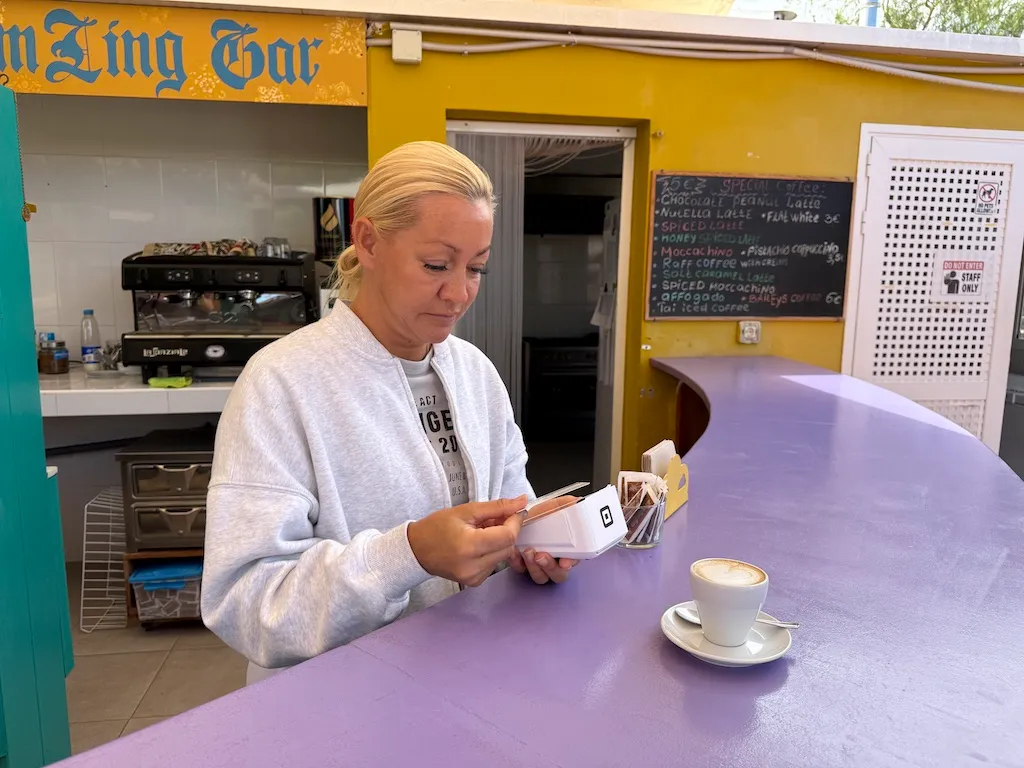
The new mobile terminal in the cafeteria which takes credit card and cash payments, has the menu and also sends orders directly to the terminal in the kitchen.
Gabriele: A credit card payment system had been introduced at the cafeteria with a software called Square. It is quite useful, very cheap and has a lot of potential. However, while we could accept payment by card, everything else was manual: a person has to write down the order, take it to the kitchen, say what to cook and so on.
What we built were two kitchen monitors – one for the bar for ordering coffee, croissants and so on, the other for the kitchen, for items that need cooking. When an order arrives, there is a sound alert on the corresponding monitor. The items are prepared and called by name or number.
Initially the bar and kitchen bells were the same sound and the staff got confused so we changed the sounds to solve the problem because since it’s our system, we can easily change things.
We are also considering connecting our platform to Uber Eats and Glovo to offer services outside the cafeteria as the software we are using gives us the possibility to start to integrate with other platforms that are in use nowadays. Another possibility we are considering is to offer a self-ordering app so people can order from their phone at the table. However, in order to go ahead with this we will need to have a fixed menu that people can consult on their phones.
The Mirror: Do you think that some of the projects that you are working on could be transferred to other gars and lings?
Thinley: If the project of the webcast goes well and is accepted by the international community it is the first one that will have more impact because it’s already available. We would like to try to spread it as much as possible and have it at super cheap costs, maybe free if we can support it ourselves so that it will be available to everybody.
One of the projects that we didn’t talk about is the shared global calendar on which we are collaborating with the IDC and Atiyoga Foundation to see if it’s possible to create one place where every institution of the international community inserts their information, their events, and that is shared with everybody. This would be a tool that will be very helpful for everyone in order to coordinate dates, inform people about online courses and practices, local events and so on.
Gabriele: The important thing about this is that we are delivering a proposal. From a technical point of view, it is an API-first system which means that it is built with the purpose of being easily integrated inside any existing system. It’s a “glue” that can connect existing systems and provide a bridge between the system and the information that each gar and ling has in order to have one place with all the information. Basically it’s a basket that collects all the information that you put in it.
Thinley: At the moment we are trying to get the IDC, the Ati Foundation and possibly Merigar on board because we think that something like this will be very useful, especially if the biggest organizations are the ones who promote and participate first in it. We want this to be a group effort. Once we have this kind of consensus it will make sense to publicize it to everybody else.
For now we are sharing with the IDC.
We’re very open to ideas to have one system for all the communities, whatever it is, it’s not that our system is better or worse. If somebody else wants to propose their system, we’re very happy to use it. The important thing is that we can access it to put information and to pull out information.
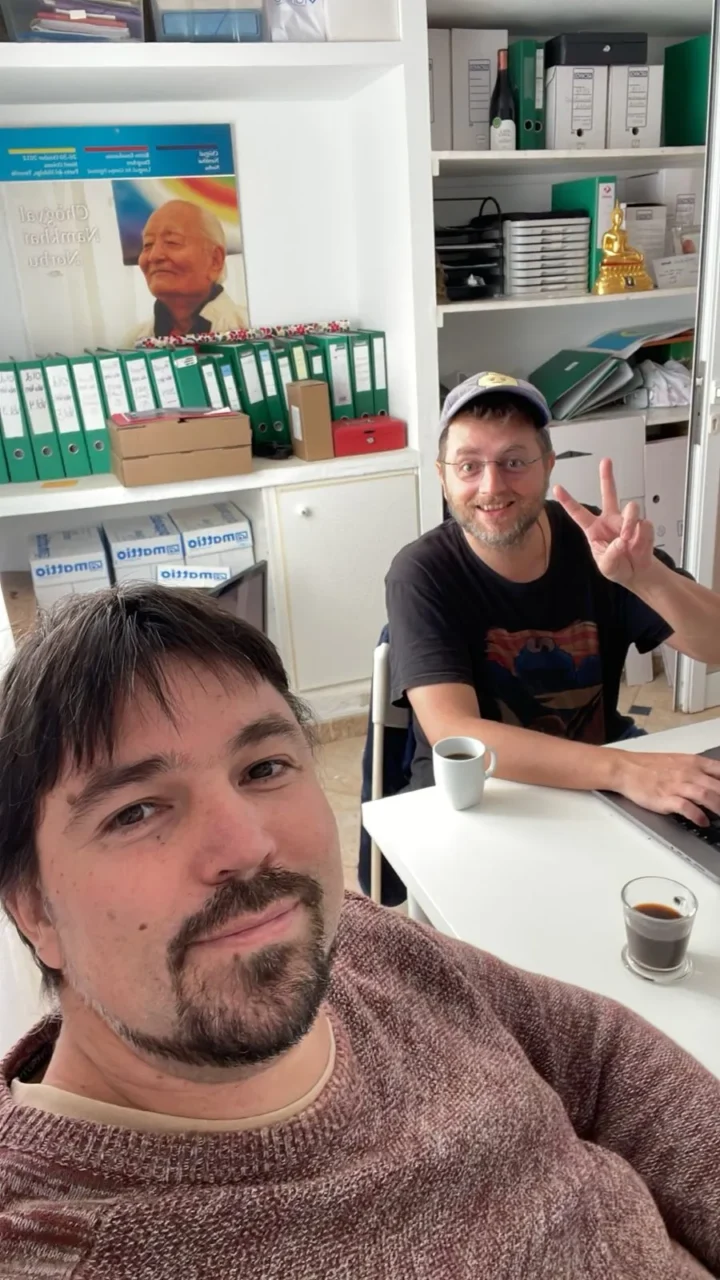
For more information about these project please contact secretary@dzamlinggar.org ATTENTION Thinley and Gabriele
The whole interview can be viewed at https://melong.online/podcast-interview-with-thinley-koblensky-and-gabrielle-marazzi-from-the-dzamling-gar-gakyil/
This post is also available in:
 Italian